
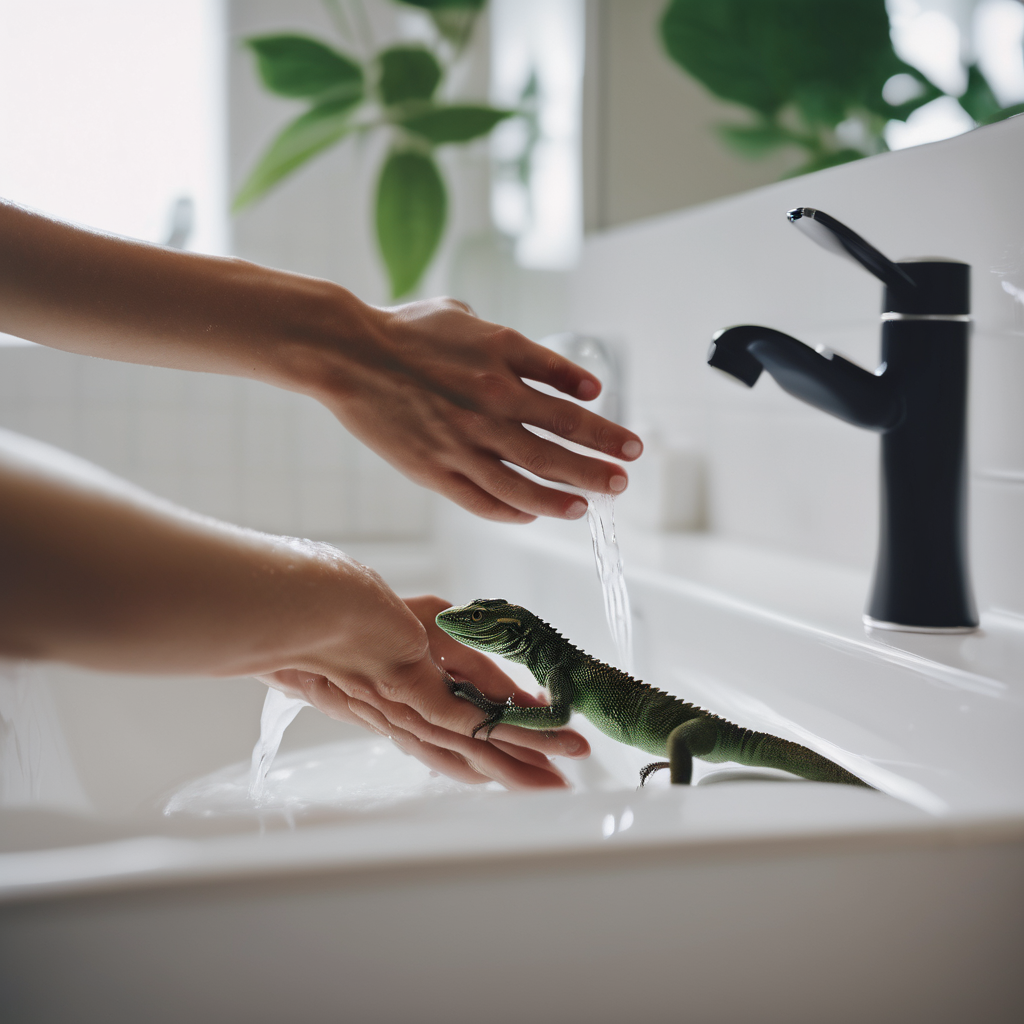
Almost every reptile and amphibian keeper eventually meets the same piece of advice, usually from a relative: “Aren’t those things full of Salmonella?” The honest answer is that many reptiles do carry Salmonella bacteria in their digestive tract, completely normally, without any sign of illness. That is not a reason not to keep them — it is a reason to keep a hygiene routine as permanent a part of your setup as your thermostat and your water bowl.
This guide is the practical version. It explains how Salmonella actually moves from animal to human, what the research says about risk, the specific habits that reliably break the chain, how to think about children, older family members and anyone with a weakened immune system, and the symptoms that mean somebody in the house needs a doctor rather than a forum.
When to see a vet or a doctor — warning signs
In a person: see a doctor promptly if anyone in the household develops diarrhea lasting more than a day or two, bloody stools, fever above 38.5°C (101.3°F), stomach cramps, headache, or vomiting — especially a child under five, anyone over 65, anyone pregnant, and anyone on chemotherapy, steroids, biologics or other immune-suppressing treatment. Tell the clinician you keep reptiles or amphibians; that information changes the tests they order.
In the animal: a reptile that suddenly goes off food, passes loose or unusual-smelling faeces, or shows blood in the stool needs an exotic vet. Do not assume it is “just Salmonella” and do not attempt to treat it yourself. Salmonella in the animal is normal background flora and is not treated with home remedies; what needs diagnosis is whatever is actually making the animal ill. If you are not yet connected to one, start with our guide to choosing a vet for your reptile or exotic pet.
Our guide to telling whether your reptile is sick covers the general red flags that need an appointment.
How Salmonella actually spreads
Salmonella is not an airborne problem and it does not soak through your skin. It is a faecal-oral bacterium: it leaves the animal in faeces, sits on surfaces, and reaches a new host when contaminated hands, food, or objects go into a mouth. Understanding that single sentence is most of the risk management, because every habit below exists to break one specific link in that chain.
The five routes that matter
- Direct contact. Handling the animal, its enclosure, its water dish, its decor, or its substrate and then touching your face, phone, or food.
- Cross-contamination in the kitchen or bathroom. The classic case is washing a reptile’s water bowl in the kitchen sink, or preparing its food (frozen rodents, insects) on the same surface as your salad.
- Bath water and bathing setups. Any tub, sink, or container used to soak or swim a reptile or amphibian must never be a human bathroom fixture.
- Contaminated substrate and dust. Dry bedding and dust travel. A vivarium near an open kitchen prep surface is a genuine, if modest, hazard.
- Other pets and children’s hands. A toddler who touches the tank and then a sibling, or a dog that drinks from the reptile’s water dish, both move contamination around the house.
Why “healthy-looking” animals are still a risk
This is the part keepers get wrong most often. Reptiles carry Salmonella as part of their normal gut flora. There is no visible difference between a carrier and a non-carrier, no test a keeper can do at home, and no way to “clean” a reptile of it — bathing a lizard does not make it Salmonella-free, and neither does a spotless enclosure. That is precisely why the controls are behavioural rather than veterinary. In animals, the illness you might notice is caused by something else entirely: poor temperatures, dehydration, parasites, or a secondary infection.
What the evidence says about actual risk
Public health agencies in the US, UK and EU have tracked reptile-associated salmonellosis for decades, and outbreaks traced back to pet reptiles — particularly bearded dragons, snakes and turtles — are well documented. The highest-risk groups are consistently the same: children under five, adults over 65, pregnant people, and anyone immunocompromised. For healthy adults and older children with a working immune system, the infection is usually an unpleasant but self-limiting gastroenteritis.
The important nuance is that the risk is not mysterious or unavoidable — it is concentrated in a small number of behaviours, and those behaviours are all fixable. A keeper who washes their hands, cleans the enclosure in the right place, and never shares kitchen surfaces is operating in a completely different risk band from a keeper who does none of those things.
The hygiene routine that actually breaks the chain
1. Hand washing — the non-negotiable one
Wash with soap and running water for at least 20 seconds immediately after any contact with the animal, the enclosure interior, its water dish, its food, or its substrate. Soap and water is the effective method. Alcohol gel is a useful backup when you are away from a sink, but it is less reliable on visibly soiled hands — soap and water first whenever you can get to a tap.
The moments keepers forget are the specific ones that matter: after cleaning the enclosure, after removing the water bowl, after handling frozen-thawed prey, and after looking into the tank to check on things. A quick glance rarely involves contact, but a quick glance plus an adjustment to a hide does.
2. Designate the enclosure-cleaning zone
Never clean reptile or amphibian equipment in the kitchen sink or the bathtub. Use a dedicated basin, a laundry sink, a garage tub, or outdoors. The discipline is simple to state and easy to lose during a rushed water change: the animal’s water and waste go into the toilet or an outdoor drain, not into a sink that touches food or dishes.
A full cleaning schedule — what happens daily, weekly and monthly, and which disinfectants are safe around animals — is in our guide to cleaning a reptile tank on a daily, weekly and monthly schedule. For amphibian setups specifically, our guide to cleaning an amphibian tank explains why amphibians absorb chemicals through their skin and why the disinfectant choice is stricter.
3. Separate the food-prep surfaces
Feeder insects and frozen rodents are handled on their own board or tray, with their own tongs, away from human food prep. Once thawed, uneaten rodents are discarded, not refrozen and re-fed. A simple physical separation — a dedicated plastic board and a separate pair of tongs kept in the vivarium room — is enough.
4. Keep the enclosure out of the food zone
Do not place a vivarium on a kitchen counter, a dining table, or directly beside a food-prep surface. A dedicated stand in a living room, hallway or spare room is the right placement. Beyond hygiene, it also keeps the animal away from cooking heat, aerosolised oils, and the constant traffic that stresses a reptile. If you are still deciding where the tank goes, our guide to reptile terrarium equipment and setup covers placement as part of the build.
5. Clean hands before you touch your face or phone
The phone is the most commonly missed vector in the whole house — keepers wash their hands, then pick up their phone to check a temperature app, then eat a snack. Get into the habit of not bringing the phone into the enclosure in the first place, and washing after you put it down.
6. Manage the faeces, not just the surfaces
Spot-clean faeces promptly rather than letting substrate accumulate. In a bioactive setup, a healthy cleanup crew of isopods and springtails breaks waste down, which is genuinely better for the animal and better for odour — but it does not remove the need to wash your hands after putting them in.
Handling: when to touch, and how
The best hygiene decision is often the simplest one: do not handle unless you need to. Many species are better observed than held, and every unnecessary handling session is another opportunity to contaminate a surface and another stress event for the animal.
When you do handle — for a health check, a rehousing, or a bonded animal that genuinely tolerates it — the method matters as much for hygiene as for the animal’s comfort:
- Support the body properly so the animal is calm and does not shed stress, thrash, or shed skin cells and faeces over you.
- Keep handling sessions short and finish before the animal becomes distressed.
- Never handle over a kitchen surface or anywhere food will be prepared.
- Wash hands before and after. Before, because you are protecting the animal; after, because you are protecting yourself.
- Wear dedicated gloves for messy tasks — deep cleans, moving substrate, dealing with a sick animal — and treat them as enclosure equipment, not household items.
Species-specific technique guides: handling a pet snake, handling a pet scorpion, handling a tarantula, and handling amphibians. Amphibians deserve a special note: their skin absorbs chemicals directly, so hand lotions, sunscreen and soap residue on your hands are a genuine welfare problem, not just a hygiene one. Our overviews of pet reptiles and pet amphibians put handling into the wider care context.
Children, older relatives and immunocompromised household members
Children under five
Public health guidance in most countries is direct on this point: reptiles and amphibians are not recommended as pets in households with children under five years old. Young children mouth objects, cannot be relied on to wash their hands, and are the group with the highest documented rate of severe infection. If you already keep reptiles and a baby arrives, the realistic options are rehoming the animals or enforcing a strict no-contact boundary enforced by adults — the tank is observed, not touched, and the child is never in the room during cleaning.
Older children and teenagers
Supervised, hand-washing children of school age can safely interact with a reptile. Set the rule explicitly and early: hands washed before and after, no kissing the animal, no putting hands near the mouth, and no touching the tank at all if you have not washed your hands. Our guide to introducing pets and children covers how to structure that supervision.
Adults over 65, pregnant people, and anyone immunocompromised
These household members should not clean the enclosure or handle the animal at all. If you are the only person available, wear disposable gloves for the cleaning and wash thoroughly afterwards. If a family member is on chemotherapy, biologics, high-dose steroids, or has had a transplant, discuss the animal with their medical team before bringing it home — that conversation is a standard one and clinicians will not be surprised by it.
Other pets in the house
Dogs and cats drinking from a reptile’s water dish is a genuine cross-contamination route, and a large dog investigating a tank can also injure the animal. Keep the enclosure off the floor where possible, and make the reptile’s water dish inaccessible to other pets — our guide to choosing reptile water bowls covers designs that reduce tipping and shared use.
Species and situations that raise the stakes
Aquatic and semi-aquatic species
Aquatic turtles, frogs and aquatic salamanders live in water that accumulates waste faster than a dry terrarium, which means more frequent water changes and more handling of contaminated equipment. Axolotls in particular need regular water work — our complete axolotl care guide explains their water requirements, and our guide to cycling a terrarium explains why a mature biological filter reduces how often you need to disturb the system.
Newly acquired animals
A new arrival is the highest-risk period: unfamiliar handling, an unfamiliar enclosure, and a period of shipping or transport stress that often coincides with increased shedding. Our guides to bringing home a new reptile and the first 30 days and reptile quarantine both recommend minimising handling during this window, which happens to be exactly the right hygiene decision too.
Species with higher documented risk
Bearded dragons, turtles and other aquatic turtles, snakes and amphibians have all featured in published outbreak investigations. That is not a reason to avoid them — it is a reason to apply the routine most carefully with the species that carry the most attention, and to be especially firm about the no-kissing rule, which is where several documented paediatric cases originated.
Seasonal and travel stress
During transport, a vet visit, or brumation, animals pass faeces more frequently and handling increases. Amphibians are worth extra care here — our guide to amphibian brumation and winter care explains their particular vulnerabilities, and their permeable skin means chemical residues on your hands matter more than with a scaled reptile.
Frequently asked questions
Can I get Salmonella from just looking at my reptile?
Looking carries no meaningful risk. The risk begins with contact — touching the animal, the enclosure interior, its water, its food, or its substrate — and then transferring that contact to your mouth or to food. Observation through glass is fine, and cleaning the outside of the glass is a very low-risk task.
Can I make my reptile Salmonella-free?
No. Reptiles carry Salmonella as part of their normal gut flora, and there is no keeper-accessible way to eliminate it. Antibiotic treatment is not appropriate for a healthy carrier and is actively discouraged because it disrupts the animal’s normal flora and can promote resistance. The control is your behaviour, not the animal’s biology.
Is it safe to clean the enclosure in my bathtub?
No. Use a dedicated basin, a laundry sink, or an outdoor area. A bathtub that is also used by people — and certainly by children — is one of the highest-risk cross-contamination surfaces in the house, even after cleaning.
Do amphibians carry Salmonella too?
Yes. Frogs, newts, salamanders and axolotls can all carry Salmonella, and aquatic species live in water that concentrates waste. The same hand-washing and equipment-separation rules apply. Our guide to amphibian health warning signs and vet visits covers what does need a vet.
My child touched the tank — what should I do?
Wash their hands with soap and water immediately, and check whether they put their hands near their mouth. A single incidental touch by a healthy child with immediate hand washing is a low-risk event. What you should do is treat it as a signal that the boundary needs re-stating, not as an emergency. If the child is under five or has any immune issue, mention it to their clinician if symptoms develop.
Can my dog or cat get sick from the reptile?
Dogs and cats can be infected with Salmonella, though clinical illness is less common than in people. The more immediate concern is usually the reverse: a cat or dog stressing or injuring the reptile, or the shared water dish moving bacteria between them. Keep other pets away from the enclosure and its water.
Does hand sanitiser work instead of washing?
Alcohol-based sanitiser is a reasonable backup when you are away from a sink, but it performs poorly on visibly soiled hands. Soap and running water for 20 seconds is the standard, and after enclosure cleaning you are always dealing with soiled hands — so wash.
Should I be worried about handling feeder insects or frozen rodents?
Yes, to the same standard. Frozen-thawed rodents are raw animal products: handle them with dedicated tongs, on a dedicated surface, thaw them in a sealed container, and never refreeze an unused portion. Feeder insect colonies produce their own waste, so wash after colony maintenance too — our guide to gut-loading and dusting feeder insects covers colony hygiene alongside the nutrition side.
What if I am pregnant and already keep reptiles?
Stop handling the animals and stop cleaning the enclosure, and have someone else do it. If that is not possible, use disposable gloves for every task and wash thoroughly afterwards, and raise it with your midwife or GP so it is on their radar. Do not make this decision alone late in a pregnancy.
A hygiene checklist you can actually keep
Print this, put it on the vivarium cabinet, and run through it until it is automatic.
Every day
- Spot-clean visible faeces and uneaten food.
- Check and refill the water dish with fresh water.
- Wash hands after every interaction with the tank, including maintenance glances that involved touching something.
- Confirm the enclosure is not positioned over or beside a food-prep surface.
Every week
- Full water change or water top-up in the designated cleaning area, waste water into the toilet or an outdoor drain.
- Remove and clean decor and the water dish in the dedicated basin, never the kitchen sink.
- Dispose of old substrate and spot-clean glass — our guide to choosing reptile substrate covers what to replace and how often.
- Check no other pet has been drinking from or tipping the water dish.
Every month
- Deep clean and disinfect the enclosure with an animal-safe product, fully rinsed and dried before the animal returns.
- Full substrate change.
- Check thermometer and hygrometer accuracy — our guide to measuring temperature and humidity accurately explains calibration, and humidity control explains why getting it wrong stresses animals and increases shedding.
- Weigh the animal and log it — a sudden weight change is the earliest reliable sign of a health problem.
- Restock gloves, dedicated cleaning tools and paper towel.
When anyone new visits
- Ask them not to touch the animal unless you supervise the hand-washing.
- Keep babies, toddlers and strollers away from the enclosure entirely.
- Say out loud, once, what the rule is. Most guests follow a clear rule and none of them follow an unspoken one.
When someone gets sick
- Note the date symptoms started and what contact happened in the previous 72 hours.
- Tell the clinician about the reptiles. It genuinely changes the differential diagnosis and the stool test they request.
- Do not attempt to treat the animal, and do not stop the hygiene routine because you are worried.
The bottom line
Reptile-associated Salmonella is a real, well-documented risk with a very manageable set of controls. Wash your hands for 20 seconds after every contact. Clean the enclosure in a dedicated place, never the kitchen or the bathtub. Keep the tank out of the food zone. Do not handle more than you need to. Keep under-fives, over-65s, pregnant people and immunocompromised family members away from the animal and its cleaning entirely.
None of that makes keeping a reptile less rewarding. It makes it a hobby you can sustain for decades without an emergency — which is, in the end, the point.
Leave a Reply