
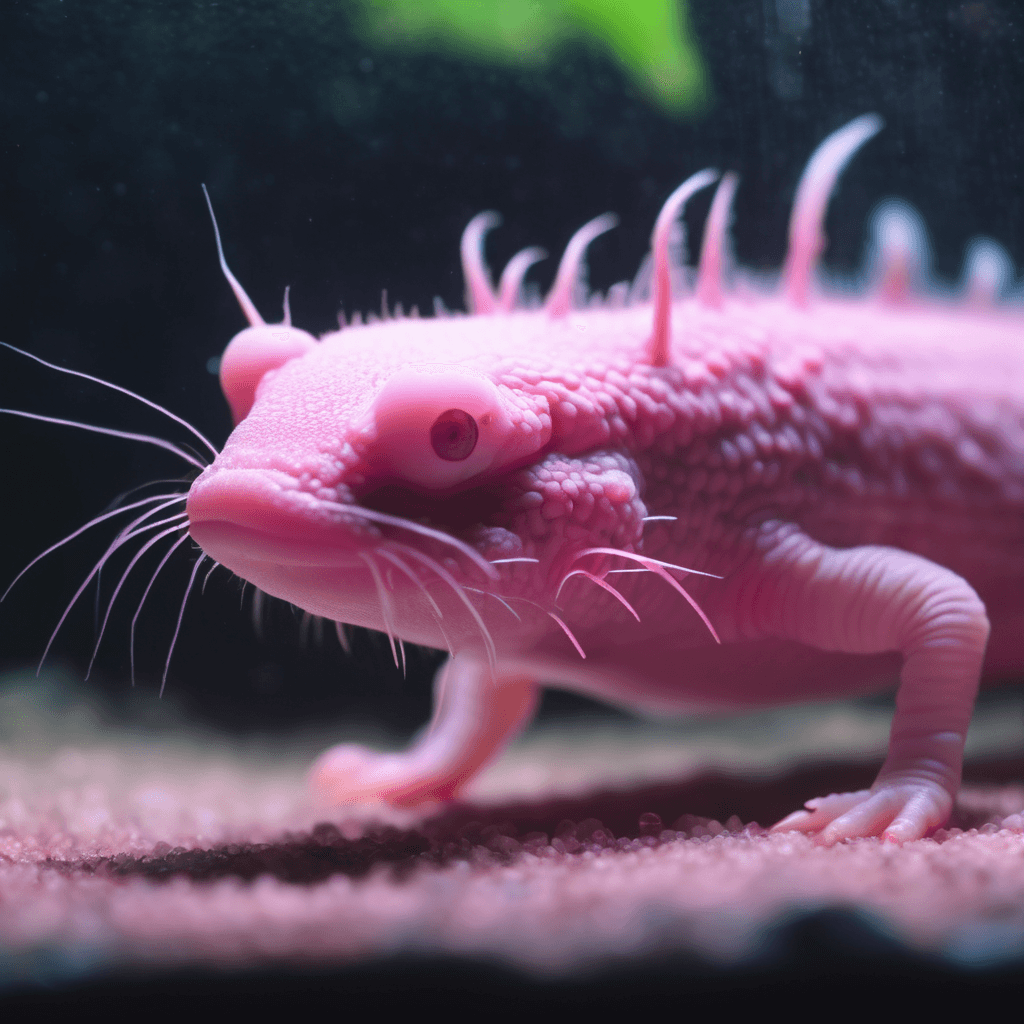
Axolotls are the amphibian that looks like it should be difficult and is not. They stay fully aquatic for life, never leaving the water, and they keep their external gills into adulthood — which makes the setup simpler than a frog’s paludarium and the water quality more demanding than most. The animal is critically endangered in the wild and common in captivity, and the care comes down to one thing: cold, clean, cycled water.
This guide covers the complete care. Part of the pet amphibians complete care guide series, and it pairs with the amphibian enclosure setup guide.
The Species
- Appearance: external feathery gills, a wide smile-like mouth, four underdeveloped legs, and a long tail fin used for swimming.
- Size: nine to twelve inches, with some individuals reaching fourteen.
- Lifespan: ten to fifteen years in a properly kept aquarium.
- Origin: Lake Xochimilco in Mexico — a single lake complex that is nearly destroyed in the wild. Every captive axolotl descends from a colony started in the 1800s.
- Neoteny: they reach adulthood without metamorphosing. They never grow lungs and never live on land, unlike every other salamander.
- Regeneration: they regrow limbs, gill tissue, and parts of the heart and brain — the reason they are the most-studied amphibian in research.
The Enclosure: Cold, Long, and Quiet
Floor space matters far more than height, because axolotls are bottom dwellers that walk rather than swim:
- A 20-gallon long tank suits one adult. A 29 or 40-gallon suits a pair. Length beats volume — a 20-gallon long is better than a 20-gallon tall.
- Temperature: 60 to 64 degrees. This is the hard requirement and the one that kills pets in warm houses. Above 74 they stress, above 78 they can die within hours, and a tank without a chiller in a warm room is a slow emergency.
- Cooling: an aquarium chiller is the reliable answer. Fans alone only drop the temperature a few degrees and evaporate water fast. Bottles of frozen water dropped in daily is a stopgap, not a system.
- Substrate: fine sand or a bare bottom. Gravel is the classic mistake — axolotl ingest it while sucking in food, and the resulting impaction is fatal. Bare-bottom tanks are the safest and the easiest to clean.
- Hides: a cave or a plant pot laid on its side. They spend most of the day hidden and emerge at dusk.
- Lighting: dim, and ideally on a cycle rather than constant. Bright light stresses them, and live plants need light the axolotl does not want — hardy low-light plants like anubias and java fern are the compromise.
- No sharp decor. Their skin is soft and permeable, not scaled — rough rock and plastic plants tear it.
- A tight lid. Axolotls jump, especially when startled or when the water is wrong.
The Filtration and Water Quality
Axolotls are messy eaters in a small volume of cold water, which means the filter is oversized and the water changes are regular:
- A canister or hang-on-back filter rated for at least double the tank volume. Cold water holds less oxygen and axolotl waste is heavy, so a weak filter shows up as a sick animal.
- Low flow. Strong current exhausts them — baffle the output with a spray bar or aim it at the tank wall.
- Cycle the tank first — four to six weeks with an ammonia source, until ammonia and nitrite both read zero. Skipping this is the leading cause of death in new setups.
- Test weekly: ammonia and nitrite at zero, nitrate below 20 ppm. Anything else is a water change today.
- Dechlorinate every addition — chlorine and chloramine absorb straight through the skin. Use a conditioner that neutralises chloramine, not just chlorine.
- pH: 6.5 to 8.0 — they tolerate a wide range, but a swing within hours is harmful. Stability beats a perfect number.
- Water changes: 20 to 25 percent weekly with a gravel/sand vacuum, and a spot clean of uneaten food daily.
Note the difference from the fish tank cycling guide: the parameters are the same, but the temperature ceiling is not. A tropical tank at 78 is correct; the same tank will kill an axolotl.
The Feeding
- Staple prey: earthworms (the best staple — high nutrition, low risk), nightcrawlers cut to size for juveniles, and high-quality sinking axolotl pellets as a supplement.
- Treats: frozen bloodworms and brine shrimp, thawed. Live feeder fish are discouraged — they carry parasites, and goldfish contain an enzyme that destroys thiamine.
- Juveniles: daily, small portions.
- Adults: every two to three days, as much as they eat in a few minutes.
- Feed at dusk with tweezers or a shallow dish — they locate food by smell and movement, not by sight, and a dish stops food from vanishing into the substrate.
- Remove uneaten food within a few hours. It is ammonia in waiting.
Handling and Tankmates
- Do not handle them. No scaled skin, no protective coating, and they absorb everything through it. Hands go in only for tank maintenance, washed and free of lotion.
- Move them in a net or a container — never by hand, and never out of the water. They cannot breathe air and suffocate in minutes.
- Keep them alone or in a pair. Juveniles nip each other’s gills and limbs, and a group of adults needs far more space than a home tank provides.
- No fish tankmates. Fish nip the gills, and the axolotl eats anything small enough to fit in its mouth.
- Their skin is delicate — a red-inflamed gill or a damaged limb is usually water quality, sharp decor, or aggression, in that order.
Warning Signs That Need a Vet
Most axolotl problems are water problems, so test the water before anything else. The signs that survive a water fix need an exotic vet:
- Curled or frayed gill tips — the single most common sign of poor water or low oxygen. Test ammonia, nitrite, and temperature immediately.
- Floating uncontrollably or listing to one side — usually gas or constipation from swallowed air or substrate. A short “fridging” period in shallow cold water often resolves it; a vet if it persists.
- White fuzzy patches on the skin or gills — a fungal or columnaris infection. Almost always water quality driven, and it needs treatment fast in warm conditions.
- Refusing food for more than a week — temperature is the first suspect, then impaction, then illness.
- Rapid weight loss — a sunken belly with normal appetite suggests parasites.
- Regenerating limbs that turn white or soft — the regrowth is infected.
- Any axolotl above 74 degrees — treat as an emergency: add ice bottles, increase aeration, and fix the cause now.
The New Owner Checklist
- Tank cycled for four to six weeks, ammonia and nitrite at zero
- Aquarium chiller installed and holding 60 to 64 degrees across a hot day
- Fine sand or bare bottom — no gravel anywhere
- Filter rated for double the tank volume, flow baffled low
- Chloramine-neutralising water conditioner on hand
- Liquid test kit for ammonia, nitrite, nitrate, and pH
- Earthworms and sinking pellets in stock before the animal arrives
- Hides in place, no sharp decor, dim light, tight lid
- Exotic vet contact identified in advance — the search is not the time to start looking
Frequently Asked Questions
Do axolotls need a heater?
Almost never — most homes are warmer than they need, not colder. The requirement is cooling: a chiller in any room that reaches the mid-70s. A tank sitting at 66 in a cool room is ideal with no equipment at all.
Can axolotls live with fish?
No. Fish nip the gills, and small fish get eaten. The gills are the target because they look like worms, and an axolotl with damaged gills cannot breathe properly.
Why is my axolotl floating?
Usually swallowed air from eating at the surface, or constipation. It resolves on its own in most cases. If it persists or the animal lists to one side, a vet visit is warranted — and check that gravel has not been ingested.
How long do axolotls live?
Ten to fifteen years with cold, clean water and no gravel. Shortened lifespans are almost always temperature or water quality, not genetics.
Are axolotls good pets for beginners?
They are forgiving in temperament and undemanding in interaction, but strict in one dimension — the water must stay cold. In a home without air conditioning, or in a warm climate without a chiller, they are a poor first choice. With reliable cooling they are among the most rewarding aquatic pets.
The Bottom Line
A 20-gallon long tank, bare-bottom or fine sand, with a filter rated for double the volume and a chiller holding 60 to 64 degrees. Cycled water tested weekly, 25 percent changes, every addition dechlorinated. Earthworms and sinking pellets every two to three days, uneaten food removed the same day. No handling, no tankmates, no gravel, and a tight lid. The axolotl is the low-maintenance pet with one non-negotiable rule: keep the water cold and clean, and the animal that regrows its own limbs will outlive most of the rest of the aquarium.
Leave a Reply