
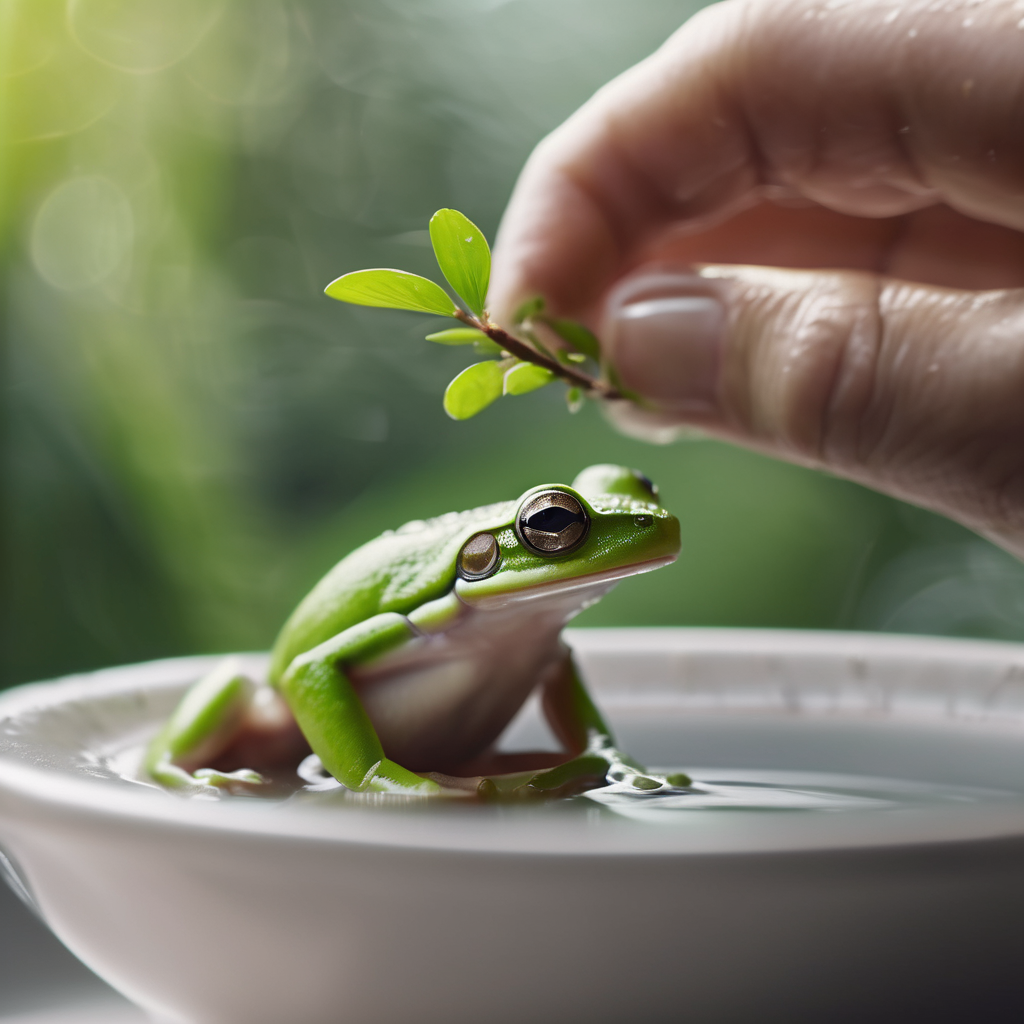
Frogs, newts and salamanders are not hands-on pets. That is the single most important sentence in this guide. Almost everything else is detail. Amphibians absorb water, oxygen and some toxins straight through their skin, they have no claws or scales to protect them, and they are small enough that a careless grip causes real injury. Keeping them is about watching them, not holding them.
That said, most keepers need to handle their animal at some point — a health check, a tank move, a photo, a snake-adjacent accident in the room. This guide covers the technique that does the least damage, the species that tolerate contact, the hard rules that override all technique, and how to tell whether handling has already caused harm.
Why amphibian skin makes handling different
Three properties of amphibian skin change every rule of handling:
- It is permeable. Whatever is on your hands goes into the animal. Soap residue, hand lotion, sunscreen, insect repellent, nicotine, alcohol gel and cleaning chemicals are all absorbed and can be lethal. This is the same reason water quality matters so much — see our guide on amphibian water quality.
- It is thin and easily torn. There is no scale layer. A dry hand, a rough edge on a net, or a floor surface will strip the outer skin layer, which opens the door to infection.
- It carries defensive secretions. Many species produce mild toxins that irritate human eyes, mouth and mucous membranes. They are not dangerous to a healthy adult, but they hurt, and they are a sign the animal is frightened.
The result is a simple rule: if you can avoid handling an amphibian, avoid it. Everything below exists for the times you cannot.
The three rules that override all technique
1. Hands must be clean and wet
Wash with plain, unscented soap and rinse thoroughly, then wet your hands in dechlorinated or tank water immediately before contact. Wet hands do not pull moisture out of the skin. Dry skin pulls, and dry skin also tears. Never use soap residue, hand sanitiser or lotion — alcohol gel in particular is absorbed rapidly and can kill a small frog.
2. Keep it short
Anything over a few minutes is too long. Thirty seconds to a minute is a reasonable maximum for a routine check. Longer than that, and the animal starts to dry out, overheat or panic, whichever comes first. Put a timer on your phone for the first few times.
3. Never squeeze
Amphibians have no rigid ribcage. Pressure on the chest or abdomen damages internal organs, and the instinctive human response to a wriggling animal is to grip harder. The correct grip is a loose, open cup, not a fist.
How to handle an amphibian correctly
The cup-and-herd method (best option)
For moving an animal between tanks or catching a loose frog, do not touch it at all:
- Use a clean, smooth-sided clear plastic container or a soft aquarium net with fine, knotless mesh.
- Herd the animal into the container rather than chasing it. Corner it gently with a smooth piece of card.
- Place the container in the new tank, open the lid, and let the animal walk out on its own.
- Rinse the net or container with dechlorinated water between animals.
This is always preferable to direct contact, and it is how experienced keepers and vets move animals.
Hands-on technique, when contact is unavoidable
- Wash and rinse your hands, then wet them fully in dechlorinated water or tank water.
- Approach from the side, slowly, with no shadow falling across the animal.
- Cup your hands with palms up and slightly curved, and let the animal settle into them. Do not reach over the top and grab.
- Hold it low — a few centimetres above a padded surface — so a jump or a twist cannot become a fall. A fall from standing height onto a hard floor can kill a frog.
- Keep fingers away from the eyes, the cloaca and the underside of the jaw.
- For a salamander or newt, support the full body length with both hands; their limbs are fragile and they will thrash if unsupported.
- Return it to the enclosure promptly and unhurried, rather than dropping it back in from height.
Never restrain an amphibian by its limbs, never flip it onto its back, and never hold a jumping species such as a tree frog in one open hand — they will launch.
Species-by-species: what actually tolerates handling
| Group | Handling tolerance | Notes |
|---|---|---|
| African clawed frogs, dwarf clawed frogs | Moderate | Aquatic, slippery, tolerant of brief contact; a wet hand and a soft net are essential |
| White’s tree frogs and other hardy arboreal frogs | Moderate | Often handled in the trade, but still stressed; keep it to minutes |
| Fire-bellied toads, Oriental fire-bellied toads | Low | Abdominal secretions irritate skin and eyes; contact hurts you and stresses them |
| Poison dart frogs | Very low | Captive-bred animals are not toxic, but they are tiny, fast and easily injured; do not handle |
| Axolotls | Low | Fully aquatic, external gills tear easily, and skin is exceptionally delicate; net only, no hands |
| Tiger salamanders, spotted salamanders | Moderate | Docile, tolerate brief supported handling better than most |
| Fire-bellied newts, eastern newts | Low to moderate | Skin secretions are genuinely irritating; wet hands, brief contact |
| Small terrestrial salamanders | Very low | Rapid moisture loss; treat as observation-only animals |
The pattern is consistent: the smaller, drier-adapted or more secretive the animal, the lower the tolerance. If a species has a reputation as a display animal — dart frogs, small salamanders, axolotls — treat that as a rule, not a suggestion. Species-by-species needs are covered in our guides on the best beginner pet frogs and on axolotl care.
Why contact stresses an amphibian
Stress in amphibians is not cosmetic. A stressed animal eats less, mounts a weaker immune response, and is more likely to develop the bacterial and fungal problems that kill captive amphibians. Symptoms of chronic stress overlap exactly with the early signs of disease:
- Refusing food for more than a few days.
- Spending all day buried, flattened, or pressed into a corner.
- Abnormal colour change: a frog that goes dark and dull and stays that way.
- Repeated, panicked jumping at the glass when you enter the room.
- Cloaked or puffed posture with the legs held away from the body.
If you see these, the fix is less contact, more cover, and a husbandry review — not more handling. Our amphibian warning signs guide separates stress from genuine illness.
Handling and the room around the tank
Amphibians are not equipped for a household the way a dog is. Three environmental points matter more than grip technique:
- Temperature. Room air is far cooler than most tropical species need. A frog held in a 20 °C room for two minutes is experiencing significant cooling, and in a cold room it can be dangerous. Handle over the tank, in a warm room, never near a window or an open door.
- Desiccation. The clock starts the moment the animal leaves a humid enclosure. Terrestrial species lose moisture through the skin fast. Thirty seconds out is the practical ceiling for a small terrestrial frog.
- Falls. Amphibians are fragile and do not compensate for a drop. Handle over a padded surface, low down, and never above a hard floor.
Where you site the enclosure in the first place also matters — our guide on temperature gradients and the terrarium placement principles apply to amphibian tanks as much as to reptile ones.
Signs that handling has already caused harm
Inspect the animal after any contact, and again the next day:
- Red, raw or cloudy patches on the skin. Usually mechanical damage from a dry hand or a rough surface.
- A dull, velvety or sloughing skin layer. Normal shedding looks different from damage, but any doubt should be checked.
- Bleeding or a visible wound. Stop all contact and contact an amphibian vet.
- Lethargy the next day, staying buried when it should be active.
- Refusing food for several days afterwards. A frog that ate reliably and then stops after handling has been stressed beyond its tolerance.
- Cloudy eyes, excess mucus or a swollen, puffy appearance. This can be chemical exposure as easily as mechanical damage — the cause is often residue on hands.
When to see a vet. Book an amphibian vet the same week if you see open sores or ulcers on the skin, a white cottony growth, abnormal bloating or fluid retention, persistent loss of appetite beyond a week, unusual buoyancy problems or listing in an aquatic species, blood anywhere, or an animal floating upside down and unable to right itself. Amphibians decline fast; a problem you notice on Monday can be critical by Thursday. Never attempt to treat a skin lesion with an over-the-counter human or reptile product on your own initiative.
A handling checklist
Before you touch
- Is contact actually necessary? If not, stop here.
- Soap and lotion removed, hands rinsed thoroughly, then wetted with dechlorinated water.
- Room is warm, no open windows, no air conditioning blowing across the tank.
- Padded surface ready below your hands, within a few centimetres.
- Container or fine net ready as the primary method.
During
- Approach from the side, no sudden shadow.
- Loose cup grip, whole body supported, no pressure on the chest.
- Under one minute. Set a timer if you are learning.
- Never a jump-risk species in an open hand.
After
- Return low and unhurried, never dropped from height.
- Inspect the skin under good light, and again tomorrow.
- Confirm the animal resumes normal behaviour within a day; if not, reduce contact further and review husbandry.
- Wash your hands afterwards too — some secretions irritate human skin and eyes, and you should never touch your face between handling and washing.
FAQ
Can I touch my frog at all?
Yes, briefly, if your hands are clean and wet and the species tolerates it. But contact is never necessary for the animal’s wellbeing, and most keepers who handle regularly end up with a more stressed, more secretive animal than one who does not. Treat handling as a veterinary necessity, not an interaction.
Why does my frog pee on me when I pick it up?
It is a fear response, not a health problem. It also means the animal was frightened, which is the signal to stop handling. Rinse your hands with plain water — the fluid is mostly water and waste, and for species with skin toxins it may irritate.
My hands were dry when I picked up my newt. Was that bad?
Probably not fatal, but check the skin for redness or cloudiness over the next 48 hours and avoid all contact until it looks normal. Next time, wet your hands first, every time. This is the most common handling mistake and it is entirely preventable.
Can my child hold the frog?
Supervised, with wet, clean hands, briefly, for a hardy species only — and honestly, a better arrangement is letting them watch the animal in its enclosure. Children’s hands carry soap, snacks, suncream and grass residue, all of which are absorbed. Set the rule that looking is the default and holding is the exception.
Do amphibians give you salmonella?
Amphibians can carry Salmonella and other organisms, which is a reason to wash your hands after contact as well as before. The risk is the same as with reptiles, and the mitigation is the same: hand washing, no contact with food preparation surfaces, and no cleaning of tanks or equipment in a kitchen sink.
How do I photograph my frog without handling it?
Photograph through the glass with the flash off, or wait until the animal is active and settle on a shot from outside the enclosure. A well-set-up bioactive viv photographs beautifully without any contact — see our amphibian enclosure setup guide.
Is my frog stressed because I handle it once a week?
Weekly brief handling with wet hands is at the upper end of acceptable for a tolerant species and too much for a sensitive one. If your animal hides more, eats less or changes colour for a day or two afterwards, drop to monthly or stop entirely. Watch behaviour rather than following a schedule.
The bottom line
Handling an amphibian is a technical operation with a narrow margin for error, not a bonding activity. Wet, clean hands, a loose cup grip, a low position, and under a minute is the whole technique. Better still is not touching the animal at all: use a container, a soft net, and observation through the glass. The species that are commonly handled in the pet trade are not the species that live longest and best — the quiet, hands-off keepers are the ones whose frogs and newts thrive for a decade. Prioritise water quality, cover and correct temperature, and let your amphibian be the animal you watch rather than the one you hold.
Leave a Reply