
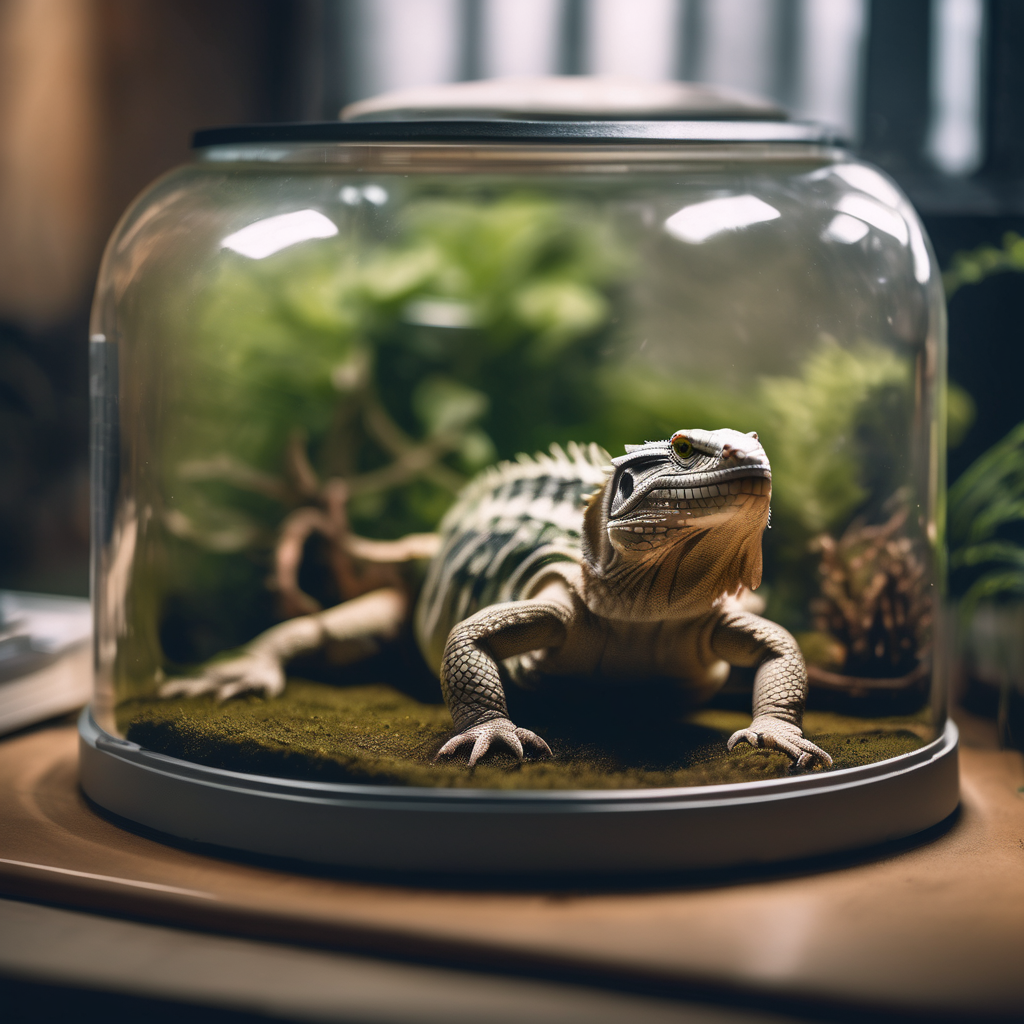
Almost every reptile burn is an equipment failure, not bad luck. A leopard gecko that sleeps pressed against an unregulated heat mat, a snake resting on a plugged-in “heat rock”, a tank bulb that slips and touches the lid — all three produce the same result: a full-thickness skin injury that takes weeks to heal and can turn septic in days. Reptiles have thin skin, a slow immune response at low body temperature, and one behavioural trait that makes burns inevitable: they cannot feel the heat building and they will not move away from it. Cold-blooded animals actively seek warmth, and a defective heat source that exceeds about 45 °C (113 °F) will hold a reptile in place while it cooks.
This guide covers how burns happen, how to tell a mild scald from a deep one, exactly what to do in the first 24 hours, and the five setup changes that eliminate the risk. It is written for lizards, snakes and chelonians, because those are the animals most often burned by heating equipment.
Quick answer: how to grade a reptile burn in 30 seconds
- Redness only, skin intact, animal behaves normally. Superficial. Remove the heat source, keep the area clean, watch for 5–7 days. No vet needed unless it worsens.
- Blistering, grey/white patches, peeling skin, or the animal avoiding the warm side. Partial-thickness. Same-day exotic vet call. Do not apply human burn creams.
- Black or charred tissue, a deep open wound, exposed bone, or toes fused together. Full-thickness. Emergency vet visit — this will need debridement, antibiotics and often surgery, and it will not heal on its own.
- Any burn on the feet, toes, vent, or eyes of a small lizard goes up one grade. Those sites are functionally critical and scar badly.
When in doubt, photograph the area with a coin beside it for scale, note the date, and send the photo to a reptile vet before you decide. Burns are the one reptile injury where a five-minute video consult is worth more than any amount of forum advice.
How reptile burns actually happen
There are five common mechanisms, and knowing which one hit your animal tells you what to fix.
1. Heat mats and heat tape with no thermostat
This is the number one cause in the hobby. A heat mat stuck to the outside of a glass tank can reach 50–60 °C at the glass surface with no control at all — far above the 30–34 °C a leopard gecko actually wants. A gecko’s ventral (belly) skin is pressed directly against that glass all night, and it has no instinct to leave because the surface is only slightly warmer than the warm hide it seeks. The result is ventral scorch: symmetrical red-to-grey damage across the belly and the underside of the thighs.
The fix is not a “low wattage” mat. It is an external thermostat with a probe on the substrate, which cuts power at a set temperature instead of hoping the wattage is right. See our full comparison in Terrarium Heat Sources Compared.
2. Heat rocks (the single worst reptile product still sold)
Hot rocks are designed to look natural while getting far too hot in localised spots. A reptile wraps around one, and because the hottest point is exactly where the belly curls, you get a deep circular burn over the abdomen within an hour or two. They are also prone to internal failure, where the casing cracks and water enters — a shock hazard on top of the burn risk. Recommendation: never use one. Overhead heat from a lamp or a ceramic emitter inside an enclosure is always safer, because it warms air and surfaces from above instead of concentrating energy in a solid object the animal hugs.
3. Basking lamps mounted too low, or one that falls
A dome fixture with a faulty clamp, or a bulb dropped into a tank “temporarily”, puts a 40 °C+ surface within reach of a climbing snake or an arboreal gecko. Burns from lamps are usually on the back, the snout or the top of the head — the classic “burnt snout” from an animal pushing against a mesh lid. Mesh lids themselves concentrate heat: an unshielded bulb over a screen produces a hot spot on the lid that a curious animal will touch.
4. Fire and secondary equipment failure
A cracked ceramic emitter, a mat under a wooden vivarium, a cheap power strip with a failed thermal cut-out. These produce enclosure fires, smoke inhalation and, occasionally, an animal burned while trying to escape. Any heater placed under a wooden structure must sit on feet with an air gap, and the tank should be on a surge-protected, rated power strip.
5. Hot water and steam
Soaks that are too hot, water straight from the tap for a tropical species, or a misting system plumbed into a hot line. Soak water should be 27–30 °C, checked with a thermometer, never with your wrist.
Why a burn is more dangerous in reptiles than in mammals
Understanding this is what stops keepers from under-reacting.
- Skin heals by shedding, and a deep wound interrupts that. Reptile epidermis repairs itself in one piece at the next shed. A burn that destroys the germinal layer means the damaged area will not heal until several shed cycles later, and it often heals as scar tissue that will never shed normally again.
- Immune function tracks temperature. White blood cell activity is poor at a reptile’s lower body temperatures. A warm animal with an identical wound will clear infection faster than a cool one. This is why the first-aid temperature target matters so much.
- Open wounds dry out. Unlike mammals, reptiles cannot bandage a limb effectively and they cannot keep a dressing clean by licking. Any exposed burn surface loses moisture continuously and can desiccate.
- Septicaemia is a real endpoint. A full-thickness burn is an open door for Aeromonas, Pseudomonas and Citrobacter — bacteria that live in substrate and water. Blister fluid in reptiles frequently contains bacteria, and a burn that looks stable on day two can crash on day five.
First aid: the first 24 hours, step by step
Do this before you worry about anything else. It takes about ten minutes and it genuinely changes outcomes.
Step 1 — Kill the heat source completely
Unplug the mat, rock or lamp. Do not just turn the thermostat down — if the thermostat is what failed, the mat may still be running. Physically disconnect the power.
Step 2 — Move the animal to a hospital enclosure
A small, bare, clean tub with paper towel, a hide on each end, and an overhead low-wattage heat source set to give a proper temperature gradient. No loose substrate, no soil, no water dish deep enough to soak a burn. Paper towel is the correct substrate while healing because you can see discharge immediately and it does not stick to the wound.
Step 3 — Cool the burn briefly, then stop
Lukewarm (not cold) water for a few minutes on a fresh superficial burn reduces pain and limits tissue damage. Do not use ice, and do not submerge the animal. Prolonged cooling of a reptile drops its body temperature and slows everything you want fast.
Step 4 — Do not apply anything you have not been told to
This is where most damage is done. Specifically:
- No antibiotic creams with painkillers. Reptile skin absorbs topical medication well, and lidocaine or hydrocortisone is toxic at reptile doses.
- No butter, no toothpaste, no aloe gel with alcohol, no hydrogen peroxide. Peroxide destroys the fragile new tissue you are trying to grow.
- No petroleum jelly or oil-based ointments on an open burn — they seal the wound and trap bacteria.
What a vet may legitimately prescribe: a dilute chlorhexidine or povidone-iodine flush, a reptile-safe silver sulfadiazine (only under veterinary direction), and systemic antibiotics injected or given orally for anything partial-thickness or deeper. Systemic antibiotics, not cream, are the mainstay for a real burn.
Step 5 — Fluids and warmth
Supportive care is the actual treatment. Keep the animal at the top of its normal range to support immune function, offer a shallow dish or a very brief daily lukewarm soak to maintain hydration, and if it is not eating, ensure it is eating and drinking. Check our guide on recognising reptile dehydration so you can catch the second problem early.
Step 6 — Photograph and log
Daily photo, same lighting, same angle. You will not remember whether the grey patch grew. Your vet will want the progression, and this log is also what tells you whether the wound is about to go systemic.
Warning signs that mean go to the vet today
Take your reptile to an exotic veterinarian the same day if you see any of the following:
- Blistering, white or grey patches, or black charred tissue — anything beyond simple redness.
- Any wound on the toes, feet, vent or eyes.
- Discharge, swelling, or a bad smell from the burn area.
- Lethargy, hiding constantly, or refusing food for more than 48 hours after the injury.
- Shaking, twitching, or an inability to right itself (see our guide on neurological signs in reptiles — these can indicate septicaemia, not a separate disease).
- Redness or swelling spreading beyond the burn outline over 24 hours.
Anything full-thickness, and any burn on a small lizard or juvenile, is an emergency. Prepare for the visit with our vet transport guide, and if you do not have a reptile vet yet, read how to choose one before the emergency, not during it.
What the vet will actually do
Knowing this helps you judge whether a visit is worth it — it is.
- Assessment under anaesthesia or sedation to determine burn depth without the animal fighting.
- Debridement of dead tissue. Burnt reptile skin does not slough cleanly, and leaving it in place is the most common reason a burn never heals.
- Culture and sensitivity if the wound is open, so the antibiotic chosen actually targets the bacteria present.
- Injectable antibiotics and fluid therapy, plus analgesia. Reptiles do feel pain, and proper pain control improves healing and appetite.
- Surgery or reconstructive closure for deep or extensive burns, sometimes with a skin graft for a large area on a valuable animal.
- Fluorescein staining of the eyes if the face or a basking lamp was involved, because corneal ulcers hide under closed eyelids.
Prevention: the five changes that make a burn nearly impossible
1. Every heat source gets an external thermostat. Every one.
Mat, tape, ceramic, bulb, deep heat projector — no exceptions. A dimming or pulse thermostat with a probe placed where the animal actually rests cuts power at your set point. Set the surface to your species’ target, then verify with a separate infrared thermometer or probe so you are never trusting the thermostat’s own display.
2. Ban hot rocks and hot caves from the enclosure. Permanently.
There is no safe wattage, no safe brand, and no safe placement. If you already own one, use it as a doorstop. Overhead heat reproduces a natural thermal gradient and cannot burn a ventral surface.
3. Guard every bulb
A ceramic socket inside a metal cage, a bulb guard on any fixture the animal can reach, and never a bulb inside a glass tank without a cage around it. Clamps get bumped; tanks get cleaned with the lid off; cats happen. A $5 guard is the cheapest insurance in the hobby.
4. Provide a thermal escape, not just a hot spot
A burn happens when the animal cannot leave. Make sure the enclosure is large enough that the cool end is genuinely cool — at least a 5 °C drop — and that the path to it is not blocked by decor. In an undersized tank, the whole floor is warm and there is nowhere to go.
5. Test the surface with your hand, then with a thermometer
Put the back of your hand on the warm surface for a full ten seconds. If you need to pull away, your reptile cannot either — and it will not. Then measure it. A target is not a feeling; it is a number you have checked.
Do not confuse a burn with these three look-alikes
- Scale rot (necrotic dermatitis / blister disease). Caused by persistently wet, dirty substrate, not heat. It presents as brown-to-red lesions on the belly and sides, often with a pinched, thickened appearance, and it comes with a history of high humidity on a damp floor. Fix the substrate and hygiene first — see our cleaning schedule. A burn can look identical once infected, which is why your vet may need to culture it.
- Dysecdysis (stuck shed) with dysecdysis-related damage. Retained shed dries and constricts toes, causing discolouration that can be mistaken for scald. The difference is that stuck shed is dry and papery, and it follows a documented humidity problem.
- Thermal-seeking behaviour gone wrong — heat stroke. If your animal has been in an overheated room or car rather than touching a hot object, the problem is systemic, not dermal. Read Heat Stroke and Overheating in Reptiles — the first aid overlaps but the priorities differ.
One more: a new animal arriving with an existing burn may have been injured in transport or at the breeder. Whatever the cause, a 30-day quarantine and settling period gives you a baseline to measure any new damage against.
Recovery timeline: what normal looks like
- Days 1–3: Redness may darken. Swelling peaks. Appetite often drops.
- Days 4–10: Superficial burns begin to look like an impending shed patch. This is a good sign.
- Weeks 2–6: The damaged area should shed off cleanly or, on a deeper wound, granulate and close from the edges. Deep wounds take multiple sheds.
- Months 2–6: Scar tissue may remain permanently pigmented differently. That is cosmetic, not a health problem — but a scar over a joint or on a toe can restrict movement.
If a wound is not visibly improving by day 10, or if it is larger than it was on day 3, escalate. Burns in reptiles plateau and then get worse; they do not slowly resolve with patience alone.
Checklist: burn-proof your enclosure today
- ☐ Every heat source is on an external thermostat with a probe on the animal’s resting surface.
- ☐ I have measured the warm surface with an infrared thermometer this week, and it reads within my species’ target range.
- ☐ There is no hot rock, hot cave, or unguarded bulb anywhere in the tank.
- ☐ The enclosure has a real gradient — the cool end is measurably at least 5 °C below the warm end.
- ☐ Substrate is dry in the cool zone and there is a hide at each end.
- ☐ The back of my hand can rest on the warm surface for ten seconds without discomfort.
- ☐ Heaters under a wooden vivarium sit on feet with an air gap, not flush against the wood.
- ☐ The power strip is surge-protected and not overloaded.
- ☐ I know where the nearest exotic vet is and have their number saved before I need it.
- ☐ I have a small hospital tub with paper towel ready for any injury.
Frequently asked questions
My gecko has a pink patch on its belly after sleeping on the mat. Is that a burn?
Probably yes, and it is most likely superficial. Measure the mat surface temperature immediately — if it is above 34 °C on the glass, that is the cause. Move the animal to a thermostat-controlled setup, keep the area clean and dry, and photograph it. If it stays pink without blistering and clears within a week, it was mild. Any blistering, greying or peeling means a vet visit.
Can I use an antibiotic cream from the pharmacy?
No. Reptile skin absorbs topicals efficiently, and human formulations contain anaesthetics, steroids or bases that are unsafe for reptiles. A reptile vet will prescribe a species-appropriate product and, for anything more than superficial, systemic antibiotics instead. Guessing here is how a small burn becomes septicaemia.
How do I treat a burn on a snake’s belly?
The same principles, with extra care because the ventral scales protect the organs directly beneath. Snake burns are usually from a mat or a heat rock and appear as symmetrical discolouration along the belly. Use a bare hospital tub with paper towel, keep the animal warm and supported, and get veterinary attention for anything beyond light redness. Do not attempt to soak a snake with an open ventral wound — you will soften the tissue and drive bacteria in.
Will the damaged skin grow back?
Superficial burns heal at the next shed, often without a trace. Partial-thickness burns heal over the following weeks with some scarring. Full-thickness burns never fully regenerate — they close with scar tissue that does not contain normal scales, which is why prevention and early veterinary debridement matter so much.
Should I keep a burnt reptile warm or cool while it heals?
Warm, at the upper end of its normal range, with a gradient still available. Immune function depends on temperature, and a cool injured reptile heals more slowly and is more prone to infection. Warm is not the same as hot — never add heat to the burn itself.
My heat mat has been running for years without a thermostat and nothing happened. Is it really that risky?
It is a matter of probability and of surface temperature. Many mats run cool enough on a given enclosure, until the ambient temperature drops, the tank is glass and cold, the mat ages, or the animal gets old and sleeps in one spot. The failure is silent and cumulative. Put a thermostat on it and you remove the variable entirely — and it pays for itself in electricity by cycling off rather than running continuously.
The bottom line
A reptile burn is a preventable injury caused by an uncontrolled heat source, and the animal will not tell you it is happening. Grade the wound honestly, remove the heat source completely, house the animal on paper towel with an overhead thermostat-controlled gradient, and call an exotic vet for anything beyond simple redness. Then fix the cause: thermostat on every heater, no hot rocks, guarded bulbs, and a real cool end.
This guide is educational and does not replace veterinary advice. Burns are potentially life-threatening injuries in reptiles — contact a qualified reptile veterinarian promptly if you suspect one.
Leave a Reply