
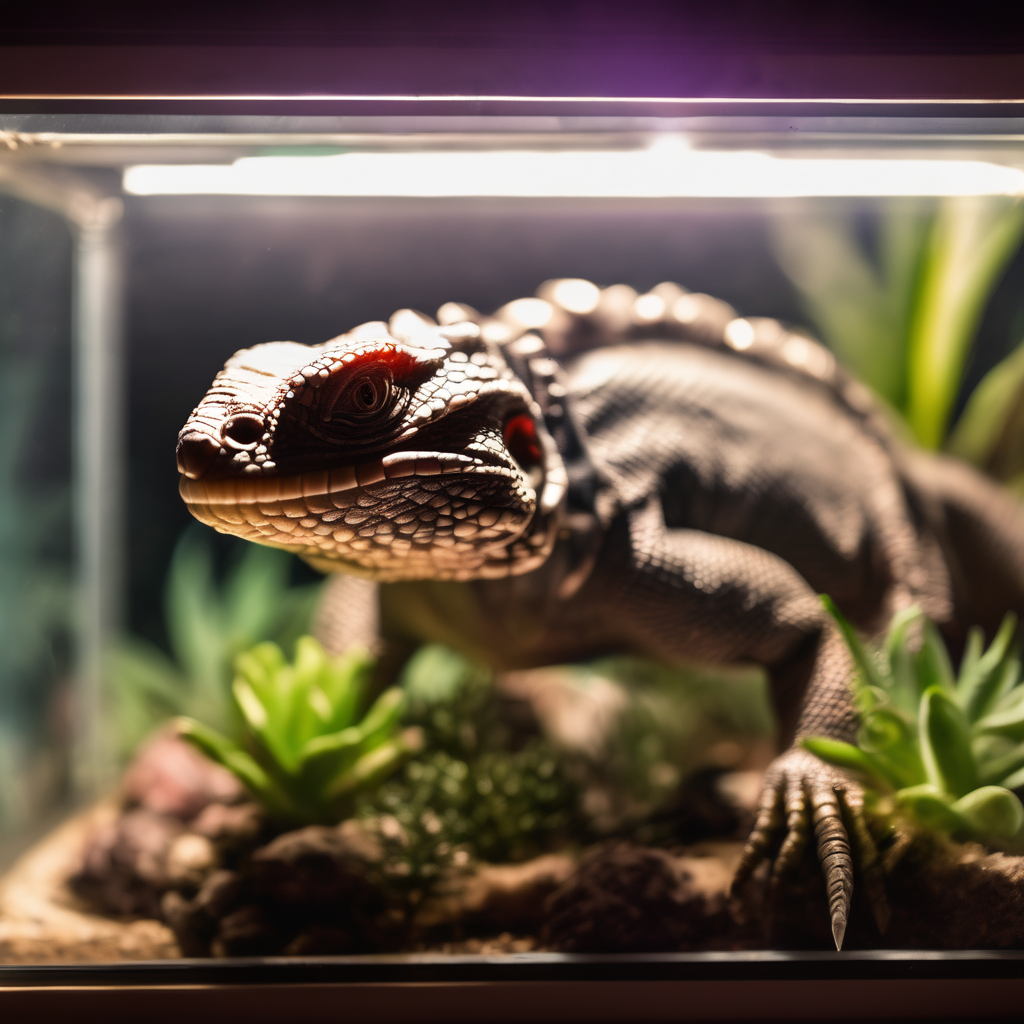
Reptiles cannot sweat, cannot pant, and cannot tell you they are too hot. Overheating is one of the fastest ways to lose a pet reptile, and it usually happens on an ordinary day: a failed thermostat, a heat bulb left on through a summer afternoon, a tank in direct sun, or a car ride with the heater running. The animal goes from active to unresponsive in under an hour, and brain damage begins within minutes at the top end.
This guide is the version you read before it happens. It covers how reptile thermoregulation actually works, the early signs of thermal stress that most keepers miss, the correct first aid sequence, and the equipment habits that make overheating essentially impossible.
Quick answer: signs of a reptile overheating
- Repeatedly moving to the coolest spot and pressing the body flat against cool surfaces.
- Open-mouth breathing, gaping, or panting (rare but serious).
- Restlessness alternating with sudden lethargy; refusal to eat.
- Bright, flushed, unusually dark or pale and patchy skin colour.
- Muscle tremors, loss of coordination, wobbling or an inability to right itself.
- Stiffness, seizure, then unresponsiveness — this is the critical stage.
- Visible distress at the hot end; digging frantically to escape the heat.
Tremors, wobbling or unresponsiveness mean you are already in the emergency window. Act immediately.
Why reptiles overheat so dangerously
Reptiles are ectotherms: their body temperature follows the environment, and they regulate it behaviourally by moving between warm and cool zones. That works beautifully inside a properly set up enclosure with a real gradient. It fails completely in three situations:
- No cool zone exists. If the whole enclosure is hot — a small tank, a hot room, a failed thermostat — the animal has nowhere to go. There is no behavioural fix available.
- Heat arrives too fast. A direct basking surface can reach lethal temperatures in minutes under full sun or a too-powerful bulb, faster than the animal can move away.
- Heat plus humidity. High humidity destroys evaporative and respiratory cooling; a hot, humid transport bag is more dangerous than a hot, dry one.
Thermal damage is cumulative. Above roughly 35 °C (95 °F) most temperate and desert reptile species begin to suffer enzyme and neurological disruption; prolonged exposure near 40 °C (104 °F) is frequently fatal even if the animal is cooled down successfully afterwards.
The gradient is the whole defence
An enclosure with a genuine temperature gradient lets a reptile solve its own thermal problems. The correct setup is a warm basking zone, a mid zone, and a cool zone where the temperature drops measurably — and the animal chooses. Without that third zone, every other safeguard is a hope rather than a plan.
The practical requirements:
- Enclosure large enough that the cool end stays cool while the hot end works — see how to set up a temperature gradient.
- Hides at both ends: a warm hide and a cool hide. An animal that feels exposed will not use the cool zone.
- A thermostat with a functioning probe controlling the heat source, not a dimmer switch you set by eye.
- A digital probe thermometer and hygrometer you actually read daily.
- A heat source with a guard, so a climbing animal cannot contact the bulb or ceramic emitter directly.
If you are unsure whether your heat source is right or overpowered, comparing heat source types is the fastest fix — and heat mats and ceramic emitters inside the enclosure are both classic overheating causes.
The causes, ranked by how often they happen
1. Thermostat failure or no thermostat at all
The single most common cause. A bulb on a timer or a dimmer with no thermostat has no upper limit. Heat mats left on continuously, in a warm room, will cook the substrate surface. Every heat source needs a thermostat rated above its wattage, with the probe placed where the animal actually sits — over the substrate under the lamp, not in the air.
2. Direct sunlight through a window
Ten minutes of direct sun through glass can turn a tank into an oven even on a mild day, and the glass traps the heat after the sun moves. Never place an enclosure in or beside a sunny window.
3. Summer and heat waves
Room temperature matters. A room at 30 °C plus a basking bulb is dangerous even if the bulb is unchanged from winter. On hot days, reduce or switch off supplementary heat and increase ventilation and cool-zone capacity. Seasonal reptile care covers the routine adjustments.
4. Transport and power cuts
A car in the sun, a bag on a radiator, an insulated box in a hot boot. In winter the opposite failure happens — a power cut with no backup heat causes dangerous cold stress. Both are covered by a simple rule: never leave a reptile in an unattended vehicle, and check temperatures in the transport container, not in the room.
5. Wrong species kept too warm on purpose
Some keepers overheat desert species by misreading care sheets, or run tropical species at desert temperatures. Check the species range rather than trusting a number you half-remember.
Reading the early signs (the part that saves animals)
Overheating is not a single dramatic event. It is a sequence, and keepers who know the sequence intervene while it is still reversible.
- Behavioural escape. The animal moves repeatedly to the cool end, presses flat against cool glass or substrate, or tries to burrow. In snakes this looks like restless searching for a cooler spot.
- Posture and colour change. In heat, many species pale or flush; chameleons and some lizards go unusually bright. The skin may look sunburned or mottled.
- Respiratory effort. Open-mouth breathing, gaping, throat pulsing. This is a genuine alarm sign in reptiles and is easy to mistake for a respiratory infection — see respiratory infections for the differential.
- Appetite loss and restlessness. Refusing food for a day or two with no other explanation, especially in warm weather.
- Neurological signs. Muscle tremors, a wobbly gait, head tilt, inability to right itself, seizure. This is critical overheating. Nerve and kidney damage is already occurring.
- Collapse and unresponsiveness. Floppy, limp, cool or hot to the touch, eyes closed. Minutes matter from here.
First aid: the correct ten minutes
Work in this order, calmly and quickly:
- Remove the heat source. Turn off the bulb, unplug the heat mat, move the enclosure out of the sun. Do this first — everything else is pointless while heat is still arriving.
- Check the temperature, then move the animal to a mild, room-temperature space. A well-ventilated, dim, room-temperature (20–24 °C / 68–75 °F) container. Not cold, not a fridge, not an ice bath.
- Offer a shallow lukewarm soak. Water at roughly 26–28 °C (79–82 °F), depth to mid-body, 10–15 minutes, supervised. This is the most effective practical cooling method. Do not submerge the head. Skip if the animal is unresponsive or seizuring.
- Improve air movement. A fan across the room, not directly on the animal, lowers ambient temperature safely.
- Hydration. A few drops of unflavoured electrolyte solution or plain water at the lip, or by the vet via injection. Do not force water into the mouth of an unresponsive animal.
- Call the exotic vet. Go for tremors, wobbling, open-mouth breathing, seizure, or unresponsiveness. Overheating causes kidney damage that is invisible for 24–72 hours and often fatal afterwards — a vet can give fluids and assess organ function. Find yours in advance via how to choose a reptile vet.
- Keep the animal dark, quiet and undisturbed. Handling and observation stress add heat load. Once cooling has started, leave them alone except for monitoring.
If the animal recovers, it still needs veterinary assessment: heat stress commonly causes delayed kidney failure. Expect a check of hydration status and blood work in the following days.
Prevention: the setup that makes it impossible
- Thermostat on every heat source, probe on the substrate. This is non-negotiable. Set the maximum at the top of the species’ range, never above it, and test the thermostat monthly by turning the dial up and confirming the bulb switches off.
- Guarded heat sources. A bulb guard or a heat source the animal cannot physically touch. Burn injuries and overheating often come from the same unprotected fixture.
- Two hides, both ends. A cool hide is what makes the gradient usable. A single central hide forces the animal to choose between security and temperature.
- Never in direct sun. Not through a window, not on a sunny balcony, not “just for an hour”.
- Daily temperature reading. Thirty seconds with a probe thermometer each morning, logged. Two thermometers — one at the hot end, one at the cool end — cost almost nothing and catch failures the day they start.
- Summer protocol. On forecast hot days: reduce heat source hours, increase ventilation, add a cool-zone water dish, and verify the cool end before you leave the house.
- Backup heat for winter. Power cut plus cold is the mirror-image emergency. A battery-powered or generator-backed heat plan matters for species that cannot tolerate cold.
- Watch the humidity too. Heat plus high humidity is worse than heat alone; humidity control and temperature are one problem, not two.
Warning signs that mean emergency, not monitoring
- Muscle tremors, twitching or seizure.
- Wobbling, inability to right itself, head tilt.
- Open-mouth breathing or gaping.
- Limp, unresponsive, eyes closed, not reacting to touch.
- Skin that looks burned, blistered or peeling.
- Disorientation after being removed from a hot environment.
Cool gradually, soak in lukewarm water if the animal is alert, and get to an exotic vet — even if they appear to recover.
Checklist: before every hot day
- Thermostat tested and probe over the substrate, not in air.
- Cool-end temperature measured and within species range.
- Both hides in place; cool hide genuinely cool.
- Heat source guarded and physically out of reach.
- Enclosure out of all direct sunlight.
- Ventilation increased; water dish available in the cool zone.
- Heat source hours reduced if room temperature is high.
- Exotic vet’s number saved where you can find it fast.
- Transport plan that keeps the container at 20–24 °C, not in a hot car.
Frequently asked questions
What temperature is too hot for a reptile?
It is species-specific, but most commonly kept lizards and snakes are in trouble above roughly 35 °C (95 °F) sustained, and in danger near 40 °C (104 °F). Always check the specific range for your species rather than a general number.
Can a reptile recover from heat stroke?
If cooled early and carefully, many recover from the immediate crisis. But heat stress frequently causes delayed kidney and neurological damage, so a vet check with blood work in the following days is essential even after an apparent full recovery.
Should I put my overheated lizard in the fridge?
No. Sudden cold shocks an ectotherm and can be fatal. Use a mild, room-temperature environment, air movement, and a lukewarm shallow soak if the animal is alert. Cooling must be gradual.
My reptile is gaping — is it overheating or an infection?
Both can cause open-mouth breathing. Check the temperature first: if the enclosure is above range, treat overheating immediately. If temperatures are correct and gaping persists, a respiratory infection is the likely cause and needs a vet. When in doubt, check the thermometer before anything else.
Is a heat mat or ceramic emitter safer than a bulb?
Not inherently — both overheat enclosures when they lack a thermostat. Heat mats left on continuously in a warm room and unguarded ceramic emitters are both common causes. Any heat source is only as safe as its thermostat and probe placement.
How do I stop this happening while I am at work?
Thermostat with the probe over the substrate, guarded heat source, a genuine cool zone with a hide, and the enclosure out of the sun. Those four things together mean a bulb failure on its own cannot cook the animal. A remote temperature alarm is a cheap extra safeguard.
The bottom line
Overheating is a husbandry failure, not bad luck, and it is the one emergency that good equipment makes almost impossible. A thermostat on every heat source with the probe where the animal sits, a real cool zone with its own hide, a guarded bulb, no direct sun, and thirty seconds of temperature reading each morning — that is the whole prevention strategy. If you do see tremors, gaping or wobbling: kill the heat, cool gradually, soak in lukewarm water, and get to a vet.
This guide is educational and does not replace veterinary advice. Suspected overheating with neurological signs is an emergency — contact a qualified reptile veterinarian immediately.
Leave a Reply