
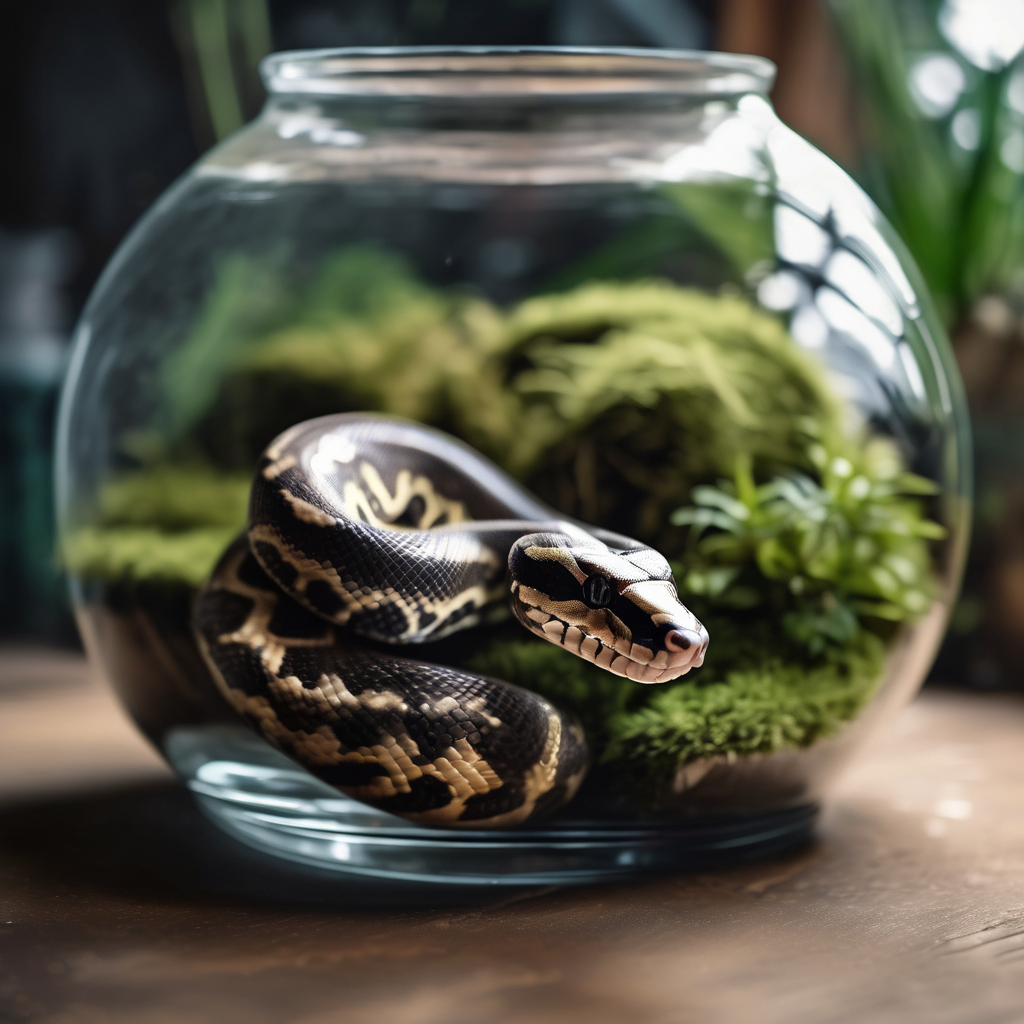
Dehydration is one of the most common ways a pet snake gets into serious trouble, and it is almost always preventable. A dehydrated snake may look “fine” from a distance for days — the creases in its skin, the dull eyes, the wrinkled neck are easy to miss on an animal that spends most of its life half-hidden in a hide box. Then it stops eating, sheds badly, and ends up in the exotic vet with stuck eyecaps.
This guide shows you how to read a snake’s hydration from its body, how to fix it safely at home, and where the line is between a soaked-and-better snake and one that needs a vet the same day. It is part of the small pet reptiles series, and it pairs with our humidity control guide, our soaking guide and our stuck-shed guide.
Why snakes dehydrate faster than you would expect
Snakes are built for dry environments in one specific way: they lose very little water through their skin. Unlike amphibians, which absorb and lose water through the skin continuously, a snake’s keratin scales are close to waterproof. That is an advantage in the desert — and it becomes a problem the moment their enclosure runs dry, because a snake has almost no way to top itself up except by drinking from a bowl or absorbing moisture in a humid hide.
The other half of the problem is that a snake’s kidneys are not like a mammal’s. They cannot produce concentrated urine to conserve water, so a snake that is not drinking steadily starts losing condition quickly. Add a heat source that is running hotter than the species needs, and the animal is losing water to respiration all day with no way to catch up.
The practical result: dehydration in a snake is rarely a sudden event. It is a slow drift over one to three weeks of slightly-too-dry air, a water bowl that is too small or awkward to reach, or a heat gradient that quietly crept up after a bulb change.
The 8 visible signs your snake is dehydrated
Check these in order — the first four are the ones most keepers notice, and the last four are what shows up once the problem has been running for a while.
- Wrinkled or creased skin. Lift the snake gently and look at the sides of the neck and the skin between the scales. A hydrated snake looks smooth and tight, like a polished balloon. A dehydrated one looks loose and folded, especially over the spine and around the neck.
- Sunken, dull eyes. The eyes sit slightly deeper in the head and lose their clear, glassy look. In severe cases they look recessed and the skin around them is tight.
- Ridges along the back and sides. Run a dry finger gently down the back. You will feel distinct raised ridges rather than a smooth curve — the classic “pinched” look along the spine.
- Stuck or incomplete shed. Dysecdysis is the number one visible consequence. A snake that cannot get a shed off in one piece, especially with eyecaps and tail tip retained, is telling you something about the humidity and the water it has had access to over the past weeks.
- Dry, sticky saliva and stringy mouth lining. The mouth looks tacky instead of wet, and the tongue flicks less readily. Healthy mouth rot and dehydration look similar — if there is redness, swelling, or cottage-cheese-like discharge, treat it as mouth rot and see a vet, not as a hydration problem.
- Poor muscle tone and weight loss. The body feels thinner and the snake is less active, moves sluggishly when handled, and may rest with its head lower than usual.
- Hard, dry urates. White urates in the droppings that are chalky and solid rather than soft indicate the animal is conserving water hard. This is a later sign and deserves a vet visit if it persists after you have corrected the enclosure.
- Refusing food. A snake that has eaten frozen-thawed rodents happily for months and then refuses two or three scheduled feeds is very often dehydrated rather than sick — check hydration before you assume illness, and check our refused feeds guide if you keep ball pythons.
The skin-tenting test: the one check that settles it
There is a simple field test used by keepers and vets alike. Gently pinch a fold of skin on the snake’s side or lower back and let go. Watch how the skin returns:
- Snaps back instantly — well hydrated.
- Returns slowly, over a second or two — mildly dehydrated. Fix the enclosure today.
- Stays tented for several seconds — significantly dehydrated. Start rehydration now and call an exotic vet if it does not improve within 24 hours.
Be gentle and be quick — a stressed snake will tighten its muscles and give a misleading result. Do this with the snake supported, not dangling, and stop immediately if the animal reacts defensively.
The 6 most common causes (in the order they actually happen)
- Humidity below the species range. A ball python needs 55–65%, a corn snake 40–50%, a green tree python 60–80%. A hygrometer reading below the bottom of that range for more than a couple of days is enough to start the drift. Check your gauge against a known-good reference — cheap dial hygrometers drift badly, and our thermometer and hygrometer guide covers calibration.
- No usable water bowl, or the wrong one. A heavy ceramic bowl that is too deep for a young snake, or a small dish the snake cannot get its whole head into, means the animal physically cannot drink enough. Give a bowl big enough to soak the lower body, and change the water daily.
- A humid hide that is not actually humid. A plastic hide stuffed with damp moss is the single most effective dehydration fixer for a snake — but only if the moss is genuinely damp and you check it twice a week. Dry moss is worse than no hide.
- Heat running too hot. A basking spot that has drifted 3–4 °C above target, or a heat mat with no thermostat, dries the air and increases respiratory water loss. Always run heat sources on a thermostat with a probe.
- Substrate holding no moisture. Dry aspen and plain newspaper hold almost nothing. Coconut-fiber based mixes and soil blends hold moisture and buffer humidity swings. See our substrate guide.
- Underlying illness. A respiratory infection, parasites, or a mouth infection can all cause a snake to stop drinking. If rehydration does not change the picture within two to three days, the dehydration is a symptom, not the disease — that is a vet job.
How to rehydrate a snake safely, step by step
Work through these in order. Most mild cases are fixed by step 3 within a week.
- Fix the enclosure first. Raise humidity into the middle of the species range, verify the warm-side and cool-side temperatures against your species profile, and confirm the heat source is on a thermostat. Rehydrating a snake while its tank is still too hot just loses the water again overnight.
- Provide a proper water bowl. Ceramic or heavy plastic, wide enough for the snake to coil in loosely, filled to roughly a third of the snake’s body depth. Change it daily — snakes routinely defecate in their water and will not drink dirty water.
- Make a humid hide. A cave-style hide with a small entrance, lined with damp (not dripping) sphagnum moss or coconut fiber, kept in the warm half of the tank. Check and re-dampen twice a week. For many snakes this alone resolves mild dehydration within days.
- Soak correctly. If the snake is still showing creases after 48 hours, give a 15–20 minute soak in lukewarm water (roughly 27–29 °C), shallow enough that the snake can hold its head out comfortably. Never leave the snake unattended, and never use water deeper than the animal can comfortably float in. Full protocol and the cases where soaking does harm are in our reptile soaking guide.
- Support moisture with misting. A single morning misting of the enclosure walls (not directly on the snake) raises ambient humidity for hours and gives the animal droplets to drink. Automated misting systems are covered in our automation guide.
- Consider an electrolyte solution — vet-guided only. Mild unflavored reptile electrolyte solutions exist, but plain clean water is the correct default for a snake you are treating at home. Do not give sports drinks, sugar solutions, or vitamin water: a snake’s kidneys handle concentrated sugar poorly, and a DIY mix can do real harm.
What NOT to do
- Never syringe water into a snake’s mouth. Aspiration pneumonia is a real and often fatal risk. Snakes drink by submerging the head and using throat muscles — they are not designed to swallow on command.
- Never force-feed a dehydrated snake. Digesting a rodent takes water. Feeding a snake that cannot drink properly turns a hydration problem into a regurgitation and a possible impaction.
- Do not soak in hot water to “warm it up”. Water above 32 °C can scald a reptile whose circulation is already compromised. Lukewarm only, and test it on your wrist.
- Do not crank humidity to 80% overnight. Rapid swings breed scale rot and respiratory problems as readily as dryness does. Raise humidity gradually over two or three days.
Warning signs that need a vet, not home treatment
Take the snake to an exotic veterinarian (not just any small-animal vet — see how to choose a reptile vet) the same day if you see any of these:
- Skin that stays tented for several seconds after 24 hours of soaking and humidity correction.
- Deeply sunken eyes that do not improve within 24–48 hours.
- No urates at all in the droppings for more than 48 hours, or hard chalky urates persisting after correction.
- Open-mouth breathing, bubbles from the nostrils, or wheezing — possible respiratory infection.
- Regurgitation of a meal, or a meal that was swallowed and comes back up hours later.
- Neurological signs: head tremors, stargazing, inability to right itself, uncoordinated movement.
- Weight loss of more than about 10% of body weight over two weeks, or a visibly prominent spine.
For transport, keep the snake in a secure, ventilated container at the lower end of its safe temperature range, bring a photo of the enclosure setup and your recent temperature and humidity readings, and pack a recent fecal sample if you have one. Our vet visit guide walks through the whole appointment.
Dehydration prevention checklist
Tape this to the side of the tank and run it once a week:
- Water bowl is present, heavy, large enough to soak in, and filled with clean water (changed daily).
- Humid hide exists in the warm half of the tank, and its moss is genuinely damp.
- Hygrometer reads inside the species range at both the warm and cool ends.
- Thermometer shows a proper gradient — no hot spot above the species maximum, no cool side below the minimum.
- Every heat source runs through a thermostat with a working probe.
- Substrate retains moisture (coconut fiber or soil blend), and spot-clean dry areas weekly.
- Daily visual check: eyes clear, skin smooth, no new creases, snake active at its normal time.
- Weekly weigh-in on a kitchen scale — a 5% drop in two weeks is an early warning, before anything is visible.
Frequently asked questions
How long can a snake go without water?
Most commonly kept species can survive several days to a week without drinking, but condition starts declining well before that. Do not use this as a reason to delay — treat any visible creasing as an active problem, and remember that a snake that is also off food or in shed has far less margin.
Can a snake absorb water through its skin?
Only marginally. Snakes can take up a small amount of moisture through the skin and, in some species, through the vent, which is why a humid hide helps so much — but they are nowhere near as capable of this as amphibians. Drinking from a bowl remains the main route.
Is a wrinkled neck always dehydration?
Usually, yes — but an underweight snake and a snake that has just eaten a large meal can also show loose skin. Check for other signs (dull eyes, stuck shed, ridged back, poor appetite) before you conclude, and re-check after the next shed. If the creasing persists with correct humidity for more than a few days, treat it as dehydration.
My snake soaked for 20 minutes and drank nothing. Did it work?
Many snakes will not drink during a supervised soak — they drink at night, undisturbed. The soak still helps by hydrating the skin and humid hide. Give it two to three days of corrected humidity plus a damp humid hide, and judge by the skin-tenting test rather than by watching it drink.
Does misting alone fix a dehydrated snake?
It helps a lot but rarely fully fixes a moderate case. Misting raises ambient humidity and leaves drinkable droplets on leaves and walls, which many arboreal species use. Combine it with a proper water bowl and a damp humid hide, and re-check the skin after three days.
Should I stop feeding while I treat dehydration?
If the snake is mildly dehydrated, one scheduled feed can usually wait — skip it and offer food again after three or four days of correction. If the snake is significantly dehydrated (persistent tenting, sunken eyes), skip feeding entirely until the vet or the skin test says the animal is rehydrated. Digestion costs water the snake does not have.
The bottom line
A snake’s hydration is visible in its skin, its eyes, its sheds and its appetite — you just have to look on purpose, once a day. Get humidity and temperature into range, provide a bowl the snake can actually soak in, keep a genuinely damp hide, and re-check with the skin-tenting test. Do that and dehydration almost never becomes a vet emergency.
Leave a Reply