
Here is the part most parasite articles skip: a low number of internal parasites is normal in reptiles, and chasing every last one with repeated dewormers is how keepers end up with a sicker animal than they started with. The goal is not a parasite-free reptile — it is a reptile whose parasite load is low enough that it thrives. Knowing the difference between a background load and a genuine problem is the single most useful thing a keeper can learn here.
This guide covers which parasites actually matter in lizards, snakes and chelonians, the signs that warrant a fecal test, how that test works, what dewormers do and do not do, and the hygiene and quarantine steps that stop the cycle. It is written for keepers who want to act on evidence rather than on a hunch.
Why “some parasites” is normal — and when it is not
Wild reptiles carry parasites continuously and manage fine. Captive reptiles, kept singly, on clean substrate, with controlled temperature and good nutrition, usually carry fewer than their wild counterparts. When a keeper finds parasites on a fecal test, the correct question is not “how do I eliminate them” but “is this load causing my animal a problem?”.
Three factors decide that, and all three point to husbandry before medication:
- Temperature. A reptile kept too cool cannot mount an effective immune response, cannot digest properly, and becomes steadily more susceptible to parasite overgrowth. Correct heat is parasite control. See the guides on thermostats and temperature gradients before you reach for any drug.
- Stress. Recent shipping, a new enclosure, overcrowding, wrong humidity, or a dominant tankmate all raise cortisol and suppress immunity. A new arrival with a positive fecal is usually a stressed animal, not a catastrophically infected one.
- Nutrition. A reptile on a poor diet, with no UVB where the species needs it, or deficient in vitamin A, is more vulnerable. Gut health starts with properly gut-loaded and dusted feeders.
Fix those three and a surprising proportion of mild parasite situations resolve or stabilise without treatment. Ignore them and any dewormer you give is a temporary patch.
The parasites that actually matter
Nematodes (roundworms, pinworms, hookworms, ascarids)
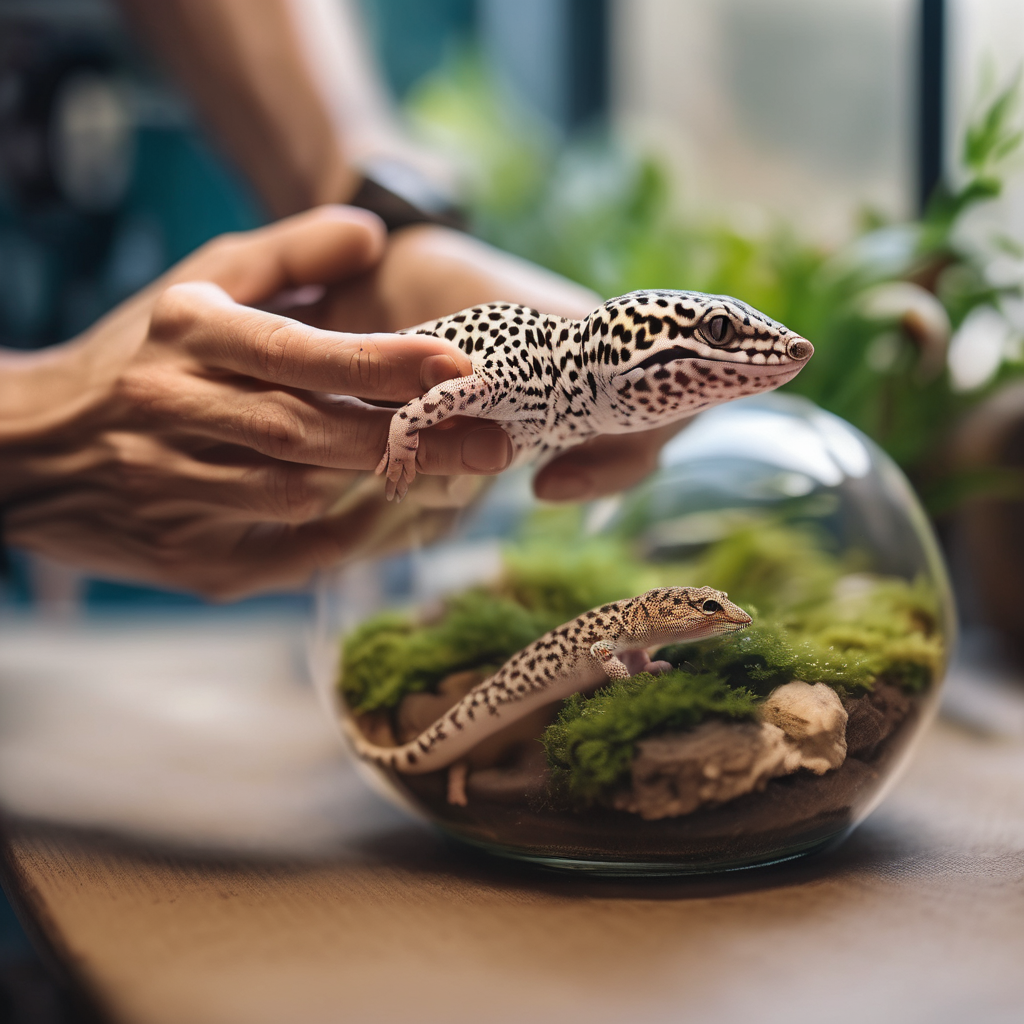
The most commonly detected group. Pinworms in particular are near-universal in captive-bred leopard geckos and are frequently an incidental finding rather than a disease. Heavy burdens, however, cause weight loss despite a good appetite, poor growth in juveniles, and intermittent diarrhoea. Hookworms and ascarids are more pathogenic — they feed on blood and tissue, and a heavy load causes genuine anaemia.
Protozoa (coccidia, flagellates, Entamoeba, Cryptosporidium)
Single-celled organisms, and the group where species identification matters enormously.
- Coccidia are common and often benign at low numbers. High loads cause weight loss, poor thriving, and diarrhoea, especially in young or stressed animals. They are not treated with the same drugs as worms, which is precisely why guessing is dangerous.
- Flagellates such as Trichomonas and Hexamita cause chronic diarrhoea, weight loss and dehydration. Common in snakes and chelonians.
- Cryptosporidium (the species complex affecting lizards, colloquially “Crypto”) is the serious one: zoonotic-capable, difficult to clear, causes chronic wasting, regurgitation and a characteristic mid-body swelling in leopard geckos. There is no reliably effective treatment, and it is a strong argument for testing any new gecko before it joins a collection.
Trematodes and cestodes (flukes and tapeworms)
Less common, more often seen in wild-caught animals or those fed wild-caught prey. Flukes can cause serious internal damage and are a strong reason never to feed wild-caught insects or vertebrates to a pet reptile. Tapeworms require an intermediate host, so they usually indicate a prey or environment source that needs identifying.
Pentastomids (tongue worms)
Respiratory parasites of snakes, almost always from wild-caught animals. Present as respiratory signs — open-mouth breathing, nasal discharge, wheeze — and overlap heavily with the presentation of respiratory infection, which is exactly why a vet needs to distinguish them.
Signs that warrant a fecal test
No single sign proves parasites. What matters is a pattern, and a pattern in an animal whose husbandry is already correct.
- Weight loss with a normal or increased appetite. The classic and most reliable sign. Weigh your reptile monthly on a small digital scale and keep the numbers — a 10% drop over a month is significant, and most keepers only notice it by eye once it is far advanced.
- Poor growth in juveniles, or an animal that simply never gains the way its siblings do.
- Chronic or intermittent diarrhoea, unusually foul-smelling droppings, or undigested food in the faeces.
- Regurgitation days after a meal, repeatedly.
- Lethargy and hiding more than usual, particularly with a poor feeding response.
- Visible worms in a fresh dropping or, in severe cases, at the vent. Dramatic, uncommon, and a same-week vet visit.
- Pale mucous membranes (inside the mouth), suggesting anaemia from a blood-feeding parasite load.
- A new arrival that has not been tested — which is a reason to test, not a sign.
See a reptile vet promptly if you notice: rapid weight loss over days rather than weeks; blood in the droppings or at the vent; repeated regurgitation of undigested prey; a visibly swollen or distended abdomen; open-mouth breathing or wheezing alongside gut signs; a prolapse from the vent; or an animal that has become weak, cold-seeking and unresponsive. Gut parasites and more urgent problems — obstruction, organ disease, systemic infection — look similar from the outside. The general warning-sign list in how to tell if your reptile is sick is the right place to start triage.
The fecal test: the only test that tells you what to do
Reptile medicine has no reliable blood test that says “worms”. What exists is a fecal examination, and it is cheap, non-invasive, and decisive.
Collecting a usable sample
- Fresh is everything. Parasite eggs and oocysts degrade quickly — aim for a sample less than 12 hours old, and refrigerate (do not freeze) if there will be a delay.
- Do not scoop substrate. Feces contaminated with sand, soil or bark makes the slide unreadable. If your animal is on loose substrate, collect from a soak water container or move it to paper towel for a day or two.
- A sample the size of a pea is plenty. Bring the urate portion too — some organisms show up there.
- Transport sealed in a clean, leak-proof container or a clean plastic bag inside a second bag. Bring it to the appointment warm, with the animal, and tell the receptionist it is a fecal sample so it goes to the lab and not on a counter.
- Ask for the sample to be examined the same day, and ask for a direct smear and a flotation if the vet does not specify.
What the vet does
- Direct smear: a thin preparation examined immediately. Excellent for motile protozoa, which die and disappear in flotation solution. This is the test that catches flagellates.
- Flotation: the sample is mixed in a solution of specific gravity that floats parasite eggs to the surface, where they collect on a coverslip. This is what finds nematode eggs and coccidia oocysts, and lets the vet count how many are present per field.
- Species-level identification where possible — necessary, because fenbendazole and ivermectin do nothing for coccidia, and ivermectin is toxic in chelonians and some skinks.
- In cases of chronic wasting, additional workup: blood chemistry, radiographs, and sometimes a PCR test or specialized stain for Cryptosporidium.
Bring a photo of the animal, its weight history, its enclosure temperatures and its diet. A vet who knows your leopard gecko is at 32°C on the warm side and eating four dusted crickets a day can interpret the result far better than one working blind. If you have not chosen a vet yet, how to choose a vet for a reptile or exotic pet and how to prepare for the visit cover the groundwork.
Deworming: what works, what does not, what is dangerous
Never deworm blind
This is the single most important line in this guide. Dewormers are species-specific against parasite groups. Giving a nematode drug for a protozoal infection does nothing except stress the animal and delay the correct treatment. Giving ivermectin to a tortoise can kill it. Giving fenbendazole repeatedly to a debilitated reptile has been associated with bone marrow suppression. None of these outcomes are hypothetical — they are the standard reasons reptile vets refuse to prescribe without a fecal.
The drugs a vet may use
- Fenbendazole — the workhorse for nematodes, given orally, usually as a short course repeated after two to four weeks to catch larvae that hatched after the first dose. Requires veterinary dosing by weight; overdose causes neurological signs and lethargy.
- Pyrantel pamoate — another nematode option, generally well tolerated.
- Ivermectin — effective but contraindicated in chelonians and several skink species, where it crosses into the central nervous system and is frequently fatal. Never use it on a turtle or tortoise, and never use a livestock formulation.
- Metronidazole — for flagellates and some anaerobic protozoa.
- Toltrazuril or ponazuril — the standard treatments for coccidia, and useless against worms. This mismatch is why identification matters.
- Praziquantel — for cestodes and trematodes.
Note that every one of these is a prescription medication dosed by weight, and that dosing an animal that is dehydrated, cold or severely debilitated is more likely to harm it. Vets commonly stabilise the animal first and dose second.
What does not work
- Store-bought reptile “dewormer” or parasite drops. Unregulated, unverified, frequently underdosed, and a common cause of a keeper believing a problem is handled while it progresses.
- Livestock or horse dewormers scaled down. Wrong concentration, wrong formulation, and in injectable forms an overdose risk. Some livestock preparations contain compounds that are toxic to reptiles.
- Prophylactic deworming on a schedule “just in case”. It selects for resistant parasites, stresses the animal, and masks the husbandry problem that made the parasite load matter.
- Feeding pumpkin seeds, garlic, or other folk remedies. No evidence in reptiles. Garlic can cause anaemia in many species.
If treatment involves oral dosing at home, the guide to giving a reptile medication covers technique, positioning and how to avoid aspiration — the most common way home dosing goes wrong.
Breaking the reinfestation cycle
Treating the animal without treating the environment is the most common reason a parasite problem comes straight back. Reptiles re-ingest eggs from substrate, water dishes, hides and décor constantly.
- Remove and replace disposable substrate (paper towel, newspaper) at the time of treatment, then daily until the follow-up fecal is clean.
- Steam-clean or bake non-porous décor. Soak hard plastic and ceramic items in a dilute reptile-safe disinfectant at the correct contact time — read the label, because most products need 10 minutes of wet contact, not a wipe.
- Discard porous wood, cork bark and live soil that cannot be reliably disinfected in a confirmed parasite case. This feels wasteful and it is the reason the problem ends.
- Disinfect water and food dishes daily during treatment, and change them between animals — shared dishes are a direct transmission route.
- Wash hands thoroughly after handling any reptile, and never clean enclosure items in a kitchen sink. Salmonella is a separate and more common zoonotic risk than parasites, and it travels the same route.
- Do not feed wild-caught prey. Wild insects and vertebrates are the main source of flukes, pentastomids and unusual protozoa. Captive-bred feeders, or a home colony you control, remove that risk entirely.
- Quarantine every new arrival — 60 to 90 days for reptiles, on paper towel, with a fecal test at intake and again before it joins the collection. The details are in the first 30 days with a new reptile.
- Follow-up fecal two to four weeks after treatment. This is the step keepers skip. Treatment without a recheck leaves you guessing whether it worked.
Prevention checklist
- Weigh monthly on a digital scale and record it. Weight is the earliest and most objective parasite signal you have.
- Verify temperatures weekly with an infrared thermometer — surface temperature, not just air temperature. Correct heat is immune support.
- Annual or biennial fecal for every healthy reptile, and one at intake for every new arrival.
- 60-90 day quarantine on paper towel for anything new, tested twice.
- Captive-bred feeders only, gut-loaded and appropriately dusted.
- No shared dishes, hides or handling between reptiles without washing hands and tools in between.
- Daily spot-clean, scheduled full clean, and disinfectant used at the correct contact time rather than sprayed and wiped.
- Never deworm blind — fecal first, targeted drug second, recheck third.
- Know the zoonotic basics: hand-washing, no kitchen-sink cleaning, supervision of children and immunocompromised handlers.
FAQ
My leopard gecko has pinworms. Do I need to treat?
Not automatically. Pinworms are extremely common in captive-bred leopard geckos and frequently cause no clinical signs. The decision rests on the animal, not the lab report: if it is at a stable weight, eating well, active and producing normal droppings, most reptile vets will recommend monitoring with a recheck rather than treating. If it is losing weight, thriving poorly or has diarrhoea, a targeted fenbendazole course prescribed by a vet is appropriate.
How often should I deworm my reptile?
Only when a fecal test and a vet say so. Scheduled prophylactic deworming is discouraged in reptile medicine: it stresses the animal, can suppress bone marrow with repeated fenbendazole, and encourages resistance. The correct rhythm is test, treat if indicated, recheck in two to four weeks, then test annually.
Can I get parasites from my reptile?
Some are transmissible or pose a risk — Salmonella is the most common and most important, and Cryptosporidium in lizards has zoonotic potential. The practical rules are the same for all of them: wash hands after every handling session, never clean enclosure items in the kitchen, keep reptiles away from food preparation areas, and take extra care with young children, elderly handlers and anyone immunocompromised.
Can I collect a fecal sample from the soak water?
Yes, and it is often the cleanest option for an animal on loose substrate. Soak the reptile as you normally would, then skim the sample from the water with a clean spoon into a sealed container. Keep it cool and get it to the vet the same day. Tell them it came from soak water — diluted samples are still readable, but the vet should know.
My reptile is losing weight but the fecal came back negative. Now what?
A negative fecal does not rule out parasites — shedding is intermittent, and a single sample can miss a low or intermittent burden. Two or three samples on separate days materially improve detection. But weight loss with a negative fecal also points elsewhere: incorrect temperatures, inadequate UVB for the species, a dietary deficiency such as the problem described in metabolic bone disease, organ disease, or a Cryptosporidium infection that needs specific testing. That is a full veterinary workup, not another fecal.
Do I need to treat the whole collection if one animal is positive?
Have every animal tested, but do not treat them all on the assumption they are positive. Shared substrate, shared dishes and shared handling tools mean transmission is likely, and separate testing keeps you from over-dosing animals that are genuinely clear — which matters most for small juveniles and debilitated adults, where dosing carries the most risk.
Is diatomaceous earth safe for reptile enclosures?
Avoid it. Inhaled diatomaceous earth is a respiratory irritant, and reptiles have far more delicate lungs than mammals. It is also of questionable efficacy against internal parasites, since it works as a physical abrasive on insects with exoskeletons — a mechanism that has nothing to do with a worm inside a gut. There are no good reasons to use it and several good reasons not to.
The bottom line
Parasites are a husbandry signal before they are a medical one. A low load in a warm, well-fed, low-stress reptile is usually a non-event. The same load in a cool, stressed, underfed animal is the start of a real problem. That is why the sequence is always: fix the heat and the diet, get a fecal, treat only what the test identifies, recheck, and clean the enclosure as thoroughly as you treat the animal.
Weigh your reptiles monthly, test new arrivals before they join the collection, and never deworm blind. Do those three things and internal parasites stay a manageable footnote rather than an emergency.
Leave a Reply