
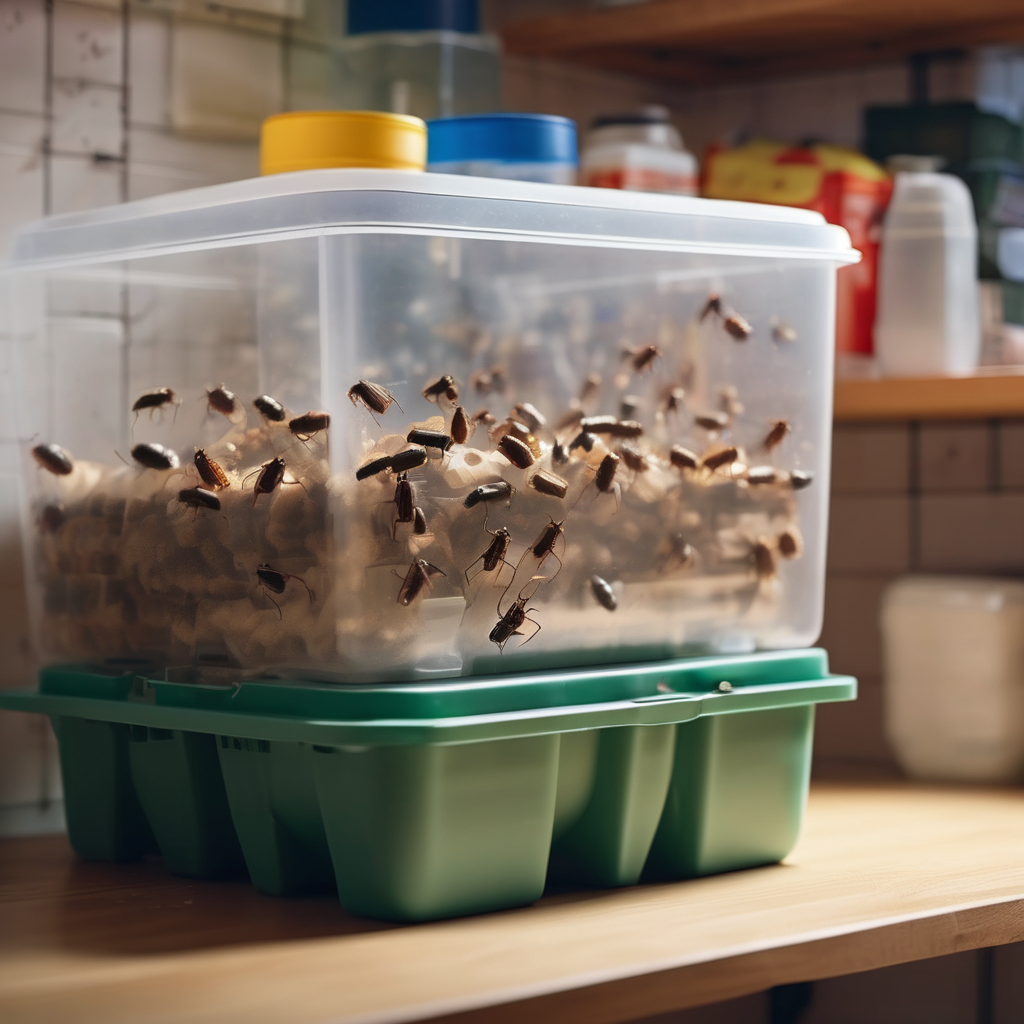
If you keep an insect-eating reptile, amphibians, or a small pet, you already know the arithmetic. A leopard gecko eats eight to twelve appropriately sized insects every other day. That is roughly 150 to 180 insects a month, every month, for the twenty years the animal may live. At pet-shop prices, that is a permanent line item, and it comes with a second cost nobody warns you about: shop-bought crickets have a mortality rate that runs anywhere from five to fifteen percent a week, so a meaningful slice of what you pay for dies in the bag or in the tank before anything eats it. Breeding your own feeders does not eliminate the work, but it converts a recurring cost into a weekly fifteen-minute chore and gives you direct control over what the insects eat, which is the single biggest lever you have on your reptile’s nutrition.
This guide covers the three species worth breeding at home, how to set up each colony, how many colonies a single animal actually needs, how to feed the colony so the feeders carry real nutrition into your pet, and the warning signs that a colony is collapsing weeks before it stops producing. For the nutrient side of the equation, read our complete gut-loading and dusting guide alongside this one.
Why breed at all, and which species are worth it
Breeding feeders is not free. It costs shelf space, a heat source, a weekly feeding and cleaning routine, and a smell you will notice. It is worth doing when at least one of these is true:
- You keep multiple insect-eaters. One leopard gecko can be fed from a modest colony, but a bearded dragon, two geckos, and a chameleon together will empty a shop bag every three days. Past two or three animals, breeding pays for itself in months.
- You keep a picky or specialized eater. Dubia roaches, silkworms, or particular cricket sizes are often out of stock locally, and a colony removes the supply risk entirely.
- Nutrition matters for the species. Animals prone to metabolic bone disease live or die on feeder quality. Home-bred insects fed a proper diet carry measurably more calcium and vitamin A than shop insects that have spent a week in a cup of potato.
- You breed reptiles yourself. Raising leopard gecko or snake hatchlings means feeding far more insects, and far more often, than adults eat.
The three species below are the ones that work in a normal house. Anything more exotic, like black soldier fly larvae setups or silkworm colonies, is either not economically worth it or needs conditions you cannot easily hold.
Dubia roaches: the best all-round colony
Dubia roaches (Blaptica dubia) are the top choice for most keepers. They cannot climb smooth plastic, they do not fly, they are silent, they smell far less than crickets, they live two years instead of eight weeks, and a single female produces twenty to twenty-five live nymphs every four to six weeks. That last number is why they win: a colony of twenty adult females produces several hundred nymphs a month without you doing anything beyond feeding them.
The bin
Use a dark, opaque, smooth-sided plastic bin. Roaches need darkness and they will not breed in a clear tank they can see out of. A 40 to 60 litre storage bin with a tight lid is standard for a small colony. Cut a panel of fine metal mesh into the lid or upper side for ventilation, and tape over the cut edges. Glue a strip of clear packing tape around the inside top few centimetres of the walls; roaches can climb rough plastic and the slippery tape defeats them.
Heat and humidity
Dubia breed between 28 and 32 degrees Celsius and essentially stop below 24. This is the single requirement that decides whether you have a colony or a slow-motion bin of expensive pets. Use a heat mat on one side of the bin with a thermostat, aiming for a warm end near 30 and a cooler end in the mid twenties. Do not heat the whole floor evenly; the animals need to move between zones. Keep humidity moderate, roughly forty to sixty percent. Too wet and the bin grows mould and the roaches die; too dry and the females cannot gestate. A shallow water dish with a piece of sponge or cotton wool in it gives drinking water without drowning anyone.
Hides
Roaches are thigmotactic, which means they actively seek contact with surfaces above and below them. Stack flattened cardboard egg crates inside the bin, upright, with a couple of centimetres between layers. The egg crate is the colony’s housing, its nursery, and its shelter, and it also makes harvesting easy: lift a crate out over a bin and shake it.
Food
Feed a dry mix and fresh vegetables every day or two. A good base is dry chicken layer crumble, or a purpose-made insect gut-load, plus a rotation of carrot, sweet potato, squash, leafy greens, and occasional fruit. Critically, include a calcium source that is not just supplement dust: crushed eggshell, cuttlefish bone, or a small dish of calcium carbonate keeps the colony’s own calcium load high, which then passes into your reptile. Do not feed citrus, onion, avocado, or iceberg lettuce, and remove uneaten fresh food within a day before it moulds in a warm, humid bin.
Harvesting and the numbers to expect
A starter colony of roughly one hundred nymphs and juveniles will, with correct heat, be producing a steady supply of harvestable medium and large nymphs within four to six months. Once it is producing, you can pull twenty to forty feeders a week indefinitely and the population holds. Size-sort during harvest by shaking a crate over a shallow tub; small nymphs fall through a coarse mesh while larger ones stay behind.
Legal and safety note
Dubia roaches are restricted or prohibited in some jurisdictions, including Florida, Hawaii, and parts of Canada. Check your local rules before buying a colony. Also keep the colony bin physically separate from your main house heating and any food preparation area, and wash your hands after handling, since roach frass is a recognised allergen for some people.
Crickets: high output, high maintenance
Crickets produce more biomass faster than any other home-bred feeder, which is why many keepers run them. They are also the noisiest, smelliest, shortest-lived, and most escape-prone option. Be realistic about the trade before committing.
The bin
Crickets jump, so the bin needs a smooth-walled interior and a lid they cannot chew through. A 40 to 75 litre bin with a fine mesh top and a taped inner rim works. Cardboard egg crates provide the vertical space they need, because crickets climb and prefer to sit off the floor. Keep two bins: one for breeding adults and one for growing juveniles, because adults will eat young crickets without hesitation.
Heat and breeding setup
House crickets breed between 26 and 32 degrees Celsius. Provide an egg-laying medium, which is a shallow dish of damp coconut fibre, vermiculite, or sand that the females lay into; move that dish into the grow-out bin every few days and the eggs hatch there rather than being eaten in the adult bin. Expect a female to lay several hundred eggs over her life, with roughly a two-week incubation and six to eight weeks from hatch to adult.
Food
Crickets are omnivorous and will eat almost anything, which is both their strength and the trap. They need protein and calcium, not just oats. Feed rolled oats or wheat bran as dry base, plus chicken crumble or fish flakes for protein, plus vegetables, plus a calcium source. A colony fed only oats produces nutritionally empty crickets, and that is exactly the failure that shows up as a gecko with soft jaws and shaky legs eighteen months later.
What to expect
Once established, a cricket colony produces continuously and you will regularly be throwing surplus insects away or feeding them to your other pets. That overproduction is the strongest argument for them if you keep multiple animals. The counter-argument is that an adult cricket lives about eight weeks, so you are always managing three overlapping generations, and dead crickets in the bottom of the bin will make the whole room smell if you do not clean weekly.
Mealworms: the easiest colony, with a limit
Mealworms (Tenebrio molitor larvae) and their adult form, darkling beetles, are the lowest-effort colony there is. They need no heat beyond room temperature, no special humidity, no ventilation mesh, and they cannot escape a smooth-sided tub. The limitation is dietary: mealworms are high in fat and phosphorus and low in calcium, so they should never be the whole diet of a reptile prone to metabolic bone disease. Used as part of a rotation they are excellent, and they are perfect for birds, skinks, frogs, and sugar gliders.
Setup
Three shallow tubs, each a few centimetres deep, filled with two to three centimetres of bran or oatmeal as bedding and food. One tub holds breeding beetles, one holds larvae growing to size, one holds pupae. Keep them at room temperature, in the dark. Add a piece of potato, apple, or carrot for moisture and remove it before it moulds. Add a small dish of calcium powder or crushed eggshell for the beetles.
The cycle
Beetles lay eggs in the bran. Eggs hatch into tiny larvae, larvae grow for two to three months at room temperature, then pupate into white, immobile pupae, then emerge as beetles. Harvest by sieving: pour the bran through a coarse kitchen sieve, and the large larvae stay while the frass and small particles fall through. The whole point of keeping three separate tubs is that beetles will eat pupae, so you move pupae to their own tub to let them emerge undisturbed.
Heat accelerates everything
If you want faster growth, keep the grow-out tub around 24 to 26 degrees. At room temperature below 20, mealworms slow to a crawl and can take six months to reach size. Do not exceed about 28, and never put mealworms in a refrigerator expecting them to survive long term; cold slows them but prolonged freezing kills them.
Superworms and waxworms: worth a mention
Superworms are basically large mealworms with a harder shell and a habit of biting. They breed on the same bran-and-veg routine, with the added requirement that you keep them individually in small vials or trays during the pupal stage, because they are cannibalistic as pupae. Waxworms do not breed in a way that is worth setting up; they are bought as treats because their high fat content makes them poor staple food and they pupate readily if kept warm.
Feeding the colony is feeding your reptile
The most common mistake in home feeder breeding is treating the colony as livestock storage rather than as the first link in your reptile’s diet chain. A cricket that has eaten nothing but dry oats for a week is a carbohydrate shell with a chitin exoskeleton. The same cricket fed greens, squash, and a calcium-rich gut-load for 48 hours before feeding is a genuine supplement delivery system.
The 48-hour rule
Gut-loading works because an insect’s gut contents are digested along with the insect. This means the load has to be in the gut at the moment of feeding, which is why a colony fed properly every day automatically produces well-loaded insects. If you are pulling feeders from a colony and feeding them out within 48 hours, put them in a dedicated gut-load tub for those two days on high-calcium food and then offer them.
Calcium, not just supplement dust
Dusting at feeding time helps, but a large fraction of the powder falls off during handling and hunting. Structural calcium in the colony diet, from cuttlefish bone, crushed oyster shell, crushed eggshell, or calcium-fortified feed, is incorporated into the insect’s body and cannot be shaken off. This is the difference between a reptile that holds its bone density over a decade and one that slowly develops MBD.
Vitamin A is the one people forget
Fat-soluble vitamin A deficiency is a real and under-diagnosed problem in insect-eating reptiles, particularly chameleons. Preformed vitamin A comes almost entirely from animal tissue, so insects have very little of it. Feed the colony with a small amount of high-quality animal protein and gut-load with carotenoid-rich vegetables such as carrot, sweet potato, and dark leafy greens, and discuss species-specific vitamin A supplementation with an exotic vet rather than guessing.
How many colonies does one animal need?
This is the question that decides whether your setup is viable, and the answer is smaller than most people expect for dubia and larger than they expect for crickets.
| Pet | Weekly insect intake | Dubia colony needed | Cricket colony needed |
|---|---|---|---|
| One leopard gecko | 40 to 60 medium insects | 1 small colony (30 to 50 adults) | 1 small colony |
| One bearded dragon | 100 to 150 mixed sizes | 1 medium colony (100+ adults) | 1 medium colony |
| Two leopard geckos | 80 to 120 medium insects | 1 medium colony | 1 medium colony plus a grow-out bin |
| Chameleon | 60 to 100 mixed | 1 medium colony, ideally plus a second species rotation | 1 medium colony |
| Amphibian (frog group) | 50 to 100 small insects | 1 small colony plus a fruit fly or springtail culture | 1 small colony |
Two species of feeder is always better than one. Rotating crickets, dubia, and mealworms, with occasional silkworms or hornworms as treats, avoids both the nutritional narrowness of a single prey item and the risk of total loss if one colony collapses.
Pest control and colony hygiene
Home colonies fail for predictable reasons, and most of them are hygiene problems rather than husbandry problems.
- Mould. Fresh food left overnight in a warm bin goes mouldy fast, and mould kills colonies outright. Feed small amounts, on a small dish rather than scattered on the bedding, and remove it the next morning.
- Mites. Grain mites will colonise a mealworm tub and look like tiny white or tan dust moving on the surface. If you see them, discard the tub’s contents outdoors far from the house, sterilise the tub, and start again with clean bedding. Never move mites into a tarantula room; read our guide on tarantula mites and parasites for why.
- Escapees. Crickets and beetles will find any gap. Tape the rim, seal the mesh edges, and never open a cricket bin inside the house without a second closed container to transfer into. A cricket colony that escapes into your walls is an actual, expensive problem.
- Cannibalism. Dead insects must be removed. Frass and carcasses breed bacteria and attract pests. Sieve mealworm tubs monthly and spot-clean dubia and cricket bins weekly.
- Drowning. Insects drown in open water dishes. Use a dish with cotton wool, a sponge, or water gel crystals instead of a deep bowl.
Warning signs your colony is failing
Colonies do not fail overnight. There is almost always a two-to-six week warning window, and if you learn these signs you can intervene before your reptile goes hungry.
- Egg crates look clean. A thriving dubia colony leaves dark spotting, frass, and shed skins across the cardboard. Spotless crates mean the animals are not feeding, not breeding, or dying quietly.
- You see no nymphs. Adults without small nymphs for several weeks means either the temperature has dropped below the breeding threshold or there is no suitable egg-laying medium.
- Insects hide at the very top of the bin and avoid the floor. Classic overheating sign. The warm end is too hot; lower the thermostat set point.
- Population clustering against one wall. That wall is the coolest, or occasionally the warmest, spot. Either way the gradient is wrong and the thermostat or mat placement needs fixing.
- Winged crickets appearing in large numbers. Winged adults mean the colony is at peak density and you are about to have a sound problem. Harvest hard for a week.
- Mealworms turning pale and thin. Usually too dry or out of food. Add moisture via vegetable and check the bedding depth.
- A sour or ammonia smell. Decomposing insects and waste. Sieve, clean, and reduce feeding until the bin recovers.
- Mites or tiny jumping insects in the bedding. Discard and restart that tub immediately.
Warning signs in your reptile, not the colony
Whatever your feeder setup, the animal is the final report card. These signs mean the diet, not the enclosure, is the problem, and they need a vet rather than more insects:
- Soft or flexible lower jaw, swollen limbs, kinked tail, or a reptile that walks with trembling legs, which points to metabolic bone disease.
- Swollen eyelids, mouth rot, or retained shed that keeps recurring, which points to vitamin A deficiency or low humidity compounding a dietary shortfall.
- Refusing food for more than two weeks despite correct temperature gradient, or losing visible body condition over a month.
- Regurgitation hours after eating, or neurological tremors after feeding.
- A reptile that eats insects but steadily loses weight, which often means an internal parasite load rather than a feeding-volume problem.
Frequently asked questions
Do I need to feed my colony anything special before offering the insects? No, if the colony is fed properly every day. Home-bred insects come pre-loaded. The 48-hour gut-load tub only matters if you are feeding out insects that have been sitting in a shop bag or in an unfed holding tub.
Can I keep a dubia colony in my bedroom? You can, but most people regret it. Dubia are quiet, but the food smells and the frass is an allergen risk. A warm utility room, garage, or insulated outbuilding with a stable temperature is better, as long as it never drops below 24.
How long before a new colony produces? Dubia: four to six months from a starter colony of nymphs, assuming heat. Crickets: about two to three months. Mealworms: two to three months from beetles to harvestable larvae at room temperature, faster with mild heat.
My colony produced far more than I can feed. What do I do? Freeze surplus insects, which kills them humanely and preserves them, then thaw as needed. Extra crickets and mealworms also make excellent food for wild birds, chickens, or a hedgehog.
Is breeding feeders cheaper than buying them? For one animal, marginally, and mostly because of reduced waste. For two or more insect-eaters, clearly yes, usually within a year once the colony is producing.
Can I feed home-bred insects to my tarantula or scorpion? Crickets and roaches are fine as part of a rotation, but check size against the animal’s body and follow the species-specific schedule in our tarantula feeding guide or scorpion feeding guide. Never drop live insects into a tarantula enclosure overnight unsupervised.
Checklist: starting your first colony this week
- Decide the species first. Dubia for reliability, crickets for volume, mealworms for zero effort. Not all three at once.
- Buy the heat source before the animals. A thermostat-controlled heat mat, verified with a separate probe thermometer, is the whole ball game for dubia and crickets.
- Get the bin right. Dark and opaque for dubia, smooth-walled and sealed for crickets, shallow and stackable for mealworms.
- Set up hides. Egg crate for dubia and crickets, bran depth for mealworms.
- Write down the feeding schedule. Dry mix always available, fresh veg every day or two, calcium source permanently in the bin, uneaten veg removed next morning.
- Start a simple log. Date, rough count, temperature reading, and what you fed. A one-line log per week is what tells you the colony is sliding before your reptile notices.
- Plan the rotation. Keep at least one backup feeder type in the house even if you are not breeding it.
- Book the vet relationship before you need it. Find an exotic vet now and know the number.
The bottom line
A feeder colony is a small ecosystem you are running on your reptile’s behalf, and it either raises the nutritional ceiling of your animal’s whole life or quietly caps it. Get the heat stable, feed the colony real food rather than filler, keep structural calcium in the bin permanently, and inspect the bin weekly with the warning-sign list above. Do that and a dubia colony will feed one or two geckos indefinitely for the price of a few tubs of chicken crumble and vegetables. For the broader species and setup context, our complete small pet reptiles species guide covers which animals actually benefit most from a home colony.
Leave a Reply