
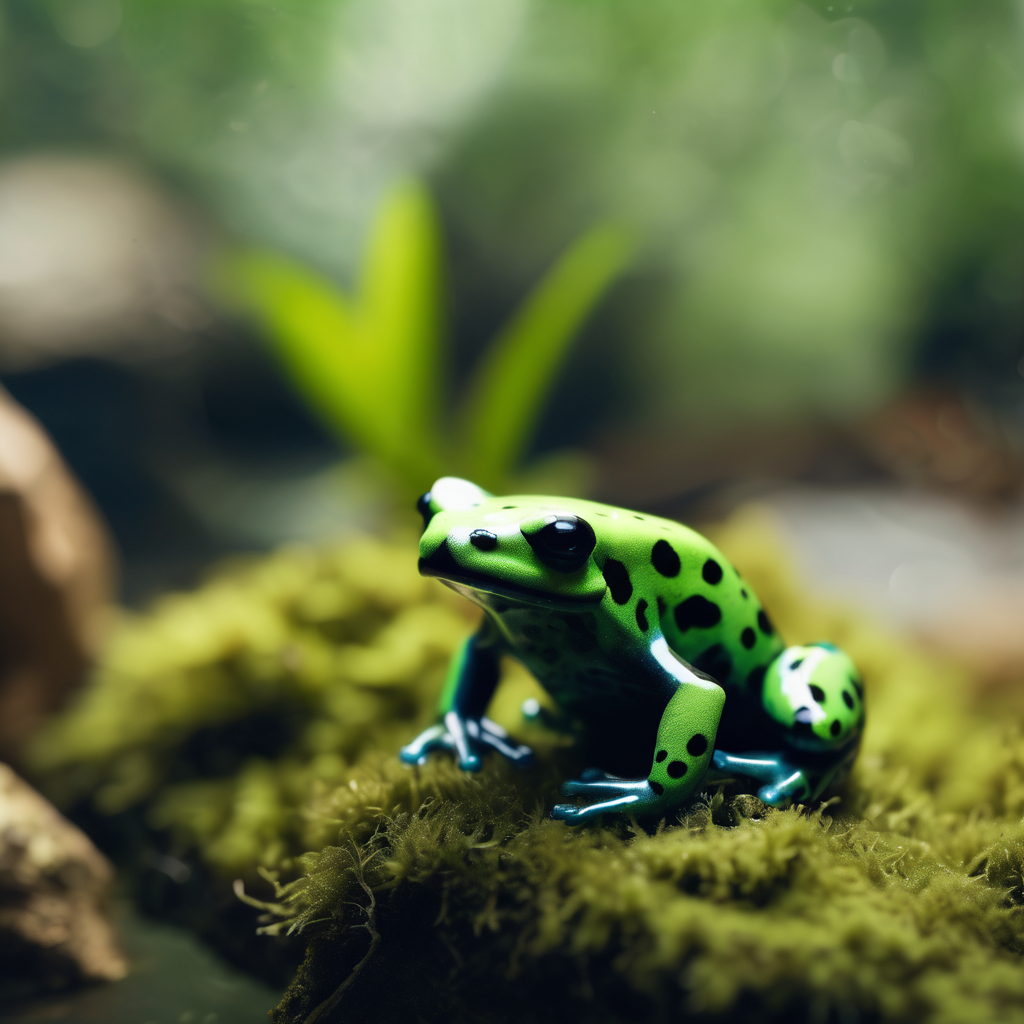
Red-leg syndrome is the name keepers give to a frog or newt with reddened, inflamed skin on the underside of the legs and belly. Chytrid is a fungal skin disease that has wiped out wild amphibian populations worldwide. Both get discussed in the same breath because they are the two diseases that most often show up in a tank that was fine last week and is not fine now, and because both are, in a captive collection, far more often a symptom than a cause. The thing that killed your frog was almost never the organism. It was the tank.
This guide explains what red-leg syndrome actually is (and why the name misleads people), what chytrid is and why it matters differently in captivity than in the wild, how to tell them apart, what a vet can and cannot do, and the tank-side changes that decide whether the rest of your collection survives. It sits alongside pet amphibians: the complete care guide and amphibian health warning signs, vet visits and preventive care, and it assumes you already have the basics of water quality and cycling in place — because that is where almost every case starts.
Red-leg syndrome: what the name hides
The name comes from the most visible sign — reddening of the skin on the underside of the hind legs and the belly, where the skin is thin and blood vessels sit close to the surface. What the name hides is that this is not one disease. It is the visible endpoint of a systemic bacterial infection, usually with Aeromonas hydrophila or Pseudomonas, in an animal whose immune system has already been compromised by something else. The redness is not the infection. It is the animal showing you it is losing.
Bacteria like Aeromonas are present in every tank, every pond, and every water dish on the planet. They do not infect a healthy amphibian. Amphibian skin is not just a barrier — it is a respiratory organ and an immune organ, and it only functions within a narrow range of temperature and water chemistry. Outside that range, the skin stops working as a barrier, the animal goes into physiological stress, and the bacteria that were always there move in. Red-leg syndrome is therefore always a two-part diagnosis: which bacteria, and what broke first.
The things that actually break first
In practice, in almost every case we can trace, one of these came first:
- Temperature too high. This is the number one cause in a home collection. Warm water holds less dissolved oxygen and speeds bacterial growth at the same time. A tank drifting to 27–28°C in a warm room is the classic red-leg setup — frogs and newts want the low 20s or below, and many species are stressed above 24°C. Chillers are not optional in summer for coldwater species.
- Ammonia or nitrite spike. From an uncycled tank, a dead filter, an overfed tank, or a cleanup crew that died. This burns the skin directly and suppresses immunity within days. Read the parameters that kill if you have not tested in a while.
- Handling. Amphibian skin absorbs what touches it — salts, lotion, soap residue, and heat from your hands. Handling is the most common single trigger for a sudden onset in a previously stable tank.
- Sharp or dirty decor causing small skin breaks, which become bacterial entry points.
- A new, unquarantined arrival carrying a higher bacterial load than the established tank’s equilibrium.
The signs, in the order they appear
Amphibians decline fast and hide it well, which is a bad combination. What you will see, in order:
- Lethargy and unusual posture. Sitting at the surface, floating listlessly, not hiding, not responding to food. This is the earliest and most reliable sign and it comes days before anything visible on the skin.
- Loss of appetite, then complete anorexia.
- Reddening on the underside of the legs and belly. In light-skinned species this is obvious. In dark or densely patterned species you have to look at the toe webbing and the inner thighs with a light.
- Skin ulceration or sloughing, sometimes with a grey or milky film.
- Bloating and fluid accumulation under the skin — the animal looks puffy, particularly around the legs.
- Neurological signs in advanced cases: circling, loss of righting reflex, inability to orient, seizures.
Chytrid: what it is and why captivity is different
Chytridiomycosis is caused by Batrachochytrium dendrobatidis (Bd) and the related B. salamandrivorans (Bsal). Bd is a fungus that infects the keratinised outer layer of amphibian skin. Because amphibians breathe and regulate water partly through that skin, a skin infection is a whole-body problem. Bd has driven the decline and extinction of hundreds of wild amphibian species and is one of the worst conservation disasters in modern biology.
In captivity the picture is genuinely different, and this is where a lot of well-meaning keepers panic in the wrong direction. Captive amphibians often carry Bd without showing disease at all — the organism is widespread in the pet trade and in established collections, and many animals are asymptomatic carriers indefinitely. Disease appears when the animal is stressed by poor conditions, low temperature in a tropical species, high temperature in a temperate one, transport, or breeding. So while Bd is a catastrophic pathogen in the wild and a serious biosecurity concern, an individual sick frog in your tank is still much more likely to be suffering from water quality and temperature than from a chytrid outbreak.
How chytrid presents
- Excessive shedding of skin in opaque pieces or whole sheets, often described as a tadpole-tail slough, distinct from normal periodic shedding.
- Skin that looks thickened, rough, or gritty rather than smooth and moist.
- Pale or discoloured patches, sometimes with a slightly yellow or grey cast.
- Lethargy, anorexia, and abnormal posture — sitting with the legs splayed out rather than tucked, refusing to right itself.
- Sudden death with minimal prior signs in acute cases, particularly after a temperature or transport stress.
The overlap with red-leg syndrome is real: both cause lethargy, abnormal shedding or sloughing, and abnormal posture. The distinguishing features are that chytrid causes thickening and rough, opaque shedding rather than the inflammatory redness of bacterial septicemia, and that chytrid often appears after transport or a temperature excursion rather than after an ammonia spike. If you cannot tell, assume the husbandry problem first and fix it immediately — the treatment path for the tank is the same either way.
First 24 hours: what to do before anyone diagnoses anything
Do these in order, today. None of them require a diagnosis and all of them improve the odds regardless of what the problem turns out to be.
Test the water, immediately
Ammonia, nitrite, nitrate, pH, and temperature. Any detectable ammonia or nitrite is an emergency and explains the illness. Do a 30–50% water change with dechlorinated, temperature-matched water right away, then re-test in 6 hours. Check the filter is running and the biological colony is alive — our water quality guide covers what each number means and what a spike does to amphibian skin.
Check and fix the temperature
Verify with a thermometer in the water, not the room. Most commonly kept frogs and newts want roughly 18–22°C; axolotls want 16–18°C and are stressed above 22°C; tropical dart frogs tolerate the low-to-mid 20s. A tank that has crept to 26°C in summer needs a chiller or a partial water change with cooler water now, not tomorrow. Temperature is the single most common cause of a sudden multi-animal die-off in a home collection, and it is the one most often missed because the keeper checked the room and not the water.
Isolate the sick animal — carefully
Move it to a simple hospital setup: bare tank, dechlorinated water at the correct temperature, no substrate, a hide, no strong light, minimal disturbance. Do not medicate the hospital tank blindly. Amphibians absorb everything through their skin, so dosing is far more dangerous and less predictable than in reptiles or fish. A separate article covers quarantine principles that apply here with amphibian-specific caveats.
Stop handling, stop feeding heavily, stop adding animals
No handling of any amphibian with bare hands until the tank is stable. Remove uneaten food within hours to prevent an ammonia spike from decaying prey. Do not introduce any new animal to the collection until this is resolved and the tank has been stable for a month.
Reduce light and disturbance
Stress suppresses the amphibian immune system through the skin. Dim the lights, leave the animal alone, and resist the urge to check it every hour. Every handling session to photograph the symptom is another hit to the animal’s defences.
Veterinary treatment: what to expect
Find a vet who actually treats amphibians — general small-animal vets are often not equipped, and amphibian medicine is genuinely specialised. Check how to choose an exotic vet before you need one, because on the day you need one you will not have time to look.
Diagnosis
A vet will take a skin swab or a shed-skin sample and examine it under a microscope, looking for chytrid zoosporangia — the diagnostic sign is the presence of the fungus in keratinised cells. PCR testing is more sensitive and is the standard for confirming Bd and Bsal, and it is the only reliable way to distinguish a carrier from an infected animal. Water chemistry review, history, and a full tank assessment are just as important: a vet who tells you your ammonia is fine without testing your water has not done the job.
Treatment
For suspected or confirmed bacterial septicemia (red-leg syndrome), vets typically prescribe antibiotics chosen for aquatic pathogens — commonly enrofloxacin or trimethoprim-sulfonamide combinations — given by bath, injection, or both. Bath treatment is unusual in that the drug is absorbed through the skin, which is efficient and also why dosing precision matters so much. For chytrid, treatment is itraconazole baths, sometimes with heat support, under veterinary supervision. Both treatments have real risks in amphibians: their permeable skin and their sensitivity to liver and kidney stress mean that a well-intentioned home treatment kills more animals than it saves.
Preventing the next case: the tank side
Treatment fixes the animal. The tank fixes the problem. If you do not change the tank, you will do this again.
1. Temperature control is biosecurity
Install a thermometer in the water and read it daily. In warm months, use a chiller for coldwater species or a fan for airflow across the surface. Log the number. Almost every sudden amphibian die-off in summer is a temperature problem, and it is preventable for the cost of a thermometer and a chiller.
2. Keep the nitrogen cycle bulletproof
Test ammonia and nitrite weekly and nitrate monthly. Never add an animal to an uncycled tank, never overfeed, and remove uneaten food. If your filter is small for the bioload, the answer is a bigger or additional filter, not less feeding of a growing animal. Our water quality guide explains what a cycled tank actually looks like on paper.
3. Quarantine every new arrival, every time
Minimum 30 days in a separate, fully cycled tank, ideally 60 for a species you know is traded with Bd in its history. Watch for lethargy, appetite change, and abnormal shedding — not just for redness. A new animal is the most likely source of a new organism entering an established collection, and the most likely animal to be stressed enough to show it.
4. Handle less, and never bare-handed
When handling is genuinely necessary, wet your hands with dechlorinated water first and keep it brief. Otherwise do not. Every handling session is an immune event for the animal.
5. Clean the right way
Amphibians are far more sensitive to disinfectant residue than fish. Rinse everything thoroughly, never use soap on anything that will contact the water, and follow the species-appropriate schedule in how to clean an amphibian tank safely. If you are disinfecting after a disease event, quarantine the tank completely for the full contact time and rinse repeatedly before anything goes back in.
6. Species-appropriate light and UVB
Amphibians need a day-night cycle and, for many species, low-level UVB supports calcium metabolism and reduces the risk of nutritional secondary disease that compounds every other problem. See amphibian lighting explained — and note that more light is not better light, and that heat bulbs over a water volume are a common way to accidentally cook a frog.
Red-leg or chytrid? A quick comparison
- Onset: red-leg usually follows a water or temperature event within days; chytrid often follows transport, a new arrival, or a temperature excursion, and can be subclinical for months.
- Skin: red-leg shows inflammatory redness, ulcers, and a wet or sloughing surface; chytrid shows thickening, roughness, opaque sheet shedding, and discolouration without the same inflammatory red.
- Pattern in the tank: red-leg often hits the weakest animal and then others in the same tank as conditions worsen; chytrid may affect one animal while tank mates remain fine, or spread gradually.
- Temperature link: red-leg strongly associated with warmth and low oxygen; chytrid with the animal’s own thermal optimum being missed in either direction.
- Diagnosis: red-leg is largely a clinical diagnosis plus water testing; chytrid needs microscopy or PCR. Only a vet can confirm either.
Frequently asked questions
Is red-leg syndrome contagious to my other amphibians?
The bacteria are, in a sense — but the syndrome is not contagious in the way a virus is. Aeromonas is everywhere. What spreads between animals is the conditions: if your tank is warm, low in oxygen, or has an ammonia trace, every animal in it is at risk, not just the one showing red legs. Fixing the tank protects the collection; medicating one animal does not.
My frog has red legs but the water tests clean. What now?
Check temperature in the water itself, and check it at the time of day the problem is worst — many tanks peak in the late afternoon. Then look at handling, sharp decor, and any recent change including a new plant or food source. If the water truly is clean and stable, get a vet: the cause may be an organism carried by a recent arrival, or a primary skin infection unrelated to water chemistry.
Can chytrid affect reptiles or fish?
No. Bd and Bsal are specific to amphibians. You cannot give chytrid to your snake, and your snake cannot give it to your frogs. It also cannot infect humans. Cross-contamination risk in a mixed collection is about bacteria and parasites generally, not chytrid specifically — but shared equipment between an amphibian tank and a reptile tank is still poor practice for other reasons.
How long can an amphibian survive red-leg syndrome?
Without treatment, days to a couple of weeks depending on severity and temperature. With immediate tank correction and veterinary antibiotics, mild cases can turn around in a week. With advanced neurological signs, the prognosis is poor. This is the disease where acting on the day you notice lethargy — not the day you notice red skin — changes the outcome.
Should I treat the whole tank if one animal gets sick?
Not with medication, and not without a vet. Bath-treating a whole display tank risks killing everything in it, including the cleanup crew and any plants, and it leaves you with no unmedicated animals to compare against. Treat the individual in isolation, fix the tank conditions, and let the vet decide whether the collection needs anything systemic.
Does chytrid mean I should get rid of my collection?
No. Captive animals commonly carry Bd without disease, and an asymptomatic collection can be maintained indefinitely with good biosecurity. The real risks are introducing a new infected animal to an asymptomatic collection, or letting conditions slip. Test, quarantine new arrivals, and keep conditions stable — that is a workable long-term position, and it is what responsible amphibian keeping looks like.
What temperature should I actually run my tank at?
Depends entirely on species. Coldwater newts and axolotls: 16–20°C, stressed above 22. Most temperate frogs: 18–22°C. Tropical dart frogs and similar: 22–25°C. African clawed frogs: 20–24°C. Look up your species’ specific range, put a thermometer in the water, and log it — a tank running at 27°C in a heatwave is the single most common cause of a sudden amphibian die-off.
The bottom line
Red-leg syndrome is not a disease you catch. It is a disease your tank gives your frog when the water is too warm, too dirty, or the animal was handled too much. Chytrid is real, it is serious, and it deserves respect — but in a home collection it is far more often carried quietly than causing disease, and a single sick frog is still much more likely to be a husbandry case than a fungal outbreak. Act on the first sign, which is lethargy and not red skin. Test the water the same day. Fix the temperature. Isolate, do not medicate blindly, and get an amphibian vet. The antibiotic saves the animal; the tank saves the collection.
Leave a Reply