
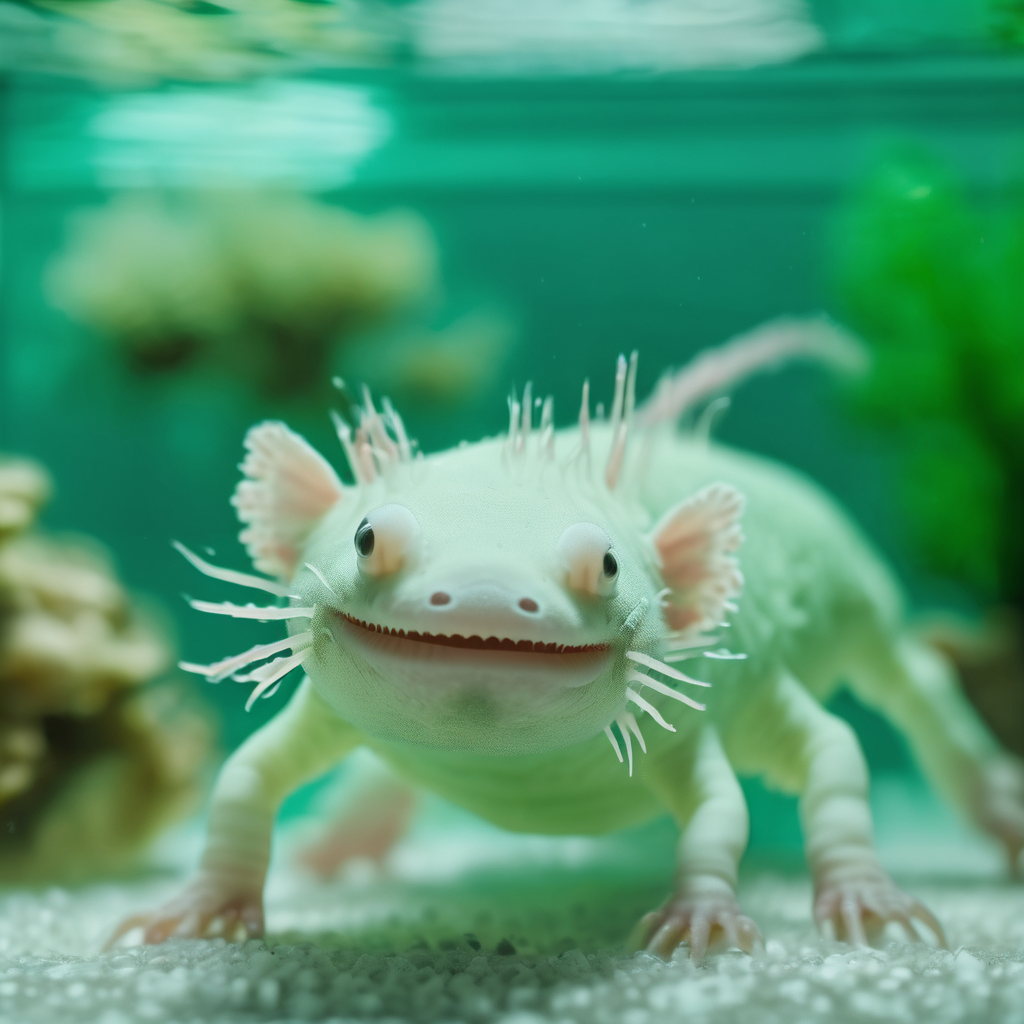
Bloat and edema — dropsy — are among the fastest-moving amphibian problems there are, and both look like nothing more than a fat frog at first. A ballooned axolotl, a frog that sits with its legs splayed straight out behind it, or an animal that suddenly looks two sizes bigger overnight is telling you something is failing in the most basic exchange of water. The difference between catching it on day one and discovering it on day five is, in most cases, the difference between a treatable water-quality correction and an animal that cannot be saved at home.
This guide separates the two conditions that keepers lump together under one name, explains what actually drives each one, gives you a triage sequence you can run in the first ten minutes, and marks the line where a vet is the only answer. It applies to frogs, toads, newts, salamanders and axolotls, with particular attention to fully aquatic species where the problem is most common and most rapid.
Quick answer: what the difference actually is
Keepers use bloat and dropsy almost interchangeably, and the confusion is understandable because both produce an animal that is visibly swollen. They are different problems with different causes and different outcomes.
Bloat (gastric or intestinal distension) is gas and fluid accumulating inside the digestive tract. The animal swallows air or produces gas that cannot escape, or a meal sits and ferments in a gut that has slowed down. The swelling is centred in the abdomen, often visibly lopsided, and in aquatic species the animal floats, cannot dive, and may ride tail-up or nose-up at the surface. Common triggers are overfeeding, prey that is too large, a sudden temperature drop that halts digestion, and constipation from eating loose substrate or a shed skin.
Edema (true dropsy) is fluid accumulating in the tissues and body cavities outside the gut. It is not a digestive problem at all; it is a failure of the animal’s ability to regulate water and salts. The swelling is diffuse rather than abdominal — the legs fill out, the underside looks puffed, the whole animal reads as a pale, waterlogged version of itself. In frogs the classic posture is legs extended straight back; in axolotls the gills go fluffy and the whole body takes on a jelly-like translucence. Edema is almost always driven by water chemistry — ammonia, nitrite, nitrate, pH crash, wrong hardness — or by organ failure behind it.
The practical distinction: an animal that cannot submerge has gas; an animal that is pale, puffed and sluggish all over has edema. Both need water checked immediately, but edema is the emergency.
Why amphibians are uniquely vulnerable to fluid problems
Amphibian skin is a permeable membrane, not a barrier. Water, salts, oxygen and dissolved waste all cross it in both directions continuously, which is exactly what makes them such sensitive indicators of tank conditions and such fast victims when those conditions slip.
Three consequences follow directly from that design:
- They gain water passively. An amphibian sitting in water that is chemically wrong (too soft, too acidic, or carrying ammonia) absorbs water faster than it can excrete it. There is no thirst mechanism that stops the process. The animal literally drowns from the inside in the water it lives in.
- Ammonia burns the skin first. Ammonia damages the permeable surface, and damaged skin no longer regulates salts properly. The edema you see is often the secondary consequence of ammonia injury that began days earlier.
- Cold stops everything. Amphibians are ectothermic, and digestion is temperature-dependent. A drop below the species’ minimum stalls the gut, and a stalled gut in a swallowed-prey-whole animal is a gas factory.
If you have not read it already, our guide to amphibian water quality and the parameters that kill covers the chemistry side in detail. This article is about recognising and responding to the animal-level result.
Bloat in detail: causes, signs, and progression
What causes it
Gastric bloat has a short and predictable list of triggers:
- Overfeeding. A prey item larger than the animal’s head, or a feeding schedule that piles food into a gut that has not cleared the last meal. Axolotls are notorious for this because they vacuum up anything that moves and have no obvious stop signal.
- Prey that fights back or is swallowed alive and struggling. Live prey that thrashes in the stomach produces gas as it dies and is a common bloat trigger in frogs and newts.
- Temperature drop after feeding. Digestion slows with temperature. Feed a frog and then let the room drop ten degrees overnight and the meal stalls, ferments and distends the gut.
- Substrate ingestion. Gravel, sand or bark swallowed with prey causes constipation, and the blockage backs gas up behind it.
- Shed skin eaten and not passed. Amphibians eat their shed; a large shed in a small gut can obstruct it.
- Bacterial enteritis. A gut infection changes motility and produces gas directly. This is the version that progresses to systemic illness.
Signs and how they progress
Bloat announces itself through the animal’s relationship with the water column and its abdomen’s shape:
- The abdomen is visibly distended, often more on one side.
- The animal floats and cannot submerge, or rides at an angle. A fully aquatic species that spends all its time at the surface is in trouble.
- Nothing has come out of the back end for several days.
- Appetite is lost. A frog that turns down a cricket it would normally race for is telling you the gut is full.
- In the later stages: redness on the belly (a sign of inflamed, stretched skin), lethargy, and a swelling that has stopped looking like food and started looking like a balloon.
Edema in detail: causes, signs, and progression
What causes it
Edema is a symptom, not a diagnosis, and it has a short list of upstream causes. Ranked by how often they show up in practice:
- Ammonia or nitrite spike. The single most common cause. An uncycled or crashed filter, a dead clean-up crew, a missed water change, or decomposing uneaten food in the substrate. Ammonia is invisible and tasteless to us and lethal to a permeable-skinned animal.
- Nitrate accumulation. Less acute than ammonia but it drives chronic edema and poor healing over weeks. Nitrate is the “slow dropsy” cause.
- pH crash. A sudden swing in acidity overwhelms the animal’s salt balance.
- Wrong water hardness or mineral content. Especially relevant for axolotls, which need moderately hard water. Very soft water, or water that is pure and mineral-free, causes chronic fluid retention.
- Chytrid or red-leg infection. Both are systemic infections that disrupt skin function. Chytrid and red-leg syndrome present with the same puffy, swollen look and must be considered whenever edema appears alongside behavioural change.
- Organ failure. Heart, liver or kidney failure produces edema because the organ that moves fluid has stopped. This is the version that does not respond to water changes.
Signs and how they progress
Edema is diffuse and it changes the animal’s whole silhouette:
- In frogs: legs extended straight back or straight out, the body low in the water, belly and thighs puffed and pale, skin looking tight and shiny.
- In axolotls: gills become fluffy and forward-curled, the body swells, the skin takes on a translucent jelly quality, and the animal stops responding to food.
- In newts and salamanders: a general puffiness, especially along the flanks and tail base, with the animal spending unusual time at the surface.
- Universal late signs: complete loss of appetite, no response to handling, skin reddening or ulcerating, and eventually the animal turning onto its back and not righting itself.
First ten minutes: the triage sequence
Do these in order. Do not skip to the vet before the water is tested, because the water test determines whether the problem is reversible in your kitchen tonight.
- Test the water immediately. Ammonia, nitrite, nitrate, pH. A liquid test kit, not a strip — strips miss low-level ammonia, which is exactly the range that causes edema. If ammonia or nitrite is anything other than zero, you have your answer for the acute cause.
- Check the temperature. Compare against the species’ correct range. A drop of even a few degrees can stall digestion and trigger bloat.
- Remove the animal to clean, correct water. Aged, dechlorinated water at the right temperature, matched for hardness. This is the single most effective immediate intervention for chemically driven edema and it buys time. Do not do a temperature or pH shock — match the parameters, do not correct them by force.
- Stop feeding entirely. No food for a bloat case until it passes waste, and no food for an edema case until the animal is clearly recovering.
- Look at the whole tank. Uneaten food in the substrate, a dead snail, a filter that has been off, a crushed plant rotting under the gravel. Find and remove the source of the ammonia.
- Photograph the animal. A side-on shot in the water, taken now, is the baseline a vet will want and it lets you judge progress objectively over the next 24 hours.
Vet warning signs — take the animal in today, do not try to treat at home:
- Edema with skin that is red, ulcerated, or sloughing
- The animal is unresponsive, will not right itself, or has been floating for more than a few hours
- Bloat that has not produced waste in 48 hours despite the steps above
- Any edema in an animal that has already had one water change and a confirmed zero ammonia reading
- Axolotl with curled-forward fluffy gills plus total appetite loss for more than 24 hours
- Any amphibian that has stopped moving except when handled
Edema that does not improve within 24 hours of clean water is organ-level, and organ-level edema needs diagnosis and medication, not more water changes.
Treating bloat at home: what actually works
What is safe to try
- Move to shallow, clean water. Shallow enough that the animal rests comfortably but cannot trap gas pressure, warm to the top of the species’ range (a leopard frog does well at the warmer end of 68–75°F, for instance). Gentle warmth increases motility.
- Increase surface agitation and aeration without chilling the water. Better oxygenation supports an animal that is working harder.
- A very brief, gentle soak in a shallow isotonic solution — specifically, unflavoured pediatric electrolyte solution diluted per the label, or a veterinary amphibian Ringer’s solution. Ten to fifteen minutes, once or twice a day, can help rehydrate and restart gut motility. Never leave the animal in it for hours and never use it as a substitute for the correct tank water.
- Hands-off observation. Many cases resolve on their own once temperature is correct and feeding stops.
What to never do
- Do not attempt to pop or massage gas out. Amphibian abdomens are not built for it and you will cause internal injury.
- Do not force-feed. A stalled gut plus more food is a worsening obstruction.
- Do not use human or mammalian laxatives, oils, or “gas relief” drops. Amphibian physiology does not respond to them the way a mammal’s does, and several common remedies are toxic across permeable skin.
- Do not add salt to a freshwater amphibian’s tank. A brief, correctly dosed salt bath is a veterinary intervention for some conditions; dumping aquarium salt into the habitat of a softwater species causes osmotic injury and makes edema worse.
Treating edema: water first, always
There is no home medication for edema because edema is a symptom. The treatment is to remove the cause, and the cause is nearly always in the water.
- Confirm ammonia and nitrite are zero with a liquid test, in the animal’s actual water, not just the tap.
- Large, correct water change. Fifty percent or more, with water matched for temperature and hardness. If ammonia is present, do it again in 12 hours.
- Find the ammonia source. Overfeeding, uneaten food, a dead clean-up crew, a filter that has been off for a day, a new tank that was never cycled. Removing the animal without removing the source guarantees a relapse.
- Check the filter and the cycle. If nitrite is anything other than zero, the biological filter has crashed and the tank is effectively uncycled until it recovers. Read our cycling guide and treat this as a fishless cycle emergency.
- Reduce nitrate. Water changes, plant uptake, and honest assessment of stocking density. Chronic nitrate in the hundreds is a dropsy factory.
- Verify hardness for the species. Axolotls in particular need moderately hard water; if you have been using pure RO or heavily softened water, that alone can cause chronic fluid retention.
If the water is genuinely clean and the edema persists past 24 hours, the cause is not the water. That is an organ or infection problem, and it needs an amphibian-experienced vet. Our amphibian health guide covers what that visit looks like.
Prevention: the husbandry that makes this rare
- Test the water weekly with a liquid kit. Ammonia, nitrite, nitrate, pH. This is the single habit that prevents most edema cases. Strips are not adequate for ammonia at low levels.
- Feed to the animal, not to the schedule. Prey no wider than the space between the eyes, and remove anything uneaten within a few hours. Our feeding guide has species-specific amounts.
- Keep the temperature stable. A thermostat is as much an amphibian tool as a reptile one. Do not let a tank sit over a cold window or an air vent.
- Cycle the tank before the animal goes in. An uncycled tank is the most common single cause of dropsy in new keepers’ first three months.
- Size the filtration and cleaning schedule to the stocking. A regular cleaning routine keeps nitrate down before it becomes a problem.
- Quarantine new amphibians. Bloat and edema both travel with new animals that are already stressed or infected.
- Watch the shape, not just the behaviour. Photograph your animal weekly in the same position. Subtle swelling is obvious in a photo series and invisible day to day.
Species notes: who gets which problem
- African clawed frogs — classic bloat species. They eat aggressively and are commonly overfed. Floating and inability to dive is the first sign.
- Axolotls — edema is the signature problem. Chronic low-level ammonia plus soft water is the usual combination. Curled, fluffy gills plus swelling is the picture to remember.
- White’s tree frogs and other arboreal frogs — less prone than aquatic species but bloat from oversized prey and a cold night is common. They often show it as refusal to move to the food dish.
- Fire-bellied newts and other semi-aquatic newts — edema from a land area that is too wet plus poor water, and bloat from eating shed skin they cannot pass.
- Tiger salamanders — constipation-driven bloat from substrate ingestion is the usual pattern, and they tolerate it for longer than frogs do, which means keepers notice late.
Prognosis: what recovery looks like
Bloat caught in the first 24 hours, with correct temperature and no feeding, resolves in most cases within two to three days as the animal passes gas and then waste. Recovery is gradual: the animal starts sinking again, then moves normally, then eats.
Chemically driven edema, caught early and corrected with clean matched water plus removal of the ammonia source, can reverse within 48 to 72 hours. The puffiness goes down slowly and the animal’s colour returns before its posture does.
Edema that has reached ulcerated skin, unresponsiveness, or an animal that will not right itself has a poor prognosis at home. That animal needs a vet, and even then the outcome depends on whether organ function is recoverable.
Frequently asked questions
My frog is floating and cannot dive. Is that dropsy?
Floating is a bloat sign, not necessarily dropsy. Gas in the gut gives the animal buoyancy it cannot overcome. Test the water anyway — the two often occur together — but treat the immediate problem as a stalled digestive tract: stop feeding, correct and slightly raise the temperature within the species’ range, and watch for waste.
Can dropsy be cured with aquarium salt?
No. Salt baths are a veterinary tool used at specific doses for specific conditions, and many amphibians — particularly softwater species — are injured by salt exposure across their skin. Adding salt to a freshwater amphibian tank to treat swelling commonly makes the edema worse. Fix the water chemistry instead.
My axolotl’s gills are curling forward and it looks puffy. What now?
Test ammonia and nitrite immediately with a liquid kit. Forward-curled, fluffy gills plus puffiness plus appetite loss is the classic ammonia-driven edema picture in axolotls. Do a large matched water change, remove the ammonia source, and if the animal is not visibly improving within 24 hours, get it to an amphibian vet.
Is bloat contagious to my other amphibians?
Bloat itself is not contagious, but whatever caused it often affects the whole tank. If ammonia caused it, every animal in the system is being exposed. If a bacterial enteritis caused it, the organism is in the shared water. Treat the tank, not just the animal.
How do I tell edema from a female full of eggs?
A gravid female is firm, symmetrical, and behaving normally — eating, moving, responding. Edema is soft or jelly-like, often asymmetrical, and comes with behavioural change: appetite loss, surface sitting, unresponsiveness. If in doubt, test the water; a clean tank with a normally behaving plump animal is almost always a gravid female.
Can a frog recover from severe dropsy on its own?
Mild, chemically driven edema caught early often reverses with correct water. Edema with skin ulceration, unresponsiveness, or an animal that will not right itself will not reverse on its own and needs veterinary care. Do not spend three days of water changes on an animal that is already in the late stage — go to the vet.
Does my amphibian need a vet visit for a single day of looking puffy?
A single day of mild puffiness in an otherwise active, eating animal, with a clean water test, is worth monitoring closely rather than an emergency trip. But a water test that shows any ammonia or nitrite, or any behavioural change at all, moves it into the “see a vet today” category. Our transport guide covers how to get an exotic pet to the vet safely.
The bottom line
Bloat is a gut problem that shows up as an animal that cannot sink. Edema is a water problem that shows up as an animal that looks waterlogged all over. Both are emergencies, both are frequently preventable, and in both cases the first useful action is the same: test the water, correct it, stop feeding, and get the animal in front of someone who knows amphibians if it is not clearly improving within a day. The animals that recover are the ones whose keepers acted on the first day of the swelling, not the third.
Leave a Reply