
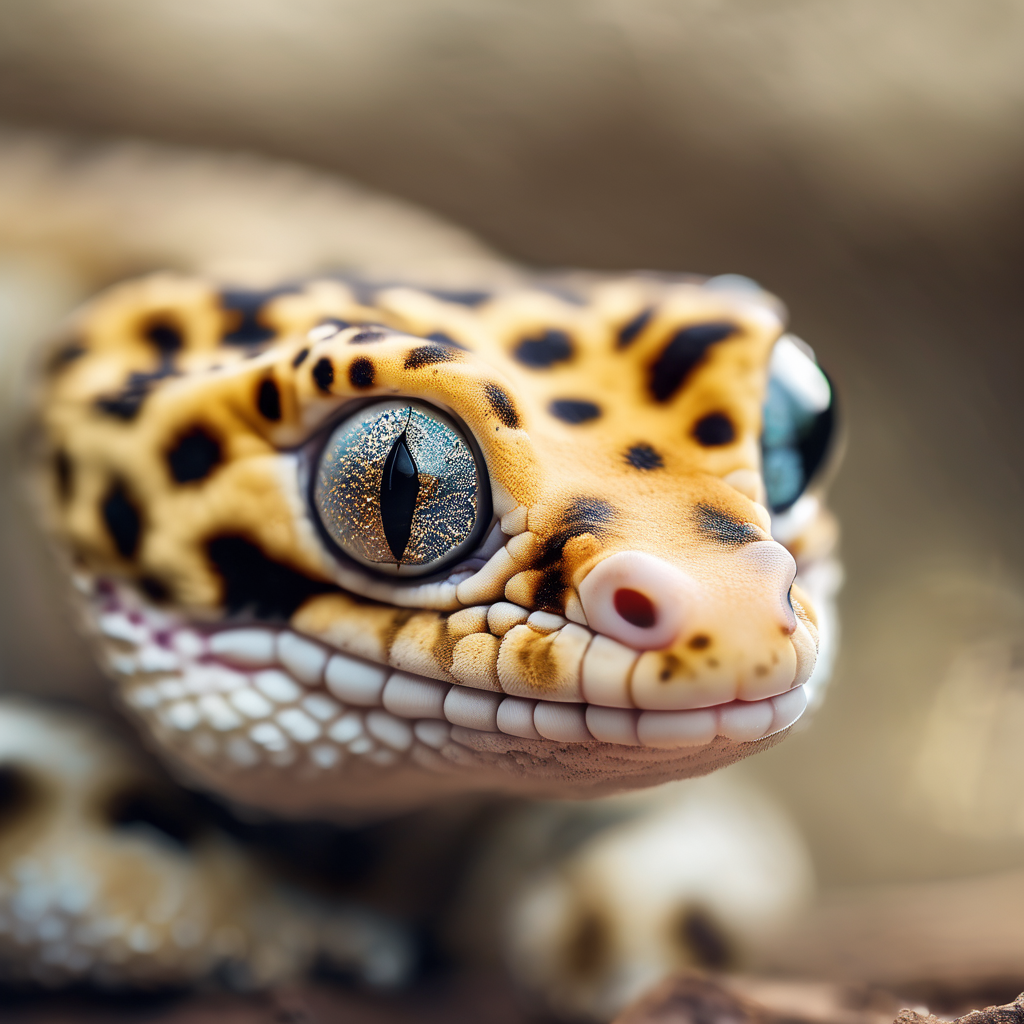
A cloudy eye on a reptile is one of those problems that looks minor and is not. If the opaque layer sitting over your gecko’s eye is a retained eye cap rather than simple pre-shed dullness, it can fuse to the surface of the eye, and a gecko that cannot see hunts badly, loses weight, and can lose the eye altogether. The good news is that the condition is almost always a humidity problem, and it is almost always preventable.
This guide covers what eye caps are, how to tell a retained cap from normal shedding, which species are affected, what to do at home, and exactly when this becomes a veterinary job rather than a keeper job.
What eye caps actually are
Lizards and snakes do not have eyelids in the way mammals do. Instead they have a transparent scale, called a spectacle or brille, covering each eye. Snakes shed this scale with the rest of the skin, all in one piece – which is why a shed snake skin, held up to the light, shows a clear cup-shaped patch over each eye position.
Geckos and many other lizards shed in pieces, and each spectacle comes off as its own small cap: the eye cap. The cap grows on the surface of the new spectacle beneath it, and in a healthy shed it lifts away cleanly with the surrounding skin.
When it does not lift, you get retained eye caps (also called retained spectacles, or eyecap retention). The old cap stays stuck, often stacking up as several layers over weeks or months, and the eye underneath becomes progressively more difficult to see through.
Why caps get retained
The mechanism is nearly always the same: the old skin was too dry to separate.
| Cause | What happens | The fix |
|---|---|---|
| Humidity too low overall | Skin dries out before it can separate; caps stay glued | Raise enclosure humidity, add a moist hide |
| No moist hide | A dry-side and wet-side gradient is not enough for many species; the animal never gets a high-humidity pocket to shed in | Add a humid hide with damp moss or paper towel |
| Deficient vitamin A | The lining of the eye socket does not shed normally; plugging starts deep and pushes outward | Vet-guided supplementation – see the warning below |
| Dehydration | Poor skin condition generally; sheds come off in fragments | Correct drinking water availability and humidity |
| Mites or skin infection | Damaged skin around the eye adheres; often with stuck shed elsewhere on the body | Treat the underlying parasite or infection |
| Scarring from a previous injury | The new cap grows into damaged tissue and cannot separate | Veterinary assessment; often recurring |
The single most common cause is humidity, and the single most common species to see it in is the leopard gecko – a desert animal that keepers habitually keep too dry, forgetting that even arid-zone species need a humid microclimate to shed in.
Retained eye cap or normal shedding? How to tell
This is the distinction that matters, and getting it wrong in either direction causes harm.
Normal pre-shed changes
- The eye looks dull, bluish or milky but the surface is smooth and even.
- The animal is secretive, off food and pale at the same time – the whole animal is in pre-shed.
- It clears within a few days to about a week.
- Both eyes behave identically.
Retained eye cap
- The eye looks opaque with a visible edge or wrinkle – you can often see a lip of material that does not sit flush.
- It does not clear after the rest of the shed completes.
- It often starts as one eye, not both.
- Over time the cap looks like a dried crust or a small blister rather than a smooth film.
- The animal may paw at the eye, keep it closed, or show asymmetry in how it moves.
The most reliable test is time and symmetry. Normal dullness is bilateral, uniform and temporary. A retained cap is one-sided, irregular, and persistent. If you are unsure after five days of correct humidity, treat it as retained and escalate rather than waiting.
What to do at home – and what never to do
For a newly noticed cap, the correct first response is environmental, not mechanical.
Step 1: Fix the humidity for 5-7 days
- Add or upgrade a moist hide: a small enclosed hide lined with damp sphagnum moss or paper towel, re-dampened daily, positioned on the warm side.
- Raise ambient humidity modestly, toward the range for the species, but do not soak the whole enclosure – chronically wet substrate causes scale rot and respiratory disease, trading one problem for a worse one.
- Reduce ventilation only if it is excessive; a glass-topped terrarium with a solid lid plus a moist hide usually does more good than misting five times a day.
For specific numbers, our humidity control guide and the leopard gecko humidity breakdown have species-appropriate targets. Verify what you are actually achieving with a hygrometer at animal level, not a dial on a mister – this measurement guide covers placement.
Step 2: Support hydration
Offer fresh water in a shallow dish the animal can climb out of easily, and check it is actually drinking. A dehydrated reptile sheds badly everywhere, not just around the eyes. If your animal is not drinking, read the dehydration guide for safe rehydration methods.
Step 3: Leave the cap alone
In most cases, correct humidity over a week is enough for the cap to lift on its own during the next shed.
What never to do
- Never peel, pick or force a cap off. The cap is the animal’s only eye protection; pulling it usually takes the new spectacle with it, leaving an open corneal wound.
- Never use tweezers, nails or a cotton bud to scrape at it.
- Never put human eye drops, contact lens solution or steroid creams on a reptile eye. They are formulated for a different eye entirely.
- Do not overdose vitamin A. Hypervitaminosis A is a real and serious iatrogenic disease in reptiles, and it looks similar to the deficiency it is meant to treat. Supplementation should follow a vet’s instruction or a species-appropriate product at the label dose, nothing more.
- Do not soak the head repeatedly. A short supervised soak is fine; a wet head in a cold room invites respiratory infection.
When this becomes a veterinary problem
Some presentations should not be managed at home at all:
- The eye looks swollen, bulging or sunken rather than simply cloudy.
- There is discharge – bubbles, pus, or a wet or sticky area around the eye.
- Multiple stacked caps, or a cap that has been present for weeks with no improvement under correct humidity.
- The animal is losing weight or missing strikes, which suggests it genuinely cannot see.
- Any suspicion of injury or scarring – a previous trauma to that eye.
- You are considering vitamin A treatment, because the dose has to be right and the diagnosis confirmed.
A vet will typically assess the eye with fluorescein stain to check for corneal ulceration, clean the area under sedation or local anaesthetic if removal is needed, and address the underlying cause. Removal by a professional is quick and, done properly, painless – which is exactly why attempting it yourself is a bad trade. Read how to choose an exotic vet before you need one, and how to prepare for the visit so the transport itself does not add stress.
Prevention: the setup that stops this happening
Retained eye caps are a husbandry outcome, and husbandry outcomes are preventable.
- Every enclosure gets a moist hide, permanently. Not a temporary measure – a permanent fixture, damped daily.
- Measure, do not estimate. A digital hygrometer at animal level, checked against a second device. Misting to a schedule you have never measured is guesswork.
- Keep heat stable. A thermostat with a probe on the substrate, not a dial set by feel. Read how terrarium thermostats work if your setup swings.
- Provide proper UVB where the species needs it. Beyond bone health, correct lighting supports normal behaviour, appetite and skin condition. This UVB guide explains who needs it.
- Feed a varied, supplemented diet. Whole insects plus a species-appropriate calcium and vitamin supplement, dusted correctly. Gut-loading and dusting is where most dietary deficiencies are actually won or lost.
If sheds in general are going wrong – fragments, stuck toes, tail tip retention – you have a systemic humidity or nutrition problem, and eye caps are only the visible part of it. Our guide to stuck shed and dysecdysis covers the whole picture.
Related eye problems that are not retained caps
Not every cloudy eye is a cap. These need different handling:
- Trauma. A scratch against rough hardscape or a feeder insect bite. Needs vet assessment – eyes heal poorly when damaged.
- Conjunctivitis or infection. Swelling plus discharge. Needs medication.
- Foreign body. Substrate lodged under the spectacle. Do not attempt removal yourself.
- Cataract or age-related change. Gradual, usually bilateral, and not urgent – but worth a vet opinion to confirm.
- Vitamin A deficiency without retention. Swollen eyelids that block the eye from outside. This is the plugging variant, and it needs veterinary guidance on dosing.
If you are looking at a sick animal and not just a cloudy eye, start from the emergency warning signs guide. For animals that genuinely need to be separated and monitored, a hospital tank makes observation and treatment far easier.
Checklist: retained eye cap response
- Confirm it is not normal bilateral pre-shed dullness (check the other eye and the rest of the body)
- Add or re-damp a moist hide on the warm side, checked daily
- Raise ambient humidity toward the species range – verify with a hygrometer at animal level
- Confirm fresh water is available and being used
- Do not touch, peel, scrape or apply any human product to the eye
- Log the date and take a photo to compare in 5-7 days
- Reassess at day 7: improved, unchanged or worse
- Book a vet if there is discharge, swelling, weight loss, multiple caps, or no change after a week of correct humidity
- Review the whole shedding setup, not just the eye – check toes and tail tip too
The bottom line
Retained eye caps are a humidity failure with an eye on the front of it. The fix is almost never mechanical and almost always environmental: a permanent moist hide, humidity you have actually measured, and the discipline to leave the cap alone while it lifts by itself. Book a vet early if there is discharge, swelling or weight loss – and keep a photo diary, because five days of “I think it looks a bit better” is worth much less than two photos side by side.
For the wider picture on enclosure climate, see our complete terrarium equipment guide, and for species-specific parameters start with the small pet reptile species guide.
Leave a Reply