
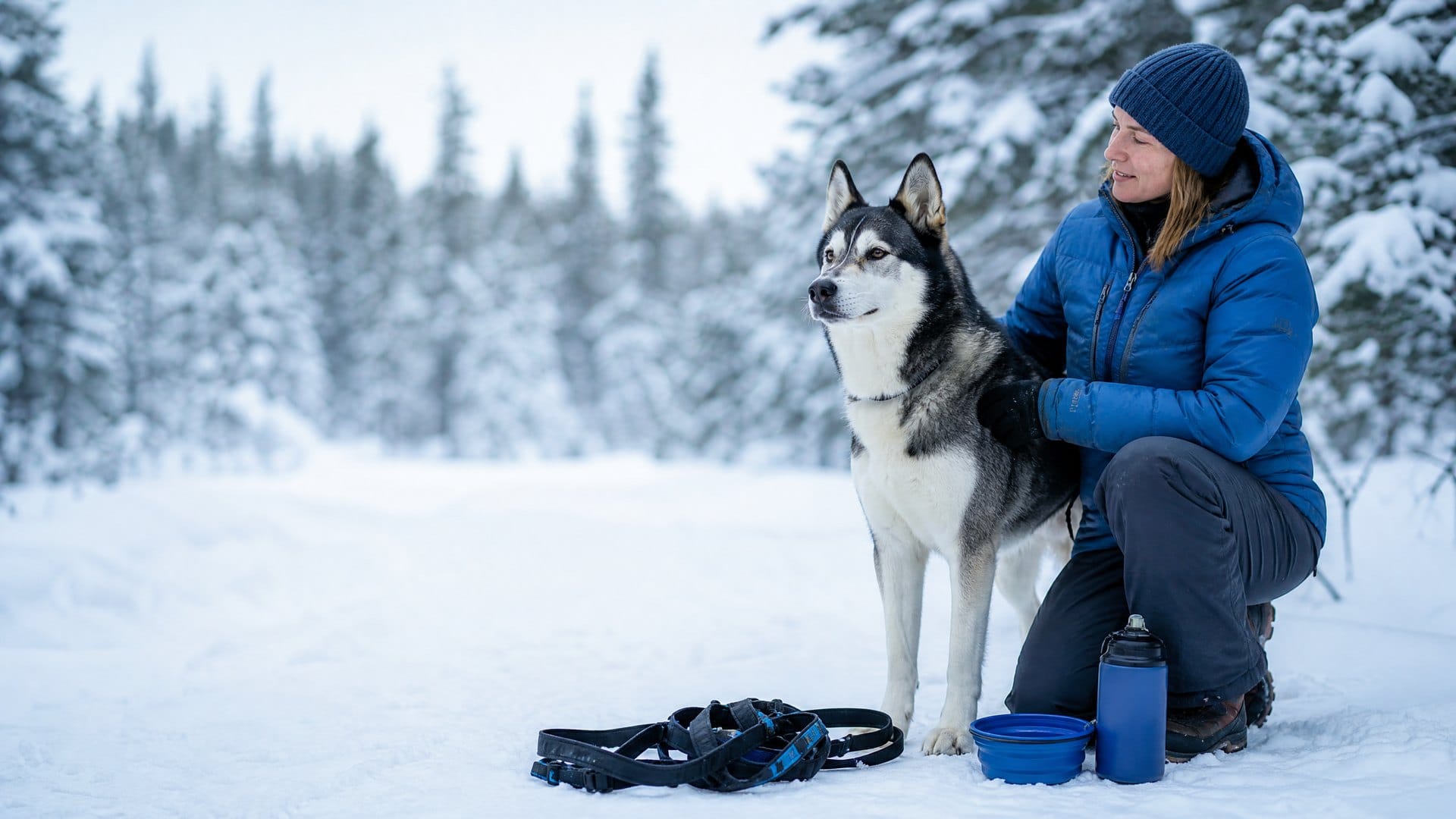
Sled work brings together cold, distance, equipment, travel and team logistics. It deserves more than a generic “high-energy” feeding message. This guide focuses on the questions that belong before activity: Is the dog healthy and conditioned for the expected work? How will the environment affect comfort and recovery? Who is supervising the plan?
Safety note: This is not a racing diet, a fat-percentage prescription or a substitute for a veterinarian familiar with the dog’s health and workload. Young, older, medically managed or recently injured dogs need individual guidance before structured cold-weather work.
Cold adds variables; it does not cancel the basics
A dog may look enthusiastic in cold air while still being affected by duration, wind, footing, transport, fatigue and unfamiliar equipment. A sound plan begins with a complete-and-balanced base diet, stable body and muscle condition, adequate rest and a professional review when the expected workload changes.
| Planning area | Why it matters in cold conditions | What to review |
|---|---|---|
| Duration and route | Longer exposure can compound effort, terrain and recovery needs. | Match the route to the dog’s existing conditioning and the day’s conditions. |
| Weather and footing | Wind, ice, deep snow and low visibility can change comfort and safety. | Keep a conservative stop-or-turn-back option from the start. |
| Water logistics | Dogs still need access to fresh water during active days. | Plan reliable water access and do not replace it with human sports drinks. |
| Recovery environment | Rest, warmth appropriate to the dog and transport are part of the workday. | Ensure the dog can settle and be observed after activity. |
Professional oversight is part of responsible preparation
Working dogs have highly variable energy needs. Copying a diet or a feeding schedule from another team overlooks medical history, body condition, workload, climate and the dog’s response over time. A veterinary team can help assess nutritional adequacy and whether a change is warranted; a qualified activity professional can help keep the workload within a dog’s preparation.
For the general planning framework, visit Performance Dog Nutrition: Build the Plan Before You Change the Bowl. For the different decision lens required by long, variable activity, read Endurance Dog Nutrition: Think in Hours, Conditions and Recovery.
Observe the dog, not just the conditions
Changes in pace, posture, coordination, responsiveness, willingness to move, breathing, gait or ability to settle are useful information. They are not a challenge to overcome with more food, a stimulant or a longer push. End activity and consult the appropriate professional when the dog appears uncomfortable or unlike itself.
The hydration discussion remains relevant even in cold weather: Active Dog Hydration Safety explains why fresh water, observation and a stop-first approach matter. When the team returns home, use Dog Recovery Nutrition to frame the quiet monitoring that follows a demanding day.
Pause and contact a veterinarian
Stop work and seek veterinary guidance promptly for collapse, marked weakness, difficult breathing, disorientation, repeated vomiting, a distended abdomen, seizures, pain, lameness, an abnormal gait or any dog that fails to recover normally after rest. Do not assume cold weather makes serious signs less urgent.
Continue exploring
- Endurance Dog Nutrition
- Active Dog Hydration Safety
- Performance Dog Nutrition
- Dog Recovery Nutrition
- Explore the Dogs Care Guide for everyday care
Leave a Reply