
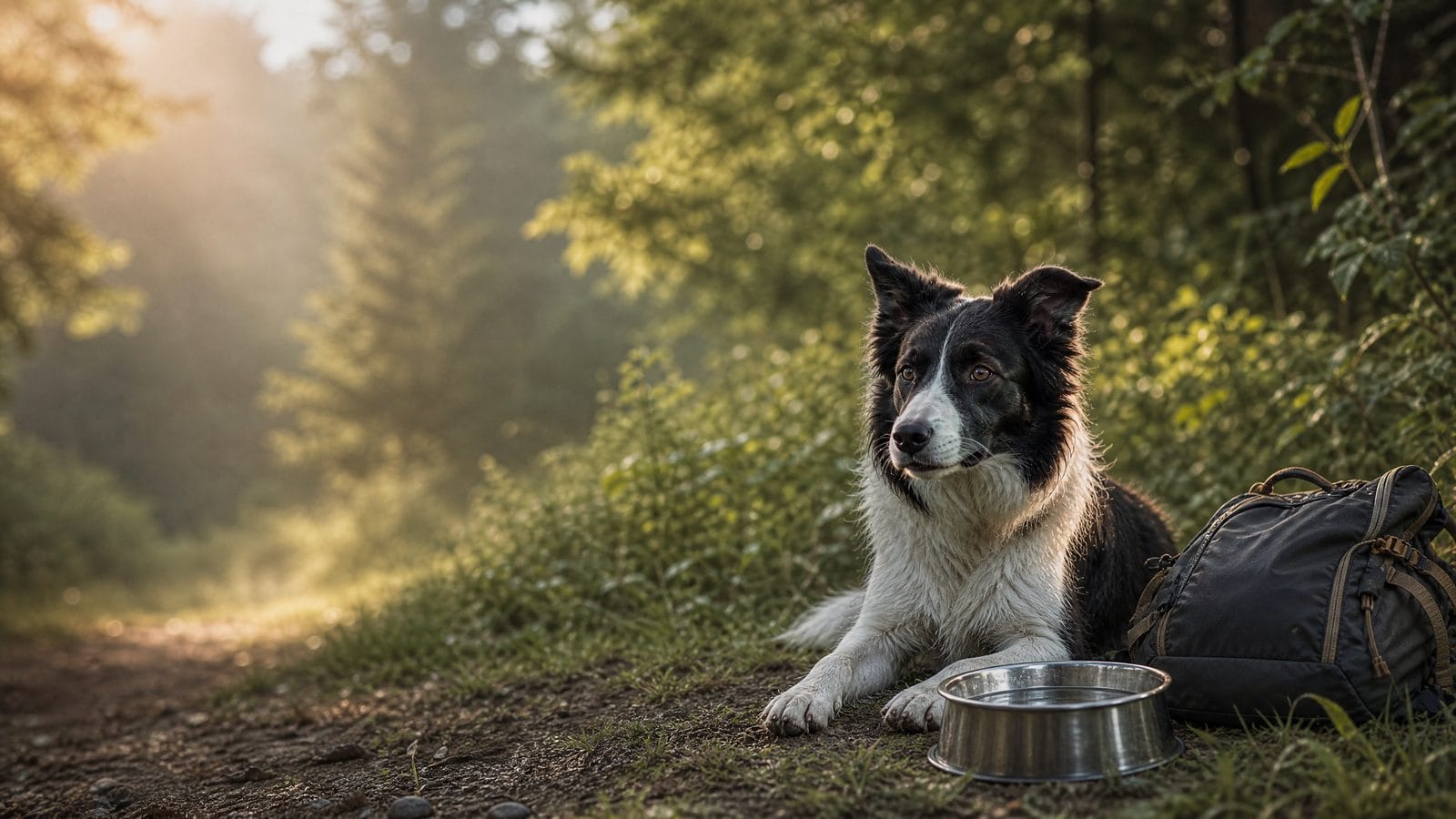
Water is the starting point of a safe activity plan—not a performance trick. A dog who runs, tracks, hikes, trains or works in warm, humid, windy or unfamiliar conditions may need closer observation than on an ordinary day. This guide focuses on preparation, access to clean water, sensible pauses and the signs that mean activity should stop and veterinary advice is needed.
Important: this page is educational and is not a substitute for an individual hydration or nutrition plan. Puppies, senior dogs, brachycephalic dogs, dogs with medical conditions and dogs taking medication may need specific veterinary guidance.
Begin with the day, not a formula
The same dog can have very different needs across a short training session, a long trail day, travel, a competition setting or a hot and humid afternoon. Instead of relying on a universal amount, start by considering the planned activity, current fitness, weather, terrain, recovery time and the dog’s usual eating and drinking pattern. VCA describes sprint, intermediate and endurance work as different activity profiles; this is a useful reminder that duration and context matter.[1]
| Before activity | During activity | After activity |
|---|---|---|
| Confirm that clean water will be available. Check the forecast, route, shade and exit options. | Offer calm opportunities to drink and observe breathing, gait, attention and willingness to continue. | Allow a gradual cool-down, provide quiet access to water and note any unusual recovery pattern. |
| Keep food changes, new supplements and unfamiliar products out of the plan on a demanding day. | Use a pause when conditions become harder; heat, humidity, travel stress and excitement can change the picture quickly. | Record concerns such as repeated vomiting, diarrhea, marked fatigue, refusal to drink or unusual behavior for the veterinary team. |
Read the whole dog, not one isolated sign
Normal panting after exercise is not the same as a dog who cannot settle, appears weak, staggers, seems confused or becomes reluctant to move. In the field, a simple question helps: is the dog recovering in a way that looks and feels normal for this individual? If the answer is uncertain, end the activity rather than trying to push through it.
Stop and seek urgent veterinary advice for
- collapse, seizure, marked weakness or disorientation;
- difficulty breathing, repeated unproductive retching, a distended abdomen or sudden distress;
- vomiting, diarrhea, inability to keep water down, or a rapid change in responsiveness;
- heat-related concern that does not settle promptly with stopping activity and moving to a cooler setting.
If you are worried a dog is overheating
End activity and move the dog to a cooler, well-ventilated area. Begin gentle cooling with water that is cooler than the dog and airflow; if the dog is alert, offer small sips of water but do not force water into the mouth. Do not use ice-cold water or assume that apparent improvement ends the need for veterinary advice. Call a veterinarian promptly after starting these steps; heatstroke can become life-threatening and the more serious effects may not be immediately obvious.[2] [3]
These signs can have multiple causes and cannot be safely assessed through a generic hydration checklist. Severe weakness, disorientation, seizures and breathing changes can be consistent with a potential heat-related emergency and warrant prompt veterinary assessment.[2] [3]
Keep hydration simple and safe
Fresh, clean water and thoughtful breaks are the core of the plan. Human sports drinks, homemade electrolyte mixtures and casually added supplements can create avoidable risk; they do not replace a veterinary assessment or a complete diet. VCA specifically notes that routine electrolyte replacement is not necessary for dogs because they do not lose electrolytes through sweating as people do.[1]
- Bring a clean water source and a familiar portable bowl when the location is unfamiliar.
- Choose shade and rest opportunities before the dog looks exhausted.
- Do not force water into the mouth or treat drinking as a test the dog must pass.
- Do not use activity day as the time to experiment with a new food, broth, supplement or “energy” product.
Hydration belongs inside the wider plan
For a healthy dog, hydration is one part of a larger picture that includes conditioning, a complete and balanced diet for the appropriate life stage, body condition, muscle condition and recovery. WSAVA recommends regular nutrition assessment and provides Body Condition Score and Muscle Condition Score tools that veterinary teams can use to monitor the individual animal.[4]
If you are building a longer-term activity routine, continue with our Performance Dog Nutrition guide for planning principles, explore Endurance Dog Nutrition for long-duration context, and use Dog Recovery Nutrition when a veterinary team is already guiding return to activity. For general care, visit our Dogs Care Guide and the Dogs archive.
Leave a Reply