
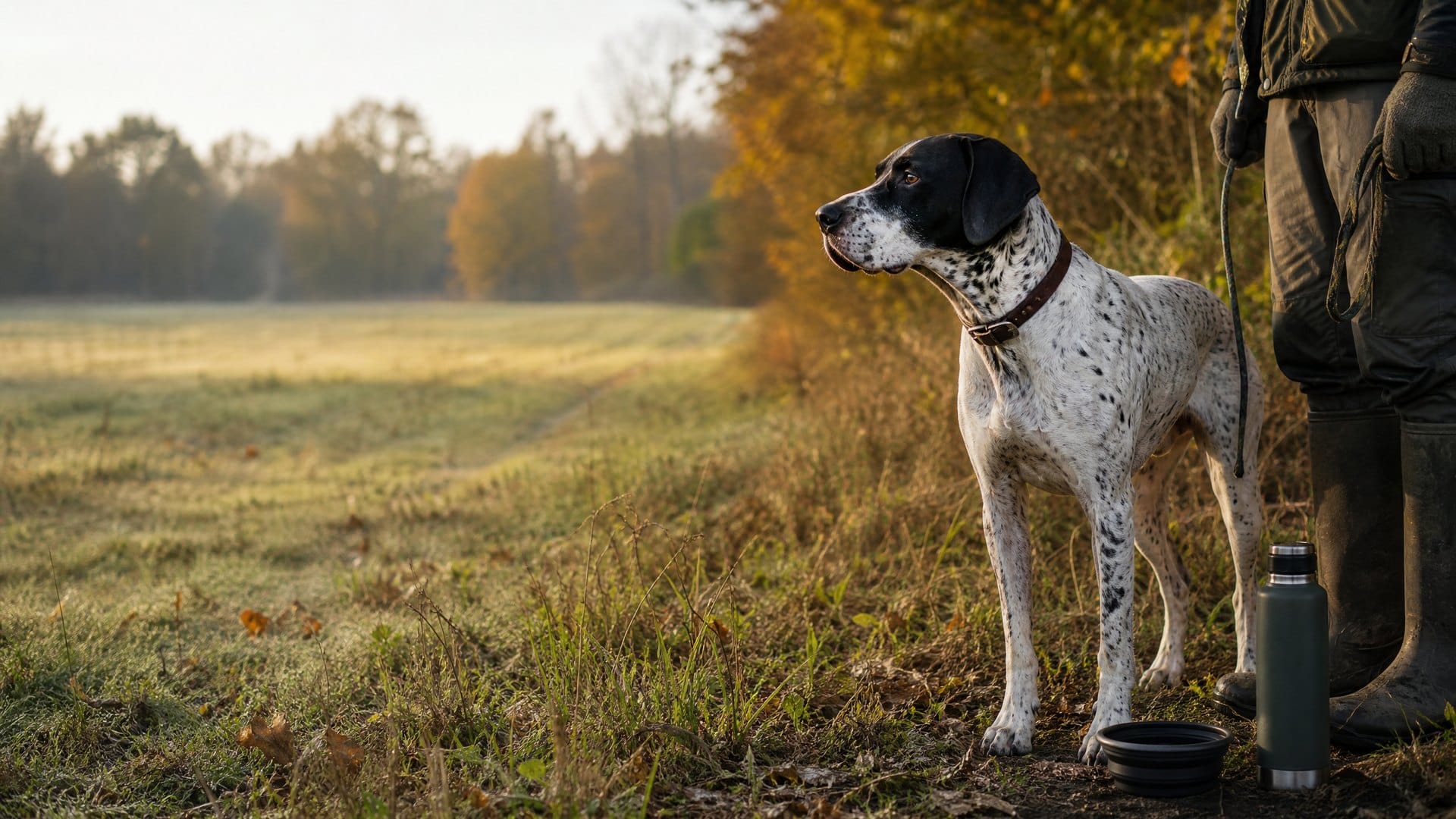
A field day can look very different from an ordinary walk. Uneven ground, weather, travel, cover, duration and the distance back to shade or water all change the context. This page is a readiness checklist for healthy adult dogs; it is not a field-ration formula or a reason to continue when a dog is not coping well.
Safety note: A complete-and-balanced everyday diet and a plan made with the dog’s veterinary team are the starting point. Individual needs vary with health history, body condition, season, workload and the environment.
Plan the day before you leave
Rather than relying on a single feeding rule, map the day. Consider the expected time outside, type of terrain, forecast, transport, opportunities for rest and the reliable availability of fresh water. If conditions have changed substantially since the plan was made, it is reasonable to shorten, postpone or stop the outing.
| Field-day factor | Why it matters | What a handler can do |
|---|---|---|
| Terrain and cover | Rough, hot, wet or unfamiliar ground changes effort and comfort. | Set conservative expectations and observe movement from the first part of the day. |
| Duration and travel | Time in transit and time working both affect recovery. | Make the schedule realistic; preserve a calm return and rest period. |
| Water and shade access | Warm conditions and activity increase the importance of fresh water. | Confirm dependable access before departure, not only after the dog looks thirsty. |
| Body condition and health | Two dogs doing similar work may not need the same plan. | Review changes in weight, appetite, stamina or comfort with a veterinarian. |
Water is a logistics question, not a last-minute fix
Fresh, clean water should be a planned resource. VCA notes that working dogs need more water as activity and warmth increase, and that dogs do not lose electrolytes through sweating in the way people do. Do not rely on human sports drinks, improvised mixes or forced drinking. For a safety-first framework on hot training days, read Active Dog Hydration: A Safety-First Guide for Training Days.
Know when to shorten or stop
A dog who seems slower, uncertain on the ground, unusually restless, reluctant to move, less responsive or unable to settle may be communicating that the plan no longer fits the moment. These observations are meaningful even before there is an emergency. End the activity, move to a calmer setting and reassess rather than trying to motivate the dog with food or a longer break.
For the broader relationship between duration, conditions and recovery, see Endurance Dog Nutrition: Think in Hours, Conditions and Recovery. For baseline planning instead of copied prescriptions, visit Performance Dog Nutrition.
Pause and contact a veterinarian
Stop activity and seek veterinary guidance promptly for collapse, weakness, breathing difficulty, disorientation, repeated vomiting, a distended abdomen, seizures, pain, lameness or a failure to return to normal behavior after rest. In warm conditions, do not wait to see whether a dog “works through” troubling signs.
Continue exploring
- Endurance Dog Nutrition
- Active Dog Hydration Safety
- Performance Dog Nutrition
- Dog Recovery Nutrition
- Explore the Dogs Care Guide for everyday care
Leave a Reply