
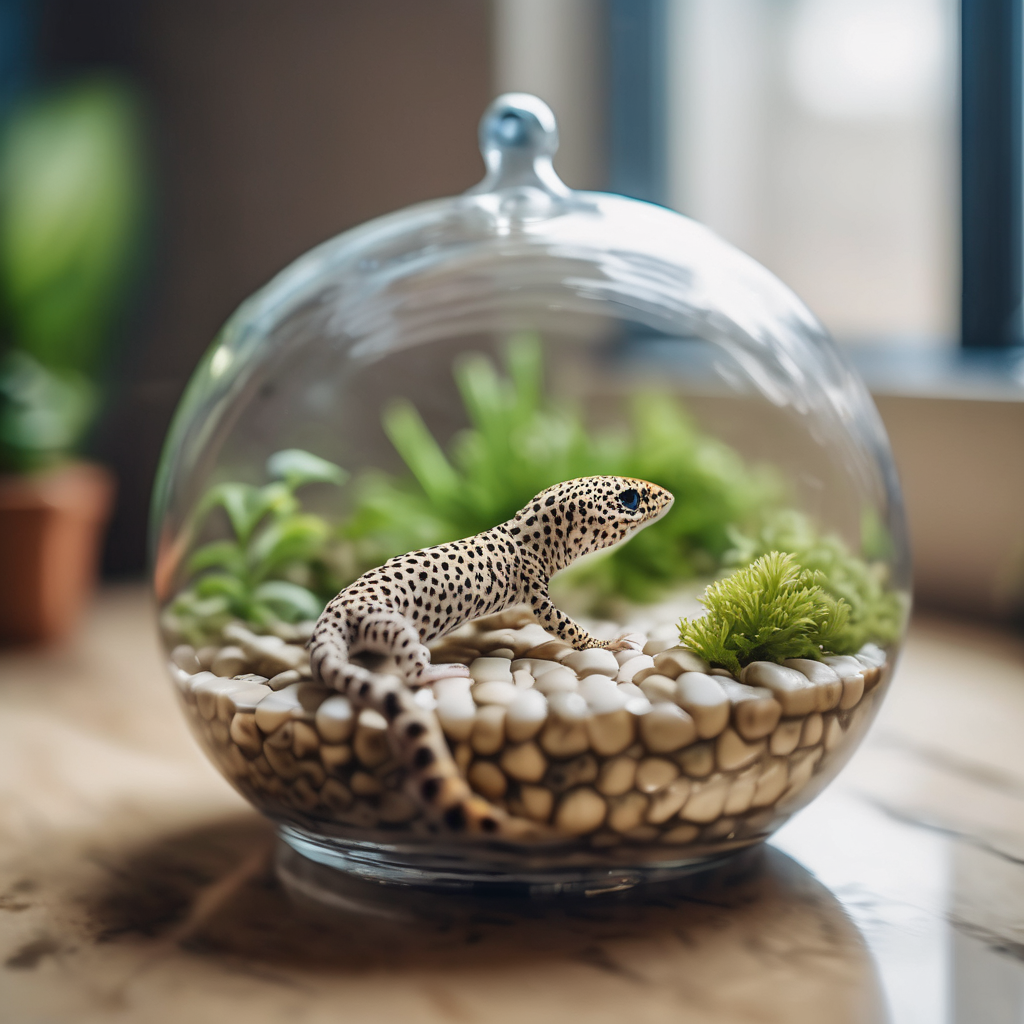
Impaction is the word keepers use when something hard and indigestible blocks a reptile’s gut, and it is one of the few reptile problems that can kill an animal in days while looking, at first, like nothing at all. The animal eats, it moves, it may even bask — but food and waste stop travelling, the abdomen swells, and by the time a keeper sees something obviously wrong the blockage is often advanced. The good news is that impaction is almost entirely preventable, and the substrate choices that cause most cases are cheap to fix.
This guide covers what impaction actually is, how it differs from ordinary constipation, the substrates and husbandry mistakes that cause it, the home care that genuinely helps, and the point at which a reptile vet is the only safe answer. It applies to lizards, snakes and chelonians, with particular attention to leopard geckos and bearded dragons, where loose sand is the classic culprit.
Quick answer: what impaction is and why it happens
Impaction means a physical blockage in the gastrointestinal tract. A reptile swallows material it cannot digest — loose sand, gravel, bark chips, calcium sand, cat litter, wood shavings, or in the worst cases a foreign object — and that material either lodges directly or mixes with food into a dense mass that cannot pass. Peristalsis, the muscular wave that moves food along, cannot push a solid obstruction through, so everything behind it backs up.
Two things make reptiles unusually vulnerable. First, most species swallow prey whole and do not chew, so anything small sitting on or near the prey goes down with it. Second, many reptiles, especially lizards that lick or tongue-test their environment, deliberately take in small amounts of substrate while foraging. A mouthful of sand with a cricket is normal in the wild and harmless in small quantities. The problem is a deep, loose, digestible-looking substrate that turns occasional sampling into steady accumulation.
Secondary causes matter too. Chronic dehydration is the biggest one: an under-hydrated reptile produces thick, dry urates and faeces that move sluggishly, so even normal substrate loads fail to clear. Low temperatures slow gut motility directly — a reptile kept below its preferred body temperature cannot digest properly, and undigested food sitting in the tract is a common route into impaction. Gut parasites, untreated over long periods, can cause a functional blockage without any foreign material at all.
Impaction vs constipation vs normal: how to tell
Keepers panic in both directions — some treat a two-week gap between droppings as an emergency, others miss a genuine blockage for a week. The distinction is straightforward once you know what to look at.
Normal variation
- A healthy adult leopard gecko may pass faeces every two to four days, and juveniles eating daily often produce a dropping with almost every meal.
- Snakes may go seven to fourteen days between bowel movements depending on prey size and species — a ball python on medium rats is not constipated on day nine.
- Droppings should be well-formed, dark, with a solid white or off-white urate cap. Soft but formed is not impaction.
- Appetite stays strong, activity is normal, and the body outline is smooth from ribs to hips with a soft, non-tense abdomen.
Constipation (slowed, not blocked)
- Longer gaps than normal, but the animal still eats and behaves normally.
- Straining with little or no result, or small, dry, hard droppings.
- Usually traceable to low humidity, low temperature, or mild dehydration — fixable with soaks and heat.
- Abdomen is normal or slightly full, not visibly distended or firm to a gentle touch.
Impaction (a real blockage)
- No faeces or urates at all for two weeks or more in a lizard, or a sudden complete stop after weeks of regularity.
- Visible or palpable swelling in the rear half of the body, sometimes with dark, shiny, stretched skin over the lower abdomen.
- A firm mass you can feel through the belly wall when the animal is relaxed — often the single most telling sign, and one keepers only look for after reading about it.
- Straining that produces nothing, repeated pushing, sometimes a small amount of dark fluid or a foul smell from the vent.
- Loss of appetite or refusal of favourite prey. A reptile that has eaten crickets daily for two years and suddenly ignores them is telling you something.
- Lethargy and hiding far more than usual, sitting in one spot, often on the cool side or directly under the heat source.
- Dragging the rear limbs, wobbliness, or a pronounced limp — late signs that pressure or toxin buildup is affecting the nervous system and hindquarters.
- Regurgitation of a recent meal, sometimes days after eating it.
- A prolapse — tissue protruding from the vent. This is an immediate emergency, not a home-care situation.
See a vet today if your reptile has any of these: a visible lump or firm mass in the abdomen; complete absence of droppings and urates for more than 14 days in a lizard; hind-limb dragging or an inability to stand normally; repeated vomiting of undigested meals; a distended, tight belly; or any tissue visible at the vent. Impaction is a mechanical problem — soaks and oils cannot move a solid obstruction, and every day of delay makes surgery more likely and less survivable.
The substrates that cause impaction
Most impaction cases trace back to one decision: the substrate. Understanding which materials are dangerous is the whole prevention strategy.
High-risk materials
- Calcareous or "calcium" sand. Marketed as digestible, it clumps when wet and is one of the most common impaction causes in leopard geckos. It is not digestible in any meaningful sense.
- Fine play sand and silica sand. Easy to swallow with prey, and a single tongue-test can deliver a surprising volume.
- Gravel and crushed walnut shell. Irregular shapes that lodge, especially in juveniles.
- Wood shavings, aspen and cedar or pine chips. Large enough to be swallowed whole, sharp enough to abrade the gut lining, and a documented impaction and perforation risk.
- Cat litter of any type, including "natural" and pellet forms. Never a reptile substrate.
- Coconut fibre or soil mixes in dry-species enclosures. Fine, swallowable, and prone to clumping in a low-humidity tank.
Low-risk alternatives
- Solid tile or slate over part of the floor — nothing to swallow, files claws, holds heat from an under-tank mat beautifully, and wipes clean.
- Paper towel or newspaper. Unattractive, but the gold standard for quarantine, for sick animals, and for any reptile under observation for gut problems.
- Reptile carpet, kept clean with a spare mat rotation.
- Excavator clay or bioactive soil mixes, but only set up properly with a drainage layer and established cleanup crew, and only for species that genuinely need burrowing — not as a lazy sand substitute.
- Large, flat stone or slate pieces on top of a solid base, so the animal cannot dig down into loose material.
For a full species-by-species breakdown, see the guide to choosing safe reptile substrate, and if you are setting up a new enclosure from scratch the current substrate round-up covers what is actually worth buying.
Husbandry mistakes that raise the risk
Substrate is the headline cause, but it rarely acts alone. Four other factors turn a survivable mouthful of sand into a blockage.
1. Feeding on loose substrate
Hand-feeding crickets or mealworms directly onto sand is the single most effective way to cause impaction. The prey moves across the substrate, picks up a load of it, and the reptile strikes at the pile. Feed in a separate tub, on tile, or from tongs onto a flat feeding stone. This one change prevents a large share of cases.
2. Chronic low-grade dehydration
Reptiles that drink rarely or are kept too dry cannot produce the moist gut contents needed to move material along. Many lizards get most of their water from food and from a proper misting or soaking routine rather than a dish. If your species should be misted, mist it. If your species needs soaks, soak it. The guide to soaking a reptile safely covers when soaks help and when they cause harm.
3. Too cool
Digestion is temperature-dependent. A reptile held below its preferred body temperature range cannot break down or move food, and undigested chitin and substrate sit in the tract for days. This is why a working thermostat is not optional, and why a proper temperature gradient matters more than a single air reading. Check surface temperature with an infrared thermometer, not just the dial on the heat mat.
4. Unhealthy prey practices
Feeding prey that is too large, too chitinous (old, hard crickets), or that has been feeding on poor food adds indigestible bulk. Feeder insects should be gut-loaded and appropriately dusted, and no single prey item should be wider than the space between your reptile’s eyes.
What to do at home — and what not to
If your reptile has mild signs — a longer-than-normal gap, slightly dry droppings, a soft but not distended abdomen, and normal appetite and activity — home care is reasonable for 48 hours while you watch closely.
Safe first steps
- Warm, shallow soaks. Lukewarm water at roughly the depth of the animal’s hips, 15 to 20 minutes once or twice a day. The water should never be deeper than the reptile can stand in comfortably, and the room should not be cold. Many mildly constipated reptiles pass a normal dropping within a day or two of consistent soaks.
- Fix the heat. Confirm the warm side is at the correct surface temperature for your species and leave it there. A correct gradient does more for gut motility than any supplement.
- Raise humidity to the correct species level. Too dry is a cause; too wet in a dry-species enclosure creates its own problems. Aim for the species range, not maximum.
- Remove the loose substrate. Switch to paper towel immediately so nothing new can be ingested, and so you can see droppings the moment they appear.
- Feed on a solid surface. Tile, a shallow ceramic dish, or a separate feeding tub.
- Stop feeding large prey. Smaller, softer items reduce the load while the tract clears. If appetite is gone, do not force-feed — that is a vet conversation.
What not to do
- No mineral oil, olive oil, or petroleum jelly by mouth. These circulate on reptile forums and they are dangerous. Aspiration into the lungs of a small lizard is often fatal, and oil does nothing to a solid obstruction. There are specific, vet-supervised rectal lubricants and fluids for confirmed cases — use those, under supervision, or nothing.
- No manual manipulation of the abdomen. Pressing on a full tract risks rupturing it, especially if the obstruction has damaged the gut wall.
- No forcing fluids into the mouth of a weak animal. Drips and syringes in a stressed reptile risk aspiration pneumonia.
- No laxatives, no human stool softeners, no "reptile impaction remedies" sold online. None are validated, several are actively harmful, and a stimulated gut pushing against a hard mass can perforate.
- Do not wait more than 48 hours on home care if nothing has changed. Time is the one resource you cannot buy back here.
What a vet can do
Modern reptile medicine handles impaction routinely when the animal arrives in reasonable condition. Expect some combination of the following.
- Radiographs (X-rays). Two views, often with a contrast medium, to confirm the location, size and nature of the obstruction and to rule out a mass, enlarged organ or egg-binding that mimics it.
- Fluid therapy. Subcutaneous or intraosseous fluids to rehydrate before any intervention. Dehydration alone changes the prognosis significantly.
- Motility and lubricant treatment. Vet-selected products given under supervision, sometimes with cloacal administration of warmed fluids or lubricant. This works only on soft, non-obstructing material — not on gravel.
- Pain management. A blocked tract hurts, and an animal in pain eats less and stresses more, both of which worsen the picture.
- Contrast study or ultrasound to distinguish impaction from organ enlargement, follicular stasis in females, or a gastrointestinal mass.
- Coelomic surgery (exploratory laparotomy). Required for hard obstructions, foreign objects, perforations, or cases presenting late. Reptiles tolerate surgery better than most keepers expect, but survival depends heavily on how early you came in.
If you do not have a reptile vet, find one now rather than during the emergency — see how to choose a vet for a reptile or exotic pet, and read how to prepare and transport a reptile to the vet before the day you need it. Carry the animal warm, in a secure dark container, and bring a fresh faecal sample if you have one.
Prevention checklist
Everything above reduces to a short list. Work through it once and impaction becomes a problem you read about rather than one you treat.
- Substrate: solid tile, paper towel, or slate for all dry-species lizards. No calcareous sand, no fine sand, no shavings, no gravel, no cat litter.
- Feeding surface: never hand-feed onto loose substrate. Use tongs onto tile, a dish, or a separate tub.
- Heat: a thermostat-controlled warm side at the correct surface temperature, verified with an infrared thermometer weekly.
- Humidity: within the species range, monitored with a calibrated digital hygrometer rather than the sticker on the tank.
- Hydration: misting or soaking routine appropriate to the species, plus a clean water dish always available.
- Prey size: no wider than the space between the eyes; gut-loaded and appropriately dusted.
- Weekly handling check: a gentle look at body outline and, for lizards, a light feel along the abdomen while the animal is relaxed and warm. You are looking for symmetry, not for lumps — but you are looking.
- Know your animal’s normal: how often it drops, how much it eats, how much it moves. Impaction is caught by the keeper who notices a change, not by one who follows a schedule.
- Quarantine new arrivals on paper towel so you can monitor output from day one — see the first 30 days with a new reptile.
- Annual or biennial vet check with a faecal exam, which catches parasite loads before they contribute to a blockage.
FAQ
How long can a reptile survive with impaction?
Days, not weeks, once a true obstruction is established. A soft, partial blockage caught early may respond to veterinary fluids and motility support within a couple of days. A hard obstruction — gravel, a foreign object, a dense sand mass — will not resolve on its own and will progress to organ damage, sepsis or gut rupture. Treat a suspected impaction as a same-week vet appointment and a hard 48-hour limit on home care.
My leopard gecko hasn’t pooped in ten days but is eating. Is that impaction?
Not necessarily. Adult leopard geckos commonly go two to four days, and a short fast, a cooler week or a big meal can stretch that. Ten days with a normal appetite, normal activity, a soft abdomen and no straining is more likely slowed digestion — check surface temperature and humidity, switch to paper towel, and start daily soaks. If day fourteen arrives with nothing, or the belly becomes firm or distended at any point, book the vet.
Is calcium sand really dangerous?
Yes. The "digestible calcium sand" claim is marketing. It clumps when moist, is swallowed readily with prey, and is one of the most frequently implicated substrates in impaction cases in leopard geckos and bearded dragons. Provide calcium through proper dusting and a dish of plain calcium carbonate instead — which also protects against the deficiency problems described in the guide to metabolic bone disease.
Will a warm soak alone fix impaction?
Only in the mildest cases, and only where there is no solid obstruction. A soak helps hydration and can stimulate a bowel movement in a constipated animal. It cannot move gravel, a clumped sand mass, or a foreign object. Use soaks as first-line care while you monitor — not as a substitute for a vet when the signs point to a real blockage.
Can reptiles get impaction from eating substrate on purpose?
Some do. Pregnant or egg-binding females, reptiles with a dietary deficiency, and animals under stress may consume unusual amounts of substrate. Persistent deliberate substrate eating is a reason to see a vet, not just to change the bedding — and in females it overlaps with the problems described in the guide to egg binding.
My snake hasn’t produced anything in three weeks after a large meal. Worried?
Probably normal. Snakes on appropriately sized prey routinely go one to two weeks, and larger meals take longer. Watch for the real signs instead: a visible swelling that grows rather than shrinks, repeated regurgitation, or the snake sitting in an unusual posture with a tense abdomen. Read the broader picture in how to tell if your reptile is sick.
Do parasites cause impaction?
Heavy parasite loads can cause a functional blockage, poor appetite and weight loss, and they compound the dehydration and low temperature that cause mechanical impaction. A faecal exam by a reptile vet is the only reliable way to know — it is inexpensive, non-invasive, and worth doing annually.
The bottom line
Impaction is a husbandry disease. The materials that cause it are the materials keepers chose, and the conditions that make it dangerous — low temperature, chronic dehydration, feeding on loose substrate — are all correctable in an afternoon. If you take one action from this guide, make it this: get loose particulate substrate out of your dry-species enclosure and feed on a solid surface. That single change removes the most common pathway to the problem.
And if you are already looking at an animal with a firm abdomen, no output in two weeks, or dragging hind legs — stop reading and call a reptile vet. There is no home remedy for a mechanical blockage, and early is everything.
Leave a Reply