
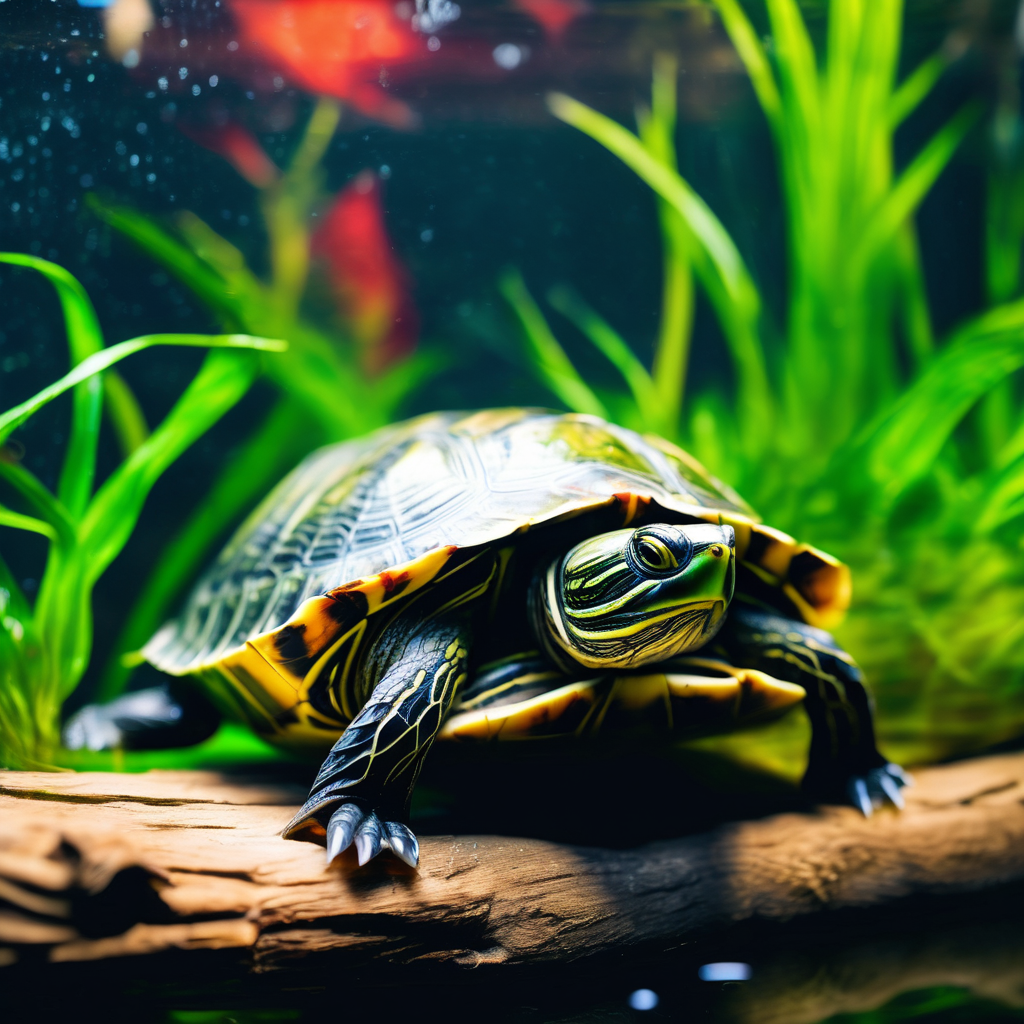
A red-eared slider basking on a sunny log is the image that comes to mind for most people when they think of a pet turtle, and for good reason: Trachemys scripta elegans is the single most popular pet turtle in the world, with tens of millions bred in captivity every year. That popularity, though, has created a trap. Countless sliders die in their first year because their keepers followed the “10-gallon-per-inch-of-shell” rule from a pet store employee and ended up with a 200-gallon adult in a 10-gallon tank with a heat lamp balanced on the lid.
This is not a beginner’s shortcut. A single adult red-eared slider needs a serious aquarium — 75 gallons minimum for a female, 55 for a male — plus a canister filter that can turn the water over 2–3 times per hour, a basking platform that dries the entire body, and a UVB light that is replaced every six months. But done right, a slider is a fascinating, long-lived companion that can thrive for 20–30 years. This guide covers what that “done right” actually means, from day one setup to the health red flags that mean a vet visit today. It belongs alongside our freshwater aquarium setup guide and our nitrogen cycle guide for the full water-quality picture.
Why a red-eared slider is not really a beginner turtle
The reputation for being “easy” is the source of most slider tragedies. A slider starts life the size of a quarter and grows steadily — females reach 8–12 inches and weigh over two pounds, males 5–7 inches. A hatchling in a 40-gallon breeder looks content and is, but that same tank becomes a prison by year two. The turtle outgrows it, the filter can no longer handle the bioload, and the water quality crashes in weeks. By the time the keeper realizes the problem, the turtle has developed a chronic respiratory infection or shell rot.
The alternative is to commit from day one. A 40-gallon tank is the absolute minimum for a hatchling and will need upgrading by year two. A 75-gallon long is the practical floor for an adult female, and a 125-gallon tank is the comfortable norm. If you are not ready to invest in a large aquarium, a canister filter, and a heavy-duty basking setup, choose a smaller Species — like a Russian tortoise or a ball python — that matches your space and budget. Our complete species guide compares turtles that stay small against the big-water turtles like sliders.
The tank: size, filtration, and the water
The single biggest setup mistake is underfiltering the water. A red-eared slider produces roughly as much waste as a small dog of similar weight, and that waste goes into the water. A single adult needs a canister or HOB filter rated for at least twice the tank’s volume — so a 75-gallon tank needs a filter rated for 150 gallons per hour. Our aquarium filter guide explains the difference between mechanical, chemical, and biological media and why a filter that only catches visible debris is missing the real problem.
Water quality is non-negotiable. Ammonia and nitrite must read zero at all times; nitrate should stay under 40 ppm. That means weekly 25% water changes with a gravel vacuum (read our water change technique guide for the right schedule), monthly filter media rinses in tank water (never tap water, which kills the bacteria colony), and a test kit checked every week. Algae is ugly but harmless — our algae guide explains when it is a problem and when it is just cosmetic.
Temperature matters. The water should sit at 70–78°F for an adult (warmer, 78–82°F, for a hatchling), measured with two independent aquarium heaters and a thermometer on opposite ends of the tank. Our heater sizing guide covers the watts-per-gallon math and why a single heater is a single point of failure. The basking platform, meanwhile, needs to reach 85–90°F — that is the temperature at which the turtle’s body can digest food and fight off pathogens. A slider that does not bask is a sick slider.
Lighting and UVB: the one thing you cannot skip
Red-eared sliders need UVB lighting to metabolize calcium and build bone. Without it, a turtle develops metabolic bone disease (MBD) — a painful, progressive deformity of the shell and limbs that is irreversible and usually fatal. A UVB light must be placed 10–14 inches from the basking spot, left on for 10–12 hours per day on a timer, and replaced every 6 months — the bulb still glows after six months but the UVB output has dropped to nothing.
Do not rely on sunlight through a window. Glass blocks the UVB wavelengths the turtle needs. A UVB strip or compact bulb rated for reptiles (not a generic “full spectrum” bulb) is the only safe option. Our full UVB guide explains how to test output with a solarmeter and why some species need more than others — sliders are moderate users, but a deficiency still kills over time.
The basking lamp and the UVB lamp can be the same fixture or separate ones, but they must both be on the basking platform. A common mistake is placing the UVB on one side and the heat on the other, which gives the turtle a warm spot without UVB — the turtle will bask all day and still develop MBD. The two must overlap so the turtle is getting both at the same time.
Diet and feeding: more than just pellets
A young slider is an opportunistic carnivore and will eat anything that moves — that is why they are easy to start but hard to finish. Hatchlings should be fed a mix of commercial pellets, chopped earthworms, small cockroach pieces, and the occasional guppy fry, 2–3 times per week. As they mature, the diet shifts toward vegetation: adult sliders are roughly 75% plant matter and 25% protein.
The shift is the hardest part of slider care. Once a turtle is used to easy prey, getting it to eat weeds and vegetables is a battle of wills. Start the transition early — by age one, begin mixing increasingly more plant matter into each meal. Good options include red leaf lettuce, dandelion greens, duckweed, and spirulina pellets. Never feed cabbage or iceberg lettuce; they are nutritional void. Calcium supplements dusted on food 2–3 times per week help counteract the phosphorus in pellets that blocks calcium absorption.
Feeding time is also a water-quality event. Any uneaten food left in the tank for more than 2–3 hours decomposes and spikes ammonia. Use a feeding ring or a turkey baster to remove leftovers immediately after the meal is over. A slider that is fed in the main tank without cleanup will have chronically cloudy water and a stressed immune system.
Shedding, hygiene, and seasonal care
Sliders shed their scutes (the individual plates on the shell) periodically throughout their lives, roughly once a year for adults and more often for growing juveniles. A healthy shed is a clean separation of the old scute from the new layer underneath; the turtle will rub against rocks and logs to help the process. A retained scute — one that stays white, soft, or smelly for more than a few days — is a sign of a nutritional imbalance, usually a calcium or UVB deficiency.
Hygiene means keeping hands away from the face and mouth. Sliders carry salmonella, and the bacteria that causes it can harm anyone in the household — children, elderly people, and immunocompromised individuals are at the highest risk. Our Salmonella safety guide covers the hand-washing protocol and the quarantine practices that keep a multi-pet household safe. Never put a turtle in your mouth or let a child do so, even for a photo.
Seasonal care is the most overlooked part of slider ownership. In winter, the water temperature should drop by 5–10 degrees and the basking lamp timer should shorten to 8–10 hours — this mimics the natural photoperiod and triggers the turtle’s metabolism to slow. Some keepers allow a natural brumation of 6–8 weeks with reduced feeding and cooler temperatures; others keep the turtle active year-round with consistent heat and light. Our seasonal reptile care guide explains which approach suits which situation.
Health problems and when to call the vet
Respiratory infection is the most common killer of captive sliders. It starts with a lethargic turtle that stays submerged and refuses to bask, progresses to mucus around the eyes and nose, and ends with open-mouth breathing and a turtle that can no longer swim to the surface. Unlike a snake, a turtle with an RI needs immediate veterinary attention — the infection can be fatal within 48 hours. Our emergency warning signs guide covers the full progression and why early action matters.
Shell problems are the other major category. A soft shell usually means metabolic bone disease from inadequate UVB or calcium; a pitted or smelly shell is shell rot from poor water quality. Both need a vet who specializes in reptiles — a general practice vet will not have the tools to evaluate a turtle’s shell or prescribe the right antibiotics. Our vet-finding guide lists the questions to ask and the credentials to verify before you need them.
Parasites are common in wild-caught or recently imported sliders and show up as weight loss, visible worms in the feces, or a pot-bellied appearance. Treating parasites requires a fecal exam and species-specific dewormer — never dose with a cat or dog dewormer, which can be toxic to reptiles. A quarantine period of at least 30 days is standard practice for any new turtle, with a fecal test before the animal joins the main display.
New-tank setup checklist
- 75-gallon long tank minimum (125+ gallons preferred for adults) with a secure lid — sliders are escape artists.
- Canister or HOB filter rated for 2x the tank volume, with mechanical + biological media.
- Two aquarium heaters (redundancy) set to 74–78°F, verified with a secondary thermometer.
- Basking platform large enough for the entire body to dry, heated to 85–90°F.
- Reptile-rated UVB bulb (10.0 or 10.0+) positioned 10–14 inches above the basking spot.
- Digital timer for lights, set to 10–12 hours of UVB + basking per day.
- Water test kit (ammonia, nitrite, nitrate, pH) with weekly testing schedule.
- Large water dish or integrated tank; adult needs to fully submerge and swim.
- Grit or cuttlebone for calcium supplementation, plus leafy greens and pellets.
- Quarantine tub and separate setup if you keep other reptiles or turtles.
Frequently asked questions
How long do red-eared sliders live?
In captivity with proper care, red-eared sliders commonly live 20–30 years, with some individuals reaching 40 or more. This is a multi-decade commitment — if you cannot guarantee that level of care, do not bring one home. Many sliders are abandoned at 5–10 years when the keeper realizes the tank upgrade costs and the commitment.
Can red-eared sliders be kept outdoors?
In warm climates (USDA zones 9–11), an outdoor pond with a basking area and winter shelter can house sliders year-round. In cooler zones, an outdoor setup is possible but requires a deep pond that will not freeze solid, a heater, and a winter greenhouse or indoor shelter. Our seasonal guide has the temperature charts for every climate zone.
Do red-eared sliders need a basking lamp AND a UVB lamp?
Yes. The basking lamp provides heat (the platform must reach 85–90°F), and the UVB lamp provides the ultraviolet radiation that triggers vitamin D3 synthesis. They can be the same fixture or separate, but both must shine on the same basking spot. A heat lamp alone will not prevent metabolic bone disease.
What is the difference between a male and female red-eared slider?
Males are smaller (5–7 inches vs. 8–12 inches for females), have longer front claws and a longer, thicker tail, and reach sexual maturity later. Females are larger and more aggressive, and they will outgrow a 55-gallon tank much faster than a male. If you are buying a hatchling, you cannot reliably determine the sex until it is 3–4 inches long — the differences appear at sexual maturity.
Can I keep multiple red-eared sliders together?
Not without a very large setup. Sliders are not social in the way mammals are — they tolerate each other for basking space but will fight over food and territory. A single aggressive turtle can wound another in minutes, and a tank that is too small will trigger constant dominance displays. If you want multiple turtles, the rule is 75 gallons per turtle with a 50% buffer, so two adults need 150+ gallons.
How often should I replace the UVB bulb?
Every 6 months, regardless of whether it still glows. A UVB bulb that has burned for 6 months will look and feel identical to a new one but will emit no usable UVB — your turtle will develop metabolic bone disease without you knowing it. Mark the replacement date on the bulb itself or use a permanent marker on the lamp fixture. Our UVB testing guide shows how to verify output with a solarmeter.
The bottom line
A red-eared slider is one of the most rewarding turtles to keep — intelligent, active, and surprisingly interactive, with a personality that emerges over months of consistent care. But that reward comes with a steep price: a large aquarium, a powerful filter, a daily feeding and water-change routine, and a UVB light replaced twice a year. If you are reading this and your turtle is in a 10-gallon tank with a heat lamp, the single best thing you can do today is rehome it to someone who can commit to the upgrade — or start planning that 75-gallon tank now, before the inevitable health crisis makes the decision urgent. The right vet, a properly cycled tank with over-filtration, and verified UVB output are the three pillars of a healthy slider. Get those right and this turtle may outlive you.
Leave a Reply