
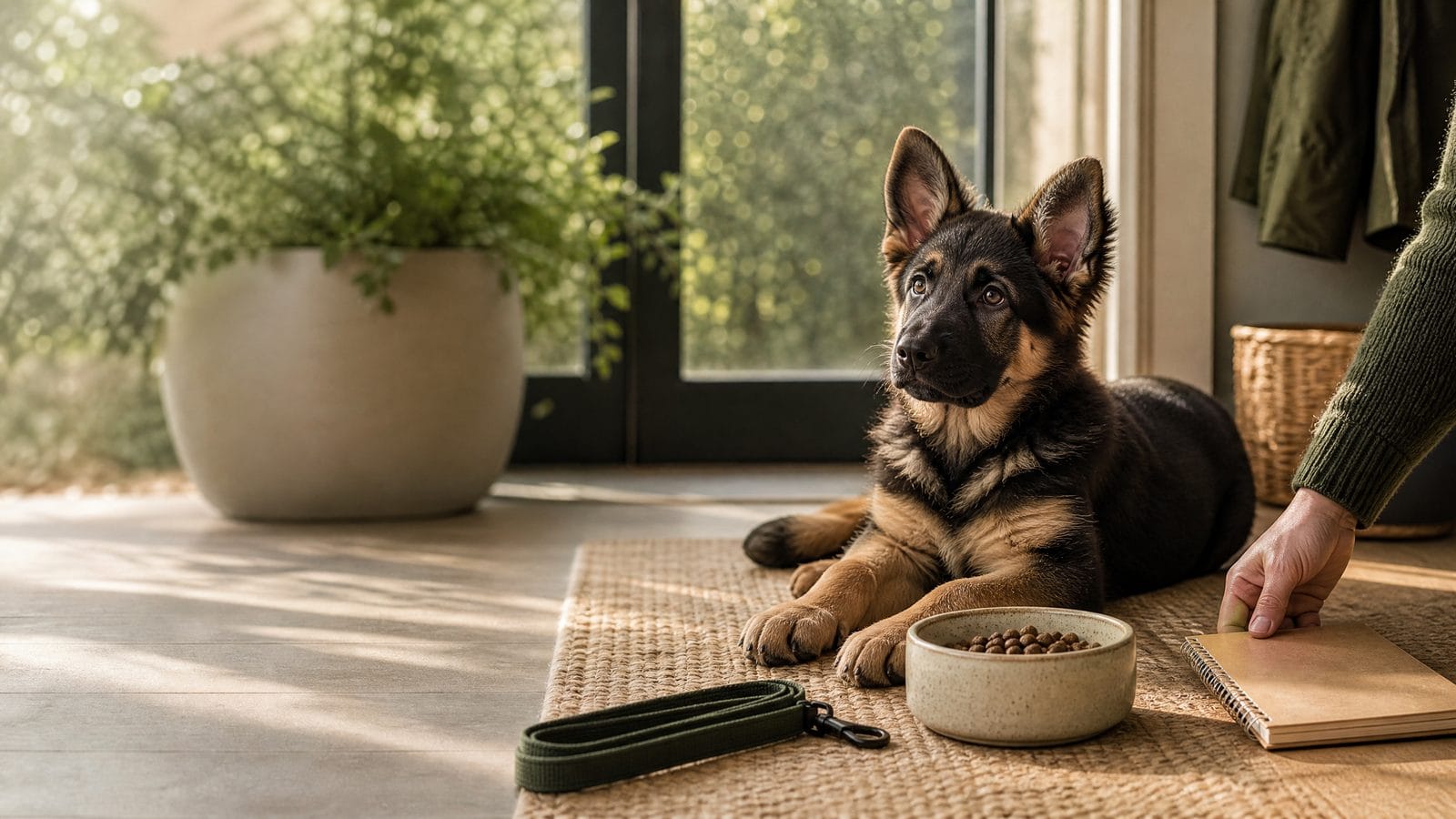
A puppy expected to become a working, sporting or highly active adult is still a puppy first. The most useful nutrition goal is not to make growth faster or to copy an adult performance diet. It is to support steady development with a complete food appropriate for growth, sensible reward habits, appropriate activity progression and regular veterinary monitoring.
Important: growing dogs have different nutritional needs from adult dogs. Do not build a home-prepared recipe, add minerals or change a complete growth diet because of a generic online percentage or “performance” claim without consulting a veterinarian or veterinary nutritionist.
Put growth, not future workload, at the center
Herding, detection, field, assistance and sport dogs may eventually have demanding roles, but their joints, muscles, digestion and learning capacity develop over time. A reliable starting point is a complete and balanced food formulated for the puppy’s life stage and expected adult size, followed by regular assessment of growth and body condition with the veterinary team. WSAVA’s nutrition resources emphasize individual assessment, diet history and Body Condition Score as practical foundations for nutrition decisions.[1]
| What to protect | What to observe | When to involve the veterinary team |
|---|---|---|
| Steady growth, appropriate life-stage nutrition and a consistent routine. | Appetite, stool quality, energy, body condition, growth pattern and tolerance for training. | Unexplained weight change, recurrent digestive upset, lameness, poor growth, persistent reluctance to exercise or questions about diet changes. |
| A calm relationship with food and rewards. | How much of the day’s food is used in training, enrichment and meals. | Any plan involving supplements, raw/home-prepared food, medical conditions or a rapidly changing workload. |
Choose a complete diet before adding extras
For most puppies, the safer first decision is to choose a food that clearly states it is complete and balanced for growth or the appropriate life stage, then follow up with the veterinarian as the puppy develops. Ingredient lists and marketing words alone do not show whether a diet is right for the individual puppy. WSAVA provides resources that help owners evaluate pet-food information more critically and encourages nutrition assessment at veterinary visits.[1]
Extra calcium, “joint” powders, high-calorie toppers and improvised recipes can make a balanced growth diet less balanced. If a puppy has a medical issue, poor appetite or a special feeding requirement, the next step is an individual veterinary recommendation—not a generic add-on.
Make training rewards part of the food picture
Food rewards can be useful in kind, reward-based training. The key is to keep them planned rather than invisible. Set aside part of the day’s suitable food or veterinarian-approved treats for training, and keep the rest of the diet predictable. This helps the handler notice when an exciting training week, travel or a new class has quietly changed the total food intake.
- Use small, easy-to-handle rewards that fit the puppy’s existing diet plan.
- Avoid using appetite, skipping meals or escalating food value as a way to pressure a puppy through training.
- Pause a session when the puppy is tired, frustrated, overheated or not comfortable; nutrition cannot compensate for unsuitable training load.
Progress activity with the puppy’s development
Working potential does not justify adult-style conditioning in a growing dog. Build skills, confidence and appropriate low-impact activity in partnership with trainers and the veterinary team. Sudden changes in workload should trigger a review of the whole routine: rest, environment, food, growth, recovery and behavior—not only the bowl.
Bring these notes to the next veterinary visit
Record the food name and amount, all rewards and toppers, stool and appetite changes, recent activity changes, the puppy’s current weight or growth record, and any questions about a transition. A clear history makes an individual nutrition assessment much more useful.
Build the next stage responsibly
As the puppy becomes an adult, the plan may change with size, health, work type and training volume. Our Working Dog Nutrition guide explains how to frame that adult conversation. For reward use and routine, visit Dog Training Food Rewards, Focus Dog Feeding and Behavior Dog Feeding. You can also browse our Dogs Care Guide.
Leave a Reply