
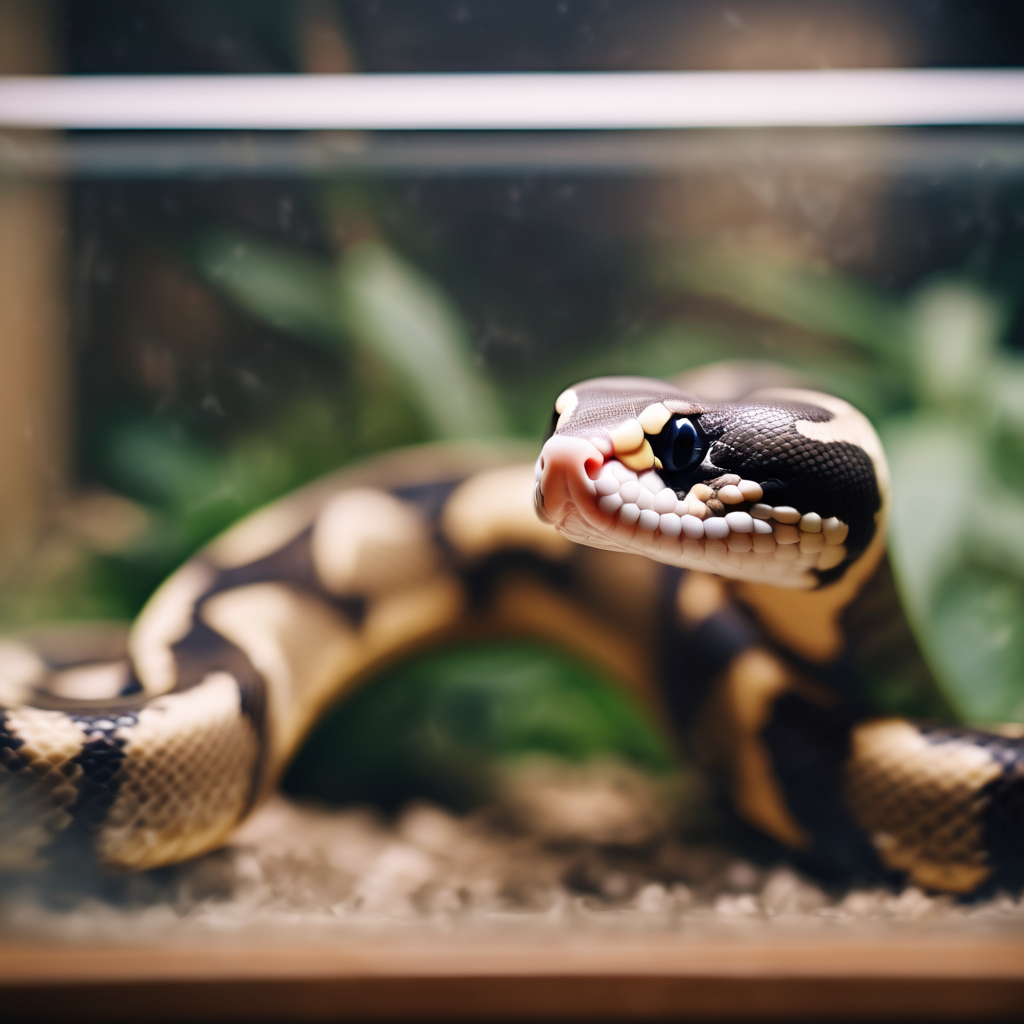
A snake that sits with its mouth open, or one that suddenly stops eating, sends most keepers straight to a panic — and rightly so. Respiratory infection, usually shortened to “RI” in the hobby, is the most common and the most potentially fatal health problem in pet snakes, and it is also one of the most over-diagnosed. The truth is that a snake can sit in an open-mouth posture while warming up after a meal, and a single missed shed in the nose can look like an infection. But when a real respiratory infection takes hold, it moves fast and can kill a snake in days, especially a young one.
This guide is the snake-specific version of the problem. It is written for keepers of corn snakes, ball pythons, hognose snakes, king snakes, boas, and pythons, and it treats the disease from three angles at once: what it actually is (a bacterial invasion of the respiratory tract, almost always secondary to a stressor), what it looks like in a snake (which differs by species), and what the keeper can do — and cannot — do before a vet sees the animal. Part of the pet snake complete care guide series.
Quick answer: the signs that mean “vet today”
- Open-mouth breathing that persists after the snake is warm and settled — not just after a meal or during a shed.
- Clear or colored mucus around the mouth, nostrils, or at the tip of the head (mucus that is clear is still an infection; white, yellow, or green is worse).
- A wheeze, hiss, or clicking sound when the snake breathes, best heard in a quiet room.
- Swollen or puffy face, especially around the nostrils (nasal bulging) or a retained shed stuck in the nose.
- Refusal to feed for more than two meals combined with any of the above, or wasting away around the spine.
- Swelling under the jaw (glands) or a “gurgling” sound on inhale — late-stage, emergency signs.
None of these alone is a death sentence, but none of them is harmless either. A snake with a respiratory infection should see a vet within 24 hours. Do not wait for a second opinion from the internet.
What a respiratory infection actually is
In snakes, the respiratory system is a single tube running from the nostrils through the nasal cavity, the choanae (the slit behind the upper teeth), and into the lungs. Unlike mammals, a snake has only one functional lung (the right one, usually). A respiratory infection inflames the nasal cavity and the upper airway and invites a bacterial secondary infection — most commonly Pasteurella multocida and various Staphylococcus and Pseudomonas species. The infection thickens the mucus lining, narrows the airway, and makes breathing labored. Left untreated, it spreads into the lungs and the bloodstream.
Why it starts: the overwhelming cause is a stressor that suppresses the snake’s immune response, almost always a temperature problem. A snake kept consistently 3-5 °F below its target range, or one exposed to a cold draft, one kept on damp substrate that invites mold, or one that has just been moved, handled too much, or hasn’t eaten in weeks — all of these create the opening for bacteria to take root. So the first rule of prevention is: keep the temperature right, always.
How it looks differs by species
A ball python’s infection tends to produce mucus at the nostrils and a puffed-face appearance, because its short skull concentrates the inflammation. A corn snake’s infection more often produces a wheeze and a neck swelling, because its longer neck holds the pressure. A hognose’s infection can mimic a “toxic” appearance — the snake looks puffy and dark and refuses to feed, but the real problem is the nose. A boa constrictor’s infection often shows as nasal discharge that the snake wipes on its enclosure, leaving crusts. Recognizing the species’ pattern is part of catching it early.
Early signs vs. the “it might be nothing” signs
The trap is that several normal snake behaviors look like early infection. Use this table to separate the two.
| Situation | Likely harmless | Possible infection |
|---|---|---|
| Open-mouth posture | After a meal, while warming up, or during a shed | Persists for hours after the snake is warm and settled |
| Not eating | Seasonal fasting, pre-melt fasting, stress from a move | Coincides with mucus, wheezing, or facial swelling |
| Nose rub | An attempt to remove a stuck shed | Won’t stop after a warm soak; skin is raw |
If any red-flag sign accompanies the behavior, treat it as infection until a vet says otherwise. If the only sign is a single missed feed and the snake is otherwise clean, active, and at the right temperature, it is probably fine — but watch closely for 48 hours.
Diagnosis: what the vet does
A qualified reptile vet will usually confirm an RI by physical exam and by gently flushing the nostrils with sterile saline to look for mucus, then, if the infection is advanced, by taking an orotracheal swab and culturing it. Radiographs (X-rays) are sometimes needed to see lung involvement, though a mild upper RI often shows up perfectly normal on an X-ray and is diagnosed by behavior alone. Blood work is rarely needed. The keeper’s job is to describe the signs honestly: when they started, what the snake was doing that day, whether there was a temperature excursion, and how long the snake has been not eating.
Treatment: the keeper’s part and the vet’s part
The vet’s part is antibiotics, usually a long-acting injectable like ceftazidime or a combination of antibiotics chosen by culture, given every 24-48 hours for 4-6 weeks. The keeper’s part is the environment: the snake goes into a clean, minimal hospital tub with a snug-fitting water dish, paper towels or news pages for substrate (no wood, which holds bacteria), a hide, and a basking lamp on a thermostat set precisely at the species’ high-end temperature. The keeper must maintain that temperature and humidity every single day for the full course, because a relapse is common and always comes back as a worse infection.
In the first 48 hours — and only with vet direction — a keeper can support the snake by offering a warm, humid “steam tent”: a plastic bin with a small dish of warm (not hot) water that the snake can breathe for 15 minutes, two to three times a day, to loosen mucus and make breathing easier. This is support, not treatment. Do not attempt to dose antibiotics yourself — the wrong antibiotic or the wrong dose selects for resistant bacteria and turns a treatable infection into a fatal one.
Prevention: the temperature rule
Every respiratory infection in this guide could have been prevented by one change. The rule: the coldest point in the enclosure must never drop below the species’ minimum for more than a few hours, and the snake must always have a way to warm up to the species’ maximum. For most common pet snakes that means a basking surface of 88-92 °F and a cool side of 78-82 °F for corn snakes and kings, or 88-96 °F basking and 76-80 °F cool for ball pythons. A digital thermostat and a daily reading are non-negotiable. Second: keep the enclosure clean, spot-clean feces daily, and deep-clean monthly. A dirty enclosure is a bacterial breeding ground, and the mucus that an RI creates is an open door for the very bacteria that caused it.
When to call it an emergency
If a snake is gaping, gasping, or making a gurgling sound on every breath, if the face is so swollen the eyes are nearly closed, if the snake is too weak to hold itself upright, or if mucus is dripping onto the substrate in thick strands — that is an emergency. These snakes need veterinary care within hours, and some need oxygen support and fluid therapy that only a clinic can provide. A keeper who has read this guide should never wait until morning for any of these signs.
Recovery timeline and what to expect
The first sign of recovery is the snake taking a meal again — usually days 5-14 into treatment if the antibiotics are working. Do not be fooled by a single feed: a snake can resume eating while the infection is still active, because feeding behavior and immune health are separate systems. Expect a 4- to 6-week antibiotic course and at least 8 weeks of careful monitoring. After it ends, the snake may be thin and need a gradual return to normal prey size. Most snakes recover fully if the course is completed and the temperature is kept correct.
Checklist: RI response plan
- Note the exact signs and when they started; take a photo if the snake will sit still.
- Check enclosure temperature and humidity with a digital probe; record the numbers for the vet.
- Move the snake to a clean, minimal tub with paper substrate, a snug water dish, and a hide.
- Call your reptile vet and describe the signs; ask whether the snake needs to be seen today or tomorrow.
- Do NOT medicate yourself. Do NOT offer force-feeding unless the vet instructs it.
- Only start a humid support tent (warm steam, 15 min, 2-3x/day) if the vet approves.
- Maintain exact temperatures and complete the full antibiotic course, even after the snake eats again.
Frequently asked questions
Can I cure a snake RI at home?
No. Home care supports the snake while a vet-provided antibiotic clears the bacterial infection. Trying human antibiotics, aspirin baths, or essential oils selects resistant bacteria and delays the care the snake actually needs. A mild case managed by a vet with support at home can resolve in a week; a mild case ignored at home becomes an emergency in days.
Does every snake with an RI need antibiotics?
Fungal or viral upper respiratory disease exists in snakes, and it is not helped by antibiotics. A vet exam and, when needed, a culture or radiograph, are how you find out which kind of infection it is. Do not start a long antibiotic course on your own assumption.
How long does an RI take to clear?
Most snakes show improvement in 3-7 days if the antibiotic is the right one, but the full course is 4-6 weeks. Stopping early is the single most common reason an RI returns — and the second infection is usually harder to treat than the first.
Is an RI contagious to other snakes?
Directly, no — but a contaminated enclosure and a keeper’s hands can pass the bacteria between tubs, and a stressed cage-mate is the most likely victim. Quarantine any snake showing signs away from the others, and clean hands and tools between every contact.
Should I feed a snake with an RI?
A snake that is breathing normally will usually keep feeding during a mild RI, and that is fine. A snake that is gaping or wheezing is stressed by the act of swallowing and should not be offered food until the breathing is normal again — force-feeding an actively infected snake can make the infection worse.
Leave a Reply