
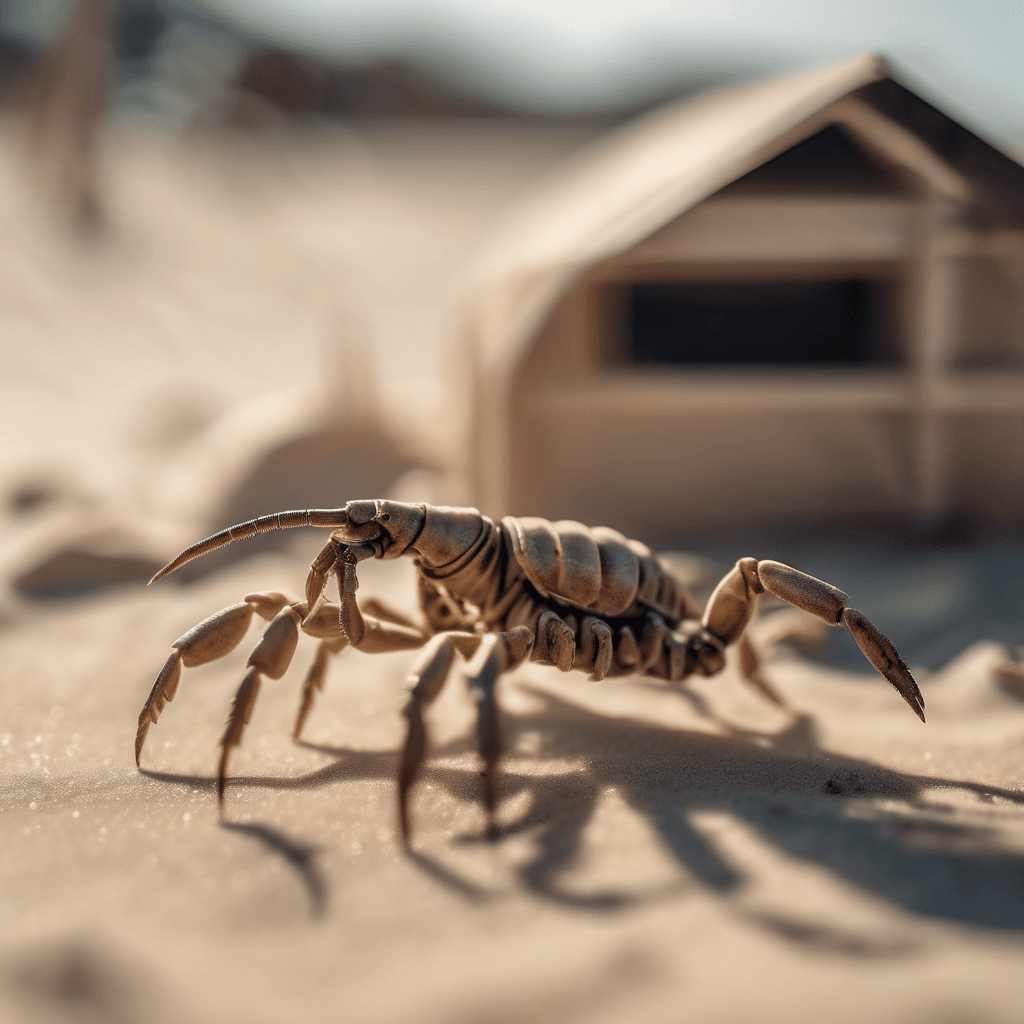
A pet scorpion is an arthropod, which means its skeleton is on the outside. To grow, it cannot simply get bigger — it must crawl out of its own armor, inflate the new, soft shell underneath, and wait for it to harden. That single act, called ecdysis or molting, is the most dangerous moment in a scorpion’s life. In the wild, a molt gone wrong is often fatal, and in captivity a well-meaning owner can turn a manageable molt into a dead scorpion in minutes.
This guide walks through the biology, the early warning signs, exactly what you should and should not do while the scorpion is in the process, and how to tell a clean molt from a stuck one that needs help. If you keep a scorpion, understanding molting is not optional trivia — it is the difference between raising an animal for a decade and losing it in a single afternoon.
Why Scorpions Molt at All
The scorpion’s exoskeleton is made largely of chitin, a tough, lightweight structural material. It protects the scorpion from predators and water loss, but once it forms, it cannot expand. Every time the scorpion outgrows its shell, it must produce a new one beneath the old and then discard the old one.
Between molts, a scorpion grows steadily. Then, when it is ready, glands beneath the old cuticle secrete enzymes that loosen the inner layer and draw fluid back into the body. The scorpion swells with that fluid, building internal pressure until the old shell splits along a predictable seam. What comes out is a pale, soft, completely defenseless animal that will roughly double in size over the following hours as it pumps itself back up.
How often does a scorpion molt?
Juveniles molt far more often than adults, because they are growing fast. A young emperor or desert hairy scorpion may molt every few months for the first couple of years. As it approaches adulthood the interval stretches, and a mature scorpion might molt only once a year or even less. The driver is not a calendar but growth rate: a well-fed scorpion molts more often; a slowly growing one stretches the interval. If your juvenile has gone many months without a molt and is still tiny, that is a feeding or temperature signal, not a normal pause.
Early Signs a Scorpion Is About to Molt
The days leading up to ecdysis are called proecdysis, and an attentive keeper can spot them. Learning these signs lets you stop feeding at the right time and resist the urge to disturb the animal.
- It stops eating. A scorpion that suddenly refuses a prey item it would normally take immediately is often days from molting. Do not force the meal and do not leave live prey in the tank.
- It turns dull and pale. The glossy, freshly hardened cuticle loses its sheen and takes on a slightly gray or washed-out look. This is the enzyme stage beginning beneath the surface.
- It becomes reclusive and still. Expectant molters burrow, wedge into a hide, or sit motionless for long stretches. They are not sick; they are conserving energy.
- The tail segments and joints look tight or cloudy. The membranes between segments can look paler, and the whole body may seem slightly swollen.
- Activity drops. Less hunting, less exploring, more time tucked away.
Critical rule: when you see these signs, stop offering food. A live cricket or worm left in the enclosure during a molt will chew on the soft, defenseless scorpion and can kill it within hours. Remove all uneaten prey the moment feeding stops.
The Molting Process, Step by Step
Molting itself takes only a few hours once it begins, but the full recovery is much longer. Here is what happens:
- Rupture. The old cuticle splits, usually across the front of the carapace and around the leg bases. A healthy scorpion molts lying on its back or side — that orientation is normal, not distress.
- Extraction. The scorpion pulls itself free, leg by leg, pedipalp by pedipalp. It works its way out of the old shell in one unbroken piece, including the tail. The discarded exoskeleton looks like a perfect, hollow ghost of the animal.
- Inflation. Newly emerged, the scorpion is pale and soft. It pumps fluid into its limbs and tail to stretch the new cuticle to full size before it hardens. This is the phase where size is actually gained.
- Hardening (sclerotization). Over the next several hours to a day or more, the new cuticle darkens and hardens as it tans. The scorpion will not eat and will move cautiously until it is firm.
Do not panic at an upside-down scorpion. A scorpion lying on its back mid-molt looks alarming but is completely normal. It is not stuck or dying — it is doing exactly what it needs to. Leave it alone.
What to Do — and What NOT to Do — During a Molt
Most of molting is hands-off. The single most useful thing you can do is nothing, and resist the well-intentioned urge to help.
Do
- Remove live prey as soon as the scorpion stops eating.
- Leave the old shed in the enclosure. Your scorpion will very likely eat it. The shed is rich in nutrients and minerals, and consuming it is normal, healthy behavior — not a sign of starvation.
- Keep humidity at the high end of the species’ range during the molt. Moist air softens the joints and makes extraction easier. A slightly more humid hide helps enormously.
- Minimize disturbance. No handling, no rearranging decor, no bright lights on the tank. Watch from a distance if you want to watch.
- Keep a shallow water source available after it hardens, so it can rehydrate.
Do NOT
- Do not pull on the scorpion or the shed. This is the number-one cause of a lost scorpion. A soft, emerging animal will tear; a leg pulled during extraction will be lost permanently.
- Do not mist heavily onto a molting scorpion in a way that knocks it over or floods it.
- Do not turn up the heat. Overheating a soft, wet scorpion is lethal. Keep temperature stable and normal.
- Do not offer food for days afterward. The fangs are still soft. Wait until the exoskeleton has fully darkened and hardened before the first meal.
Stuck Shed vs. Successful Molt: How to Tell
A successful molt leaves a complete, hollow exoskeleton and a scorpion that is larger, evenly colored, and moving normally once hardened. A problem molt looks different, and the distinction matters because only some stuck sheds need help.
Signs the molt went well: the shed is intact and hollow, all legs and the tail came out clean, and the new scorpion darkens evenly within a day or so.
Signs of a stuck or incomplete shed (dysecdysis): a leg or the tail is still trapped in the old shell, the new cuticle stays pale and soft far longer than expected, the scorpion moves stiffly or drags a limb, or the shed came out in pieces with parts still attached.
When and how to help a stuck shed
Intervention is genuinely risky, so the threshold for it is high. Only consider helping if:
- The scorpion has been completely free of the old shell for many hours (it is fully out, not mid-extraction), and
- A specific leg, telson (stinger tip), or pedipalp is clearly still glued inside a fragment of shed, and
- Raising humidity alone has not worked after a reasonable wait.
If all three are true, the gentlest approach is environmental, not manual: move the scorpion to a small, humid, secure container with damp (not wet) paper towel and a hide, and let increased moisture soften the joint over hours. Manual tugging should be the absolute last resort and is better left to an experienced keeper or an exotic vet, because a torn limb will not regrow.
Warning Signs: When a Molt Is Going Wrong — Vet Needed
Most molts resolve on their own, but some situations mean the scorpion is genuinely in trouble and normal aftercare is not enough.
- The scorpion is still soft and pale more than 24–48 hours after emerging and cannot right itself or move normally. This suggests a hydration, temperature, or systemic problem.
- It is stuck mid-extraction and cannot free itself despite correct humidity — do not pull, but seek help.
- Abnormal darkening, blackening, or a foul smell near the joints or the shed site. This points to infection, which is far more dangerous than a slow molt.
- Deformity after hardening: a shriveled, curled, or permanently bent limb or tail indicates the new cuticle hardened in a bad position.
- Repeated failed molts. A scorpion that struggles with molt after molt is usually being kept too dry, too cool, or under-fed.
For invertebrates, a regular vet is rarely the right call. Look for an exotic or invertebrate-experienced veterinarian, and when you call, describe the species, the humidity and temperature you maintain, and exactly what the molt looked like. Treatment options for invertebrates are limited, which is exactly why prevention through correct husbandry is everything.
Preventing Molt Problems Before They Start
Nearly every failed molt traces back to environment. Set the tank up so that molting almost cannot go wrong:
- Maintain species-appropriate humidity with a gradient. Give the scorpion a moist hide on one end and a dry area on the other so it can choose. Low, flat humidity is the leading cause of stuck sheds.
- Hold stable temperature. A correct heat gradient with a thermostat prevents both cold stress and overheating.
- Provide a secure hide. A molt is safest when the scorpion can retreat somewhere it will not be disturbed or fall.
- Keep substrate suitable. Deep enough to burrow for burrowing species; firm and clean so a molting scorpion is not on unstable footing.
- Feed appropriately for growth. Consistent, well-sized prey keeps growth steady and molts regular rather than erratic.
Quick Checklist: The Scorpion Molt Playbook
- [ ] Scorpion stops eating → remove all live prey immediately
- [ ] Dull, pale, reclusive → raise humidity, stop handling, do nothing else
- [ ] Molting on its back → normal — leave it completely alone
- [ ] Never pull on the scorpion or the shed — the #1 cause of lost scorpions
- [ ] Leave the shed in — the scorpion will usually eat it for nutrients
- [ ] Wait until fully darkened and hardened before feeding again
- [ ] Stuck limb only after it is fully free and humidity alone failed → humid retreat, then seek exotic vet help
- [ ] Pale/soft 24–48h+ after, blackening, or odor → vet, not home intervention
Frequently Asked Questions
Should I remove the old exoskeleton?
No. Leave it in the enclosure. The scorpion will almost always eat it, reclaiming valuable nutrients and minerals. Removing it offers no benefit and the shedding is not a hygiene problem at this scale.
My scorpion is on its back and not moving. Is it dying?
Almost certainly not. A scorpion molts on its back or side. It is soft and still while the new cuticle hardens. If it is mid-molt (old shell splitting, legs emerging), it is healthy. Give it space and time.
How long does it take to harden after molting?
The animal is fully extracted within a few hours, but the new cuticle can take anywhere from several hours to a full day or more to darken and firm up, depending on species, temperature, and humidity. Do not feed until it looks fully hardened and is active again.
Can I feed during the molt?
No. Withhold all food once the scorpion stops eating before the molt, and for a day or more afterward. Live prey during a molt will injure the soft scorpion, and freshly hardened fangs cannot yet handle prey.
What does a healthy shed look like?
A complete, hollow, translucent ghost of the scorpion — every leg, the body, and the tail, all intact and empty. Fragmented or partial sheds, or body parts still stuck, mean an incomplete molt.
Do all scorpions molt the same way?
The core process is identical across species, but frequency, humidity needs, and how secretive they are during it vary. Match your humidity gradient and hiding spots to the species, and the process itself will look the same.
The Bottom Line
A scorpion molt is a marathon of stillness wrapped around a few hours of genuine vulnerability. The keeper’s job is mostly restraint: remove live prey when feeding stops, keep humidity high and conditions stable, and let the animal work in peace. The two mistakes that kill pet scorpions at molt time — pulling on the animal and leaving live prey in the tank — are both things a well-informed owner simply does not do. Get the environment right, and molting becomes the routine, successful event it is meant to be.
Leave a Reply