
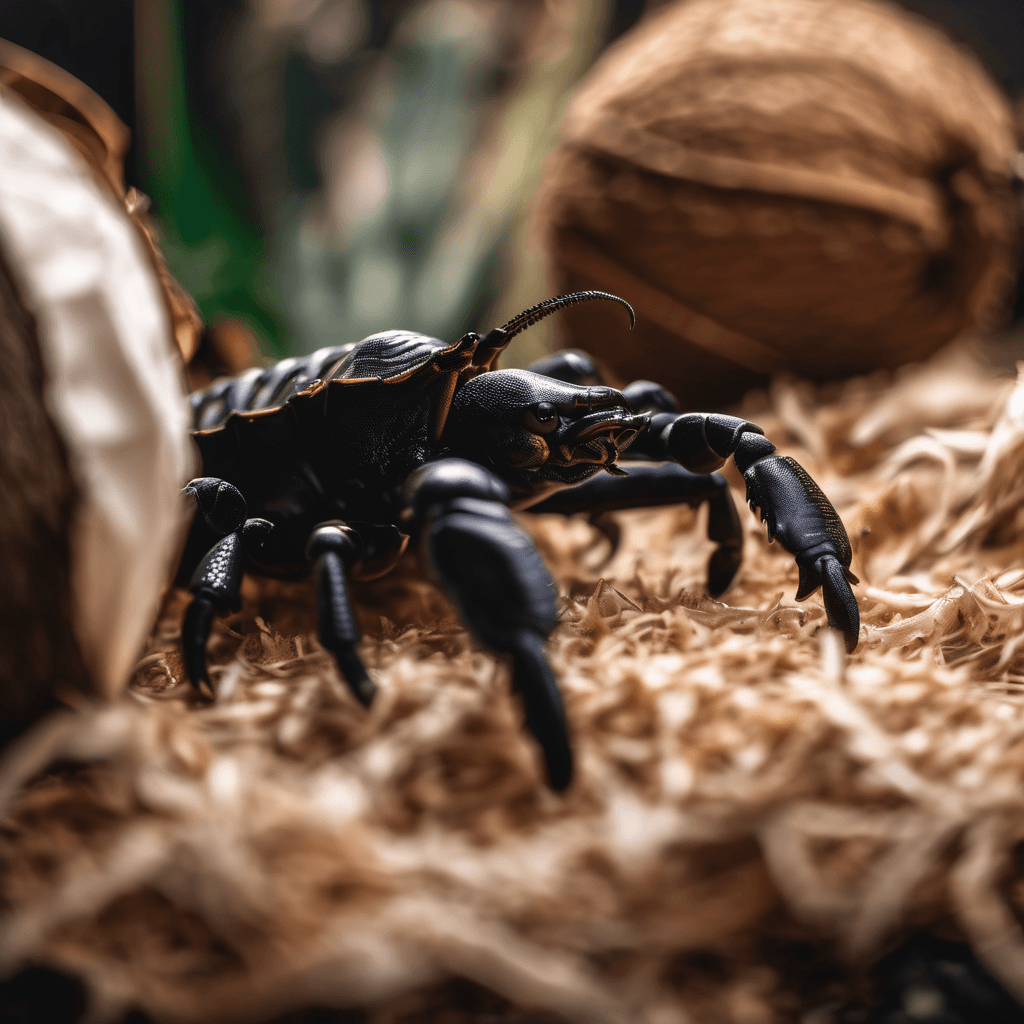
Scorpions are masters at hiding illness. In the wild, an animal that looks weak gets eaten, so the survival strategy is to appear normal for as long as possible. By the time a scorpion visibly totters or lies on its back, the problem is usually days to weeks old and often terminal. The keeper who catches health problems early is the one watching for behavior changes, not dramatic symptoms.
This guide covers the warning signs worth watching, the illnesses behind them, the environmental mistakes that cause the majority of scorpion health failures, and how to find veterinary care for an animal most clinics turn away. Part of the pet scorpions complete care guide series.
The Daily Observation Habit
Scorpions are nocturnal, so the best observation window is the first hour after dark. Check for thirty seconds each evening and learn your scorpion’s normal:
- Where it sits. Most species adopt a regular spot — under the hide, at the burrow entrance, against the glass. A scorpion that has moved to an unusual place (out in the open during the day, pressed into a corner, or climbing constantly) is telling you something.
- Posture. Normal is relaxed, legs folded, tail curled naturally. Note anything different.
- Appetite. Feed on a schedule and note whether prey is taken within an hour. Refusal is the earliest and most reliable illness signal there is.
- The tail. A tail held high and stiff for long periods, or curled abnormally tight, is a stress or pain posture.
Photograph your scorpion weekly from the top. Comparing photos catches slow changes in color, size, and body proportions that daily viewing misses.
Warning Signs Ranked by Severity
Emergency — act today
- Lying on its back or side, unable to right itself, outside of a molt. During molting this is normal; at any other time it is a sign of severe illness or imminent death. Scorpions flip onto their backs only to molt.
- Missing limbs with fresh, dark fluid at the joints. Indicates a recent injury or an infection progressing rapidly.
- Abdomen visibly swollen or shriveled. Swollen can mean organ failure or egg-binding in females; shriveled means severe dehydration.
- Hemolymph (clear or bluish fluid) leaking from any joint. Wound infection or internal damage — often fatal once visible.
Urgent — fix the environment now, watch 48 hours
- Refusing food for more than two weeks when temperature and prey size are appropriate. First rule out pre-molt (bald patch, dull color) and pre-molt fasting is normal up to a month in large species.
- Stuck molt in progress. Limbs trapped in the old exoskeleton, animal unable to complete extraction. Increase humidity immediately and consult a vet — the window for intervention is hours.
- Unusual aggression or frantic pacing combined with refusal to settle in the hide. Usually heat stress or dehydration.
Watch closely — environmental correction
- Resting in the open during daylight. The enclosure is too hot or the hide is unacceptable. Check temperature and hide placement.
- Climbing the walls constantly. Seeking cooler ground (overheating) or trying to escape an enclosure that is too dry, too wet, or too bare.
- Dull, ashy coloration outside a molt cycle. Common in dehydrated scorpions; check the water dish and humidity.
The Environmental Causes Behind Most Problems
Veterinary care for scorpions is limited, so prevention through correct husbandry is where real health is won. Roughly speaking, the large majority of scorpion illnesses trace to one of these four environmental failures.
Heat stress
- The signs: frantic activity, restlessness, standing tall on extended legs, moving to the coolest corner, eventual collapse.
- The cause: enclosure above 90°F (32°C), a heat mat without a thermostat, or direct sunlight through glass — which turns a terrarium into an oven in minutes.
- The fix: a thermostat on every heat source, a thermal gradient with a warm end around 85°F (29°C) and a cool end in the 70s°F (low 20s°C), and no enclosure in direct sun. Never place a terrarium on a windowsill.
Dehydration and stuck molts
- The signs: dull color, wrinkled appearance, shriveled abdomen, and eventually a molt the scorpion cannot complete.
- The cause: no water dish, a dry dish in a heated room, or humidity far below the species range. Remember that humidity and drinking are separate needs — a humid enclosure without a dish still dehydrates the animal.
- The fix: a shallow water dish always available, humidity at the species range (most tropical species 70-80%, desert species 55-65%), and misting the substrate walls rather than flooding the floor. See the reptile humidity guide for setting a reliable gradient.
Mold and mites from excess moisture
- The signs: fuzzy white growth on substrate or dish, tiny white or reddish mites moving near the dish or under the hide, musty smell, scorpion avoiding the substrate surface.
- The cause: over-misting, poor ventilation, waterlogged substrate, or unquarantined substrate introducing mites.
- The fix: reduce misting to the substrate walls, increase cross-ventilation, remove the dish temporarily while humidity rebalances, replace contaminated substrate, and quarantine (or bake at low heat) new substrate before it enters the enclosure. A mite infestation requires a full clean-out, not spot treatment.
Falls and crush injuries
- The signs: leaking hemolymph, a limb held at a wrong angle, rupture of the abdomen — often fatal.
- The cause: tall enclosures with climbable surfaces and no lid security; handling; a hide or decoration that can topple onto the scorpion.
- The fix: low enclosures for ground species, secure lids, weighted decorations, and minimal handling — use a deli cup and a soft brush to move a scorpion instead of hands. An abdominal rupture is almost always beyond saving, which makes prevention the only real option.
Normal Behaviors People Mistake for Illness
Not every alarming behavior is a problem:
- Lying motionless for hours. Scorpions are ambush predators. A scorpion sitting still in its hide all day is behaving perfectly.
- Refusing food for weeks. Pre-molt fasting is normal — in large species it can run three to five weeks. Look for the pre-molt signs: dull color, a brighter patch on the pedipalps, and the exoskeleton taking on a slightly glossy sheen.
- Fluorescing blue-green under UV. Harmless and universal — the exoskeleton contains beta-carboline compounds. It is not a sign of anything wrong, and no UV bulb is needed for health.
- Digging constantly. Burrowing species rearrange their enclosure nightly. This is enrichment, not stress — as long as the enclosure is not too dry and the hide stays usable.
- Eating slowly over hours. A scorpion can take 6-12 hours to consume prey and may leave it for later. This is normal, not weakness.
Quarantine and the Illnesses You Cannot Treat
Some problems have no home treatment. Be realistic about these before they happen:
- Dyskinetic syndrome (neurodegenerative disease) — seen most in some Heterometrus and other captive-bred lines: uncoordinated movement, tremors, eventual loss of motor control. No treatment; believed linked to genetics and possibly temperature history. Do not breed from affected animals.
- Internal parasites — suspected in wild-caught imports showing slow decline despite correct care. No safe deworming protocol exists for scorpions; support care only.
- Systemic bacterial infection — hemolymph turning milky or dark, animal lethargic with no environmental cause. Even with veterinary antibiotics, the prognosis is poor.
This is exactly why buying captive-bred animals from a reputable breeder matters: wild-caught scorpions arrive with unknown parasite loads, unknown age, and stress from collection.
Finding a Vet Who Treats Scorpions
Most small-animal clinics do not treat invertebrates. Before you need one, find the ones that do:
- Search by specialty, not by proximity: query “exotic vet”, “reptile vet”, or “invertebrate vet” and check the Association of Reptilian and Amphibian Veterinarians (ARAV) member directory — ARAV members routinely see invertebrates even if it is not their headline specialty.
- Call before you go. Ask directly: “Do you see pet scorpions and other arachnids?” A clinic that says yes on the phone will have oxygen chambers, hypodermic setups, and a vet who has handled the species. A clinic that hesitates will not.
- What to ask at the appointment: whether they have treated scorpions specifically, what they can offer (supportive care, humidity/temperature correction, diagnostic options), and what they cannot. Invertebrate medicine is largely supportive — hydration, environment, and pain/wound management.
- Transport in a ventilated, escape-proof container: a small deli cup with air holes, a damp paper towel, and the hide. Never a mesh cage for transport — toes and tarsi get caught in the mesh.
- Bring evidence: your temperature and humidity readings, feeding history, photos of the enclosure, and the date of the last molt. Environmental correction is often the entire treatment, and your data is the diagnosis.
Warning Signs Summary Table
| Sign | Likely cause | First action |
|---|---|---|
| On its back outside molt | Terminal illness or injury | Vet today if any invertebrate vet is reachable |
| Refusal > 2 weeks | Pre-molt, temperature wrong, illness | Check for pre-molt signs and temperature, then watch |
| Stuck mid-molt | Dehydration / low humidity | Raise humidity gently, vet immediately |
| Dull, wrinkled | Dehydration | Dish present? Humidity at range? Add moisture |
| Frantic pacing, out in daylight | Heat stress | Verify thermostat, move out of sun, check gradient |
| Mites or mold | Over-misting / contaminated substrate | Reduce moisture, replace substrate, full clean |
Frequently Asked Questions
How do I know if my scorpion is dying?
The clearest signs are inability to right itself (lying on its back or side outside a molt), leaking hemolymph, and a shriveled abdomen with no response to hydration. Each is advanced. The earlier signal — refusal of food for two-plus weeks with dull coloration — is the one to act on.
Do vets treat scorpions?
Some do — typically exotic, reptile, or ARAV-affiliated practices. Call ahead and ask specifically about arachnids. Expect supportive care rather than cure: hydration support, environment correction, and wound management. Invertebrate medicine is limited, which makes prevention the main strategy.
My scorpion is lying on its back — is it molting?
Probably, if the exoskeleton looks dull or glossy, the animal has been fasting, and you can see a split forming near the carapace. If there is no sign of a molt and the animal is unresponsive or has been like this for hours, treat it as an emergency. Molting scorpions also stop eating and may hide for days beforehand.
Can I treat a sick scorpion at home?
Only through environment correction — fixing temperature, humidity, water access, and substrate condition, which resolves the majority of problems. There are no safe over-the-counter medications for scorpions, and dusted prey or supplements designed for reptiles have no established benefit. Never attempt surgery or apply topical products not prescribed by an exotic vet.
How long do pet scorpions live?
Common pet species typically live 4-8 years, with large forest species like emperor scorpions reaching 6-8 and some desert species somewhat less. A scorpion that declines early in life is almost always showing a husbandry problem — correct the environment first and consult a vet before writing off the animal.
Checklist
- Nightly observation: location, posture, appetite
- Thermometer and calibrated hygrometer in the enclosure; thermostat on every heat source
- Shallow water dish always full; humidity at the species range
- No direct sunlight on the enclosure
- Weekly top-down photo to track slow changes
- Substrate quarantined or baked before use
- Contact details for an exotic/ARAV vet saved before you need them
The Bottom Line
Scorpion illness is hidden illness — the keeper who waits for obvious symptoms has usually waited too long. The early signals are behavioral: food refusal, unusual location, dull color, a stiff tail. And the causes are overwhelmingly environmental: heat without a thermostat, water dishes that run dry, humidity far from the species range, and moisture that breeds mold. Watch nightly, correct the environment first, and know in advance which local vet will see an arachnid. Prevention is not just the best treatment here — with limited veterinary options for invertebrates, it is the only reliable one.
Leave a Reply