
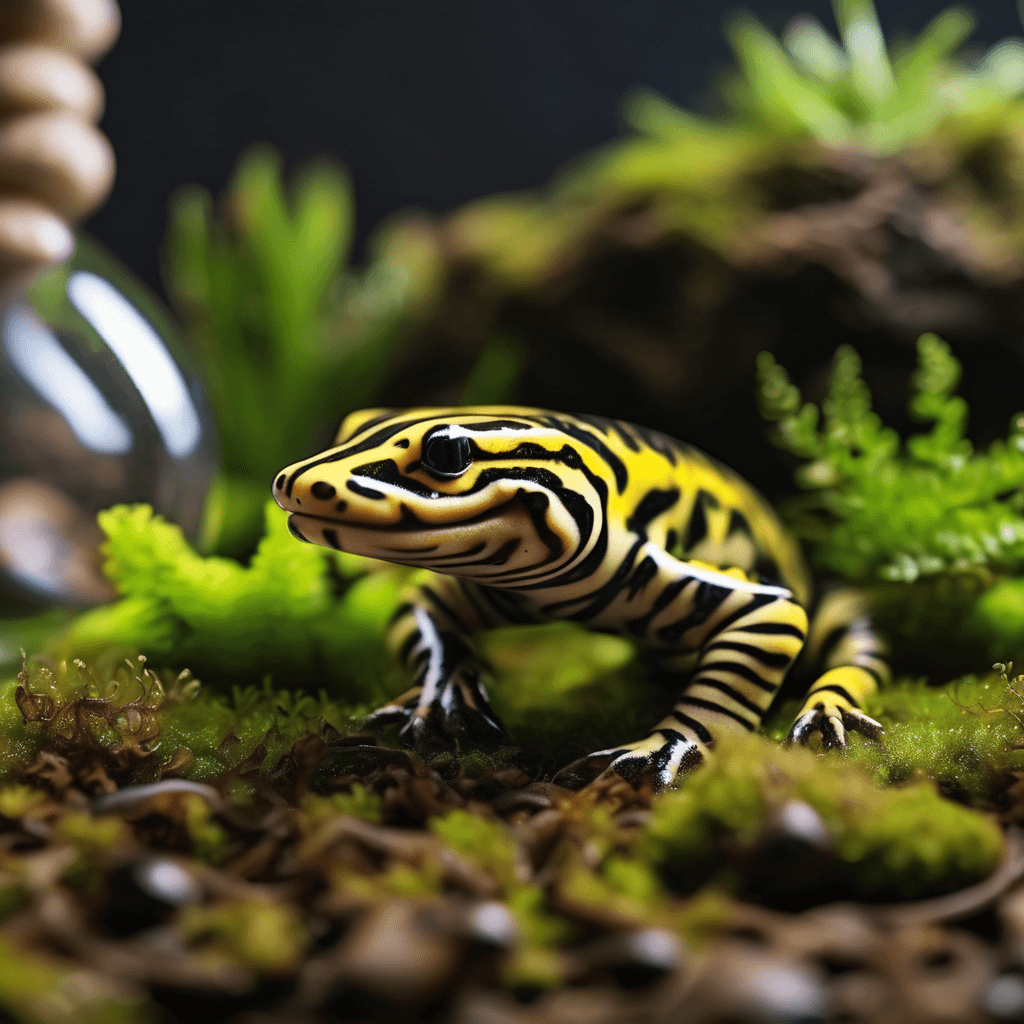
Salamanders are ancient, fully-backboned amphibians with unique care needs that few beginners can predict. This guide is part of the pet amphibians series — read that hub first for the species comparison and the water-quality basics every amphibian keeper must master. Salamanders and newts move between land and water across a permeable skin that absorbs everything: good water, good humidity, and the right prey, or they sicken fast.
Beginner Species Compared
- Tiger salamander — the largest and most robust North American species. Adults reach 12 to 14 inches, eat earthworms and small rodents, and can be kept terrestrial or semi-aquatic. Forgiving of beginner temperature swings. Lifespan 15 to 25 years.
- Fire-bellied newt — small (5 to 7 inches), semi-aquatic, and hardy. Eats daphnia, bloodworms, and small insects. Stays smaller and needs less water volume than a tiger. Lifespan 15 to 20 years.
- Mole salamander (Ambystoma type) — terrestrial as an adult, needs a deep moist substrate to burrow. Less common in the pet trade but excellent for keepers who want a “true” terrestrial salamander.
- Axolotl — the fully-aquatic neotenic salamander that keeps its external gills. Striking and popular, but strictly aquatic and more sensitive to water quality. Best as a second amphibian project. Lifespan 10 to 15 years.
- Eastern newt — the terrestrial (eft) and aquatic phases look different. Efts are terrestrial juveniles that need high humidity before moving to water. A good learning species but requires phase-aware care.
For the first salamander, a tiger salamander is the most forgiving and the most rewarding — it tolerates a range of temperatures, eats reliably, and shows clear health signals. An axolotl is a step up in water-quality demand and is best left to a keeper who has mastered ammonia and nitrite cycling.
The Enclosure: Terrestrial, Semi-Aquatic, and Aquatic
- Size. A terrestrial tiger salamander needs a 20-gallon long tank with at least 6 inches of moist substrate. A semi-aquatic fire-bellied newt needs a 20-gallon tank split 50/50 land and water. An axolotl needs a 20-gallon long minimum, ideally 29 gallons, with a lid — they are jumpers.
- Lid and security. A tight-fitting lid is mandatory. Unlike snakes, salamanders are fragile — a dropped lid, a bumped tank, or a dry substrate can kill in hours. Screen lids are fine for terrestrial setups; solid lids retain humidity for tropical species.
- Substrate. For terrestrial and semi-aquatic setups, a moist mix of coconut fiber, coco peat, and sphagnum moss (about 4:1) holds burrows and humidity. For aquatic setups, fine sand or a bare bottom is safest — gravel is swallowed and causes intestinal blockage (impaction).
- Water. Semi-aquatic and aquatic species need dechlorinated water. Change 20 to 30 percent weekly. The water dish must be shallow enough for the salamander to climb out — a drowning risk is real for terrestrial species.
- Hides. A moist hide (damp moss under a half-log or cork bark) is essential for terrestrial species. Aquatic species need floating plants or a platform to rest and gulp air.
Temperature, Humidity, and the Water Quality Imperative
- Temperature. Tiger salamanders do well at 60 to 70 F (15 to 21 C) — a cool room temperature is ideal. Fire-bellied newts: 65 to 75 F (18 to 24 C). Axolotls: 60 to 68 F (15 to 20 C) — they are stressed above 72 F and susceptible to fungal infection. Most salamanders need no heat lamp at all; a cold room is fine.
- Humidity. Terrestrial setups need 50 to 70 percent humidity — mist the substrate, not the animal. A hygrometer plus a daily check of the substrate dampness (it should feel like a wrung-out sponge) keep it right. Too-dry substrate is a death sentence.
- Water quality. This is the #1 killer of amphibian pets. Dechlorinate all water (chlorine and chloramine are absorbed through the skin and are lethal). Cycle the tank before adding the animal. Test ammonia and nitrite weekly — any reading above zero is an emergency water change. The amphibian that declines almost always has a water-quality problem.
Feeding: Live Prey, Gut-Loading, and Dusting
- Diet. Tiger salamanders eat earthworms, small nightcrawlers, and appropriately sized rodents. Fire-bellied newts eat daphnia, brine shrimp, bloodworms, and small insects. Axolotls eat earthworms, blackworms, and cut-up shrimp. Prey should be smaller than the salamander’s head.
- Gut-loading. Feed prey insects carrots, leafy greens, and commercial gut-load for 24 to 48 hours before offering — an empty insect is empty calories. Salamanders need the nutrients more than the protein.
- Dusting. Dust prey with a phosphorus-free reptile or amphibian vitamin powder every other feed, and a calcium powder once a week. Over-supplementation is toxic — a light dusting is enough.
- Frequency. Tiger salamanders: every 2 to 3 days as juveniles, once or twice a week as adults. Newts and axolotls: every day to every other day for young, then 2 to 3 times a week. Remove uneaten prey after 2 hours — a dead worm fouls the water.
- Live versus frozen-thawed. Salamanders hunt live prey, but always offer pre-killed or thawed prey to reduce injury risk. Never force-feed — a healthy salamander will eat when hungry.
Shedding, Hibernation, and Seasonal Care
- Shedding. Salamanders shed frequently (weekly for juveniles). The shed is usually eaten, so it rarely causes problems. A retained eye cap or patchy skin means humidity is too low — add a moist hide and raise humidity.
- Hibernation / brumation. Many temperate species (tiger salamanders, newts) need a cool winter period: 40 to 50 F (4 to 10 C) for 60 to 120 days, with reduced feeding. Axolotls and tropical species do not brumate. A false hibernation from an accidentally cold room kills more salamanders than any disease — keep temperatures stable or plan the cycle deliberately.
- Reproductive recession. Some females reabsorb eggs (ovulation without laying) under stress — a swollen, egg-bound female is a vet emergency. Provide a moist lay box with damp sand if she fills with eggs.
Health Problems to Watch — Vet Visits That Cannot Wait
- Fungal infection (the white cotton). The most common emergency in axolotls and injured newts. A white, cottony growth on the skin or gills means the water is foul or the animal is injured. Requires antifungal treatment from a vet — salt baths are a last resort and risk kidney damage.
- Red-leg and bacterial sepsis. The salamander becomes lethargic, loses its color, and the limbs look reddened — a systemic infection from dirty water or trauma. Needs immediate antibiotics. Prevent it with perfect water quality.
- Metabolic bone disease. Weak limbs, a curved spine, or refusal to eat signals calcium or phosphorus imbalance, or lack of vitamin D. More common in axolotls kept without UVB or under poor light. Reverse early with vet-directed supplementation; advanced cases are fatal.
- Parasites and worms. Wild-caught prey or unquarantined tank-mates introduce flukes and cryptosporidium. Quarantine for 90 days and have a fecal test run by a vet. Wasting, weight loss, and white fecal casts are the clues.
Checklist Before You Bring One Home
- Choose a beginner species — tiger salamander for hardiness, fire-bellied newt for a smaller tank.
- Cycle the water and test ammonia/nitrite for at least two weeks before arrival (aquatic species).
- Set up a moist hide and check substrate dampness daily.
- Purchase gut-loaded, appropriately sized prey for the first two weeks.
- Locate a vet who treats amphibians — a general small-animal vet may not.
- Plan the cool room or hibernation cycle if your species brumates.
Frequently Asked Questions
Can salamanders live out of water? Terrestrial species (tiger salamander, mole salamander) live mostly on land with a water dish. Semi-aquatic and fully-aquatic species (axolotl) need water year-round — they drown if pulled out.
Do salamanders need UVB lighting? Most do not require UVB, though some keepers provide low-level UVB for diurnal species. Water quality and temperature matter far more than lighting for amphibian health.
How often should I feed a salamander? Juveniles need food every day or every other day. Adults need feeding 2 to 3 times a week. Overfeeding pollutes the water and causes obesity.
Are axolotls beginner pets? Axolotls are intermediate — they are fully aquatic and forgiving of low temperature, but their water quality must be pristine. Best as a second amphibian after you have mastered cycling and testing.
Why is my salamander hiding and not eating? Hiding is normal — salamanders are secretive prey animals. If hiding is constant with weight loss or skin changes, check the temperature and water quality first, then see a vet.
The Bottom Line
A tiger salamander in a 20-gallon long tank with at least 6 inches of moist coconut-fiber substrate, a shallow dechlorinated water dish, a moist hide, and a steady diet of gut-loaded earthworms and small nightcrawlers is a beginner salamander that almost cannot fail — if the water is clean and the substrate stays damp. Get the humidity and feeding right, and the rest follows; but remember that a salamander is a 15- to 25-year commitment and the water quality that kills silently is the #1 vet-bill driver. For the full beginner-amphibian comparison, the water-testing schedule, and the species-choice matrix, see the complete pet amphibians guide.
Leave a Reply