
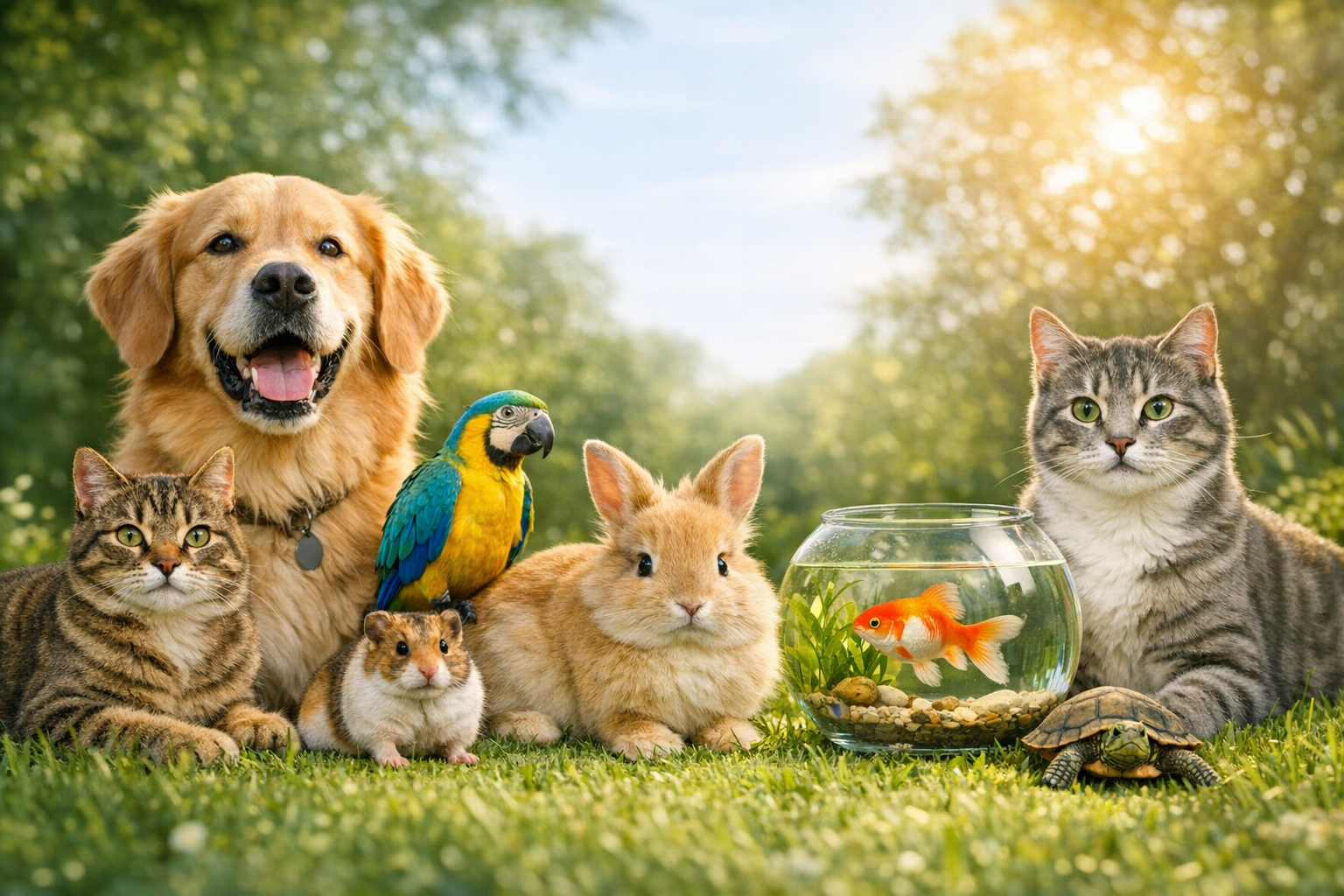
Goldfish are the most abused pet in the world — kept in bowls without filtration, fed until the water turns cloudy, and expected to survive. They do survive, for a while, which is exactly the problem: owners see survival as success. Goldfish in proper conditions live ten to twenty years and grow to the size of a forearm. Goldfish in bowls live months and stay small because they are slowly poisoned.
This guide covers the setup that produces the long-lived, full-size goldfish.
The Bowl Problem
Bowls fail for reasons that cannot be fixed from inside them:
- No filtration. Goldfish produce enormous waste — more than any common aquarium fish relative to size. Without filtration, ammonia accumulates to lethal levels within days.
- Too small to cycle. The nitrogen cycle needs water volume to establish. A bowl cannot hold enough bacteria to process the waste a goldfish produces.
- Temperature swings. Small volumes heat and crash with the room — goldfish prefer cool, stable water around 65 to 72 degrees.
- No oxygen exchange. The narrow surface area of a bowl limits gas exchange, and warm water holds less oxygen.
- Stunting. Goldfish in small water release growth-inhibiting hormones and stay small — it looks like the fish “fit” the bowl, but it is chronic stress, and the internal organs keep growing regardless. Stunted goldfish die young from organ failure.
A bowl is not a small tank — it is a different environment entirely, and goldfish cannot thrive in it at all.
The Real Tank Requirements
- Single-tailed goldfish (commons, comets): 20 gallons for the first fish, plus 10 gallons per additional fish. They reach 10 to 12 inches and are the hardiest option in a properly sized tank.
- Fancy goldfish (orandas, ryukins, fantails): 20 gallons for the first, plus 10 per additional. They reach 6 to 8 inches.
- Pond housing is the best option where climate allows — goldfish are pond fish, and outdoor ponds give them the space and temperature they are built for.
- The 55-gallon tank is the common sweet spot for one or two fancy goldfish indoors.
The single most important upgrade a goldfish owner can make is tank size. Everything else follows from it.
Filtration: Over-Spec It
Goldfish are waste machines, and the filter is the life support system:
- Rate the filter for two to three times the tank volume. A 55-gallon tank needs a filter rated for 110 to 165 gallons. The over-spec accounts for the bioload.
- Canister filters or large hang-on-back filters — sponge filters alone cannot handle goldfish waste.
- Weekly 25 to 50 percent water changes — nitrate removal is mechanical; the filter cannot do it alone. Goldfish tanks need more frequent and larger changes than tropical tanks.
- Gravel vacuuming every change — the waste settles and rots.
Water Conditions
- Temperature: 65 to 72 degrees — cooler than tropical tanks. No heater needed in most homes; a heater is needed only if the room drops below 60.
- pH: 7.0 to 8.4 — goldfish tolerate a wide range, but stability matters more than the exact number.
- Ammonia and nitrite: zero, always. Any reading above zero means the cycle is not established or the tank is overstocked. Test weekly.
- Nitrate: under 40 ppm, ideally under 20. Water changes control it.
- Oxygenation: surface movement from the filter return or an air stone. Cool water holds oxygen well; warm water does not.
Diet
- Quality goldfish pellets or flakes as the staple — formulated for goldfish, not generic tropical food.
- Sinking pellets for fancy goldfish — the round-bodied varieties gulp air at the surface and develop swim bladder problems. Sinking food prevents it.
- Supplement with vegetables — shelled peas (skin removed), blanched zucchini, spinach. Goldfish are omnivores and plant matter aids digestion.
- Occasional live or frozen foods — bloodworms, brine shrimp as treats.
- Feed small amounts once or twice a day — what they eat in one to two minutes. Overfeeding is the most common goldfish killer: uneaten food rots, ammonia spikes, water turns cloudy.
- Fast one day a week — goldfish handle it fine and it prevents constipation.
Uneaten food on the gravel is the clearest sign of overfeeding. If food remains after two minutes, reduce the portion.
Tank Mates
- Other goldfish — common or fancy, not mixed (commons outcompete fancies for food and their speed stresses the slower fancy varieties).
- White Cloud Mountain minnows — cool-water compatible, peaceful, and small enough not to bother the goldfish.
- Weather loaches (dojo loaches) — cool-water compatible, interesting, and peaceful.
- Never tropical fish — the temperature mismatch (tropicals need 76 to 80) stresses one group or the other.
- Never goldfish with tropical community fish — goldfish eat anything that fits in their mouths and produce waste the tropical tank’s filtration cannot handle.
Plants and Décor
- Goldfish eat plants. Hardy, fast-growing species — anubias, java fern, hornwort — survive better than delicate plants.
- Smooth gravel or sand substrate — goldfish sift through substrate and swallow small gravel, causing impaction.
- No sharp décor — fantails and orandas have flowing fins and delicate eyes; sharp rocks tear fins.
- Open swimming space — goldfish are active swimmers; cluttered tanks stress them.
Common Problems
- Cloudy water: usually a bacterial bloom from overfeeding or an uncycled tank. Fix the feeding, check the cycle, do a partial water change.
- Swim bladder issues: fancy goldfish floating or sinking — often from gulping air at the surface or dry food. Sinking pellets and peas (skin removed) usually fix it.
- Ich: white spots — usually temperature-related. Raise temperature slowly and treat.
- Fin rot: deteriorating fins — poor water quality. Water changes fix it.
- Ammonia burns: red or bloody fins and gills, gasping at the surface — toxic water. Immediate large water change, test the cycle.
Nearly every goldfish problem traces to water quality or overfeeding. Fix those first; the medicine cabinet is a last resort.
Frequently Asked Questions
Can a goldfish live in a bowl?
It can survive in a bowl for a while. It cannot thrive — no filtration, no stable water, no space. Properly housed goldfish live 10 to 20 years; bowl-kept goldfish usually die within months to a couple of years, stunted and stressed.
How big do goldfish get?
Common and comet goldfish reach 10 to 12 inches; fancies 6 to 8. Bowl-kept goldfish stay small because of growth-inhibiting hormones — the organs keep growing and the fish dies young.
Do goldfish need a heater?
Usually not — they prefer 65 to 72 degrees, which matches most room temperatures. A heater is needed only if the room drops below 60 degrees consistently.
How often should I change the water?
Twenty-five to fifty percent weekly, with gravel vacuuming. Goldfish produce more waste than most aquarium fish and need more frequent changes — the single most important maintenance task.
The Bottom Line
Twenty gallons minimum, 55 for a pair of fancies, with filtration rated for two to three times the tank volume. Weekly 25 to 50 percent water changes with gravel vacuuming — goldfish are waste machines and nitrate control is everything. Cool water, 65 to 72 degrees, no heater needed. Sinking pellets for fancies, small portions, fast one day a week. Never a bowl — the stunting is chronic stress, not adaptation, and the fish dies young. Goldfish in a proper tank live 10 to 20 years and grow to a foot long — the bowl is what turns them into a months-long pet.
Leave a Reply