
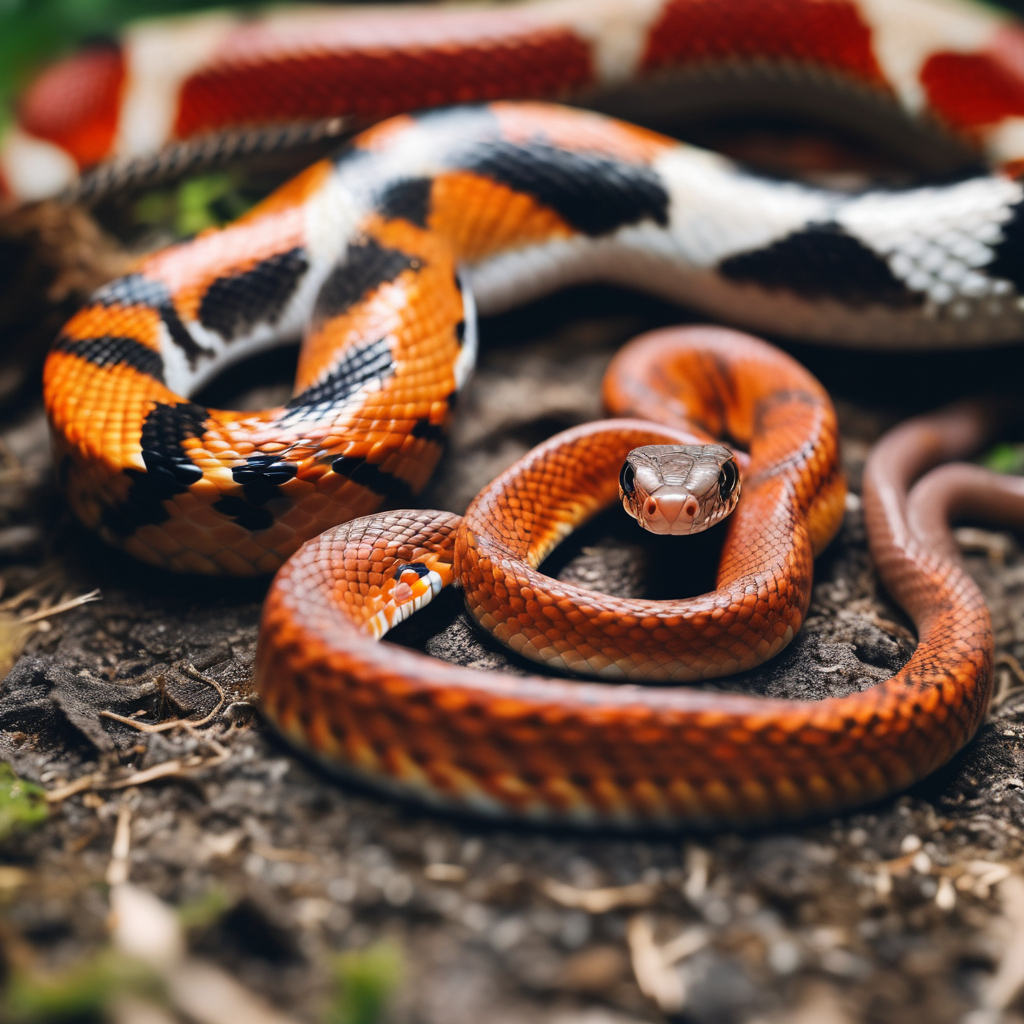
If you are standing in front of the reptile section of a pet store and trying to decide between a corn snake and a king snake, you are already doing something right: both are among the most forgiving snakes a beginner can choose. But forgiving is not the same as identical. A corn snake’s calm demeanor can mask a nervous streak that makes it a poor fit for a keeper who wants a hands-off pet, while a king snake’s appetite can turn into a expensive habit if you do not plan for the rodents they will demand as adults. Both will sit in your lap for hours and both will happily skip a meal without complaint, but the reasons they do those things are different, and those reasons are where the right choice lives.
\n\n
This guide compares corn snakes and king snakes across the dimensions that actually matter: size and growth, temperament and handling, enclosure needs, feeding habits, shedding and health, cost and availability, and lifespan. It is written for keepers who want exactly one of these snakes and need to decide which. It belongs alongside our guides to corn snake care and king snake care for the full husbandry picture, and as a companion to our ball python vs corn snake comparison for people who are weighing three options at once.
\n\n
\n\n
Quick comparison: corn snake vs king snake at a glance
\n\n
| Factor | Corn Snake | King Snake |
|---|---|---|
| Adult size | 3-5 feet | 3-4 feet (California), 4-6 feet (other species) |
| Temperament | Alert, sometimes nervous; calms with handling | Calm, curious; rarely defensive |
| Handling | Moderate; can bolt when startled | Good; generally slow and deliberate |
| Enclosure size | 20-gallon long (adult) | 20-gallon long (adult, smaller species) |
| Feeding | Mice throughout life; occasional skip is fine | Mice, some species take small rats |
| Temperature | 78-88 deg F gradient | 78-88 deg F gradient |
| Humidity | 40-50% | 40-50% |
| Lifespan | 15-20 years | 15-20 years |
| Care difficulty | Easy | Easy to moderate |
\n\n
What they are and why they differ
\n\n
Corn snakes (Pantherophis guttatus) are colubrid snakes native to the southeastern United States, where they hunt rodents in fields and barns. They earned their common name from their habit of vibrating their tails in dry leaves, sounding like a corn plant rustling in the wind. King snakes (Lampropeltis species) are a genus of colubrids found throughout North America, named for their habit of preying on other snakes, including venomous ones they are immune to. The most common king snake in the pet trade is the California king snake (Lampropeltis californiae), but you will also see Mexican black king snakes, black milksnakes, and others.
\n\n
Despite sharing a habitat broadly, they are not close relatives. Corn snakes are hunters that rely on stealth and a strike-and-release strategy, while king snakes are constrictors that subdue prey with coils. That single difference drives most of the practical distinctions between them: king snakes are more efficient eaters, but they are also more likely to regurgitate if stressed, because their feeding strategy requires a calm, sustained effort to constrict. Corn snakes can be more skittish because they are not built for holding still while eating, and a startled corn snake during a meal can drop a mouse mid-strike.
\n\n
Size and growth rate
\n\n
Corn snakes are larger than the average king snake most keepers will encounter. A typical adult corn snake reaches 4-5 feet, with some large females topping 5.5 feet. A California king snake typically stays at 3-4 feet, though other king snake species like the Mexican milksnake or the black king snake can grow larger. Growth rate is similar: both reach adult size in about 18-24 months, though they continue filling out musculature for another year. A hatchling corn snake is about 10-12 inches; a hatchling king snake is about 8-10 inches.
\n\n
The size difference matters at feeding time. A full-grown corn snake will take a large mouse or a small rat, while a king snake will typically take a medium to large mouse throughout its life. This means a adult corn snake eats slightly more often (every 7-10 days) than an adult king snake (every 10-14 days), though both will happily skip a meal and go without consequence for weeks. If you are squeamish about feeding whole prey, the king snake’s lower feeding frequency is a real advantage.
\n\n
Temperament and handling
\n\n
This is where most keepers make their decision, because it is the part of ownership that shows up in daily life. Corn snakes are alert and curious, and they tend to explore their enclosure with active tongue-flicking. They can be nervous when first handled, especially as juveniles, and a sudden movement or loud noise can trigger a swift retreat. With regular, calm handling they settle in, but the initial impression a nervous corn snake gives is of high energy, not relaxation.
\n\n
King snakes, by contrast, are famously docile. They earn this reputation honestly: California king snakes are among the most frequently used in education and outreach programs because they tolerate handling extremely well. A king snake’s first reaction to being picked up is usually to investigate the new surface rather than flee. This makes them a better choice if you plan to take your snake out of the enclosure regularly, if you have children who will handle it under supervision, or if you simply prefer a pet that does not bolt when you open the lid.
\n\n
However, the calm of a king snake can lead to overconfidence. Both snakes can live a decade or more, and handling frequency should decrease as the snake matures and becomes more sedentary. A king snake that is handled too much as an adult becomes stressed, which can suppress its immune system and trigger a feeding refusal. The rule for both species: handle only when the snake is in a calm, post-shedding phase, never when it is in blue, and never feed a snake within 48 hours of handling.
\n\n
Enclosure setup: same needs, different details
\n\n
Both snakes thrive in a 20-gallon long tank as adults, with a secure screen lid, a substrate depth of 2-3 inches, a water dish large enough for the snake to soak in but shallow enough that it cannot trap its head, and two hides (one on the warm side, one on the cool side). The temperature gradient is identical: 88-90 deg F on the warm side, 78-80 deg F on the cool side, achieved with an under-tank heater controlled by a thermostat. Humidity should sit at 40-50%, which both snakes achieve easily in a properly ventilated enclosure with a water dish.
\n\n
The differences are in the details. Corn snakes are notorious for escaping through the smallest gaps, so the lid must lock or clip securely, and the tank should be checked regularly for gaps around the rim. King snakes are slightly less agile escape artists, but they are more likely to attempt to escape if the enclosure is too small or too bare. Both snakes benefit from a few branches or cork bark pieces for enrichment, though neither is an arboreal species that needs vertical space. Substrate choice is the same: aspen, cypress mulch, or newspaper are all acceptable; avoid pine and cedar, which are toxic to both snakes.
\n\n
For the full setup checklist, see our snake enclosure setup guide and our reptile substrate guide.
\n\n
Feeding and diet
\n\n
Both snakes eat pre-killed or thawed rodents, and both will take mice as hatchlings and adults. The practical difference is in portion size and frequency. A corn snake eats a mouse roughly the width of its midbody every 7-10 days as an adult, while a king snake eats the same prey type but typically every 10-14 days. A king snake’s slower metabolism means it can go longer between meals without consequence, and a king snake that is in a fasting phase (common in winter) can skip several weeks without issue.
\n\n
Both snakes will occasionally refuse a meal. For a corn snake, a refusal is usually tied to temperature (the enclosure is too cold), a recent shed, or stress from handling. For a king snake, a refusal is usually seasonal (winter slow-down) or tied to the size of the prey being offered — king snakes can be picky about prey that is too large. Never force-feed either snake; a healthy adult can go months without food as long as body weight remains stable.
\n\n
Both snakes can be transitioned from live to frozen-thawed rodents with patience, and both should be eating frozen-thawed by their third meal to protect them from bites. For the detailed feeding protocol, see our frozen-thawed rodent feeding guide.
\n\n
Shedding and health
\n\n
Shedding is the same process for both snakes: they will turn blue (the eyes cloud over, the skin dulls), retreat to their hide, and shed their skin in one piece. Both need a humidity hide — a covered container with damp paper towel — to complete a clean shed. A retained shed, especially around the tail tip or eye caps, is the most common issue for both, and it is easily fixed with a warm soak and a humidity hide. A shed that is stuck for more than 48 hours after the blue phase resolves on its own needs attention, and persistent retention is a sign that the enclosure humidity is too low.
\n\n
Health-wise, corn snakes are prone to including cellulitis (a bacterial skin infection) from bites during feeding, while king snakes are prone to inclusion body disease, a viral condition that has no cure and is fatal. Both can develop respiratory infections from temperature drops or poor ventilation. For the full list of warning signs, see our article on snake dehydration and our guide to emergency reptile warning signs.
\n\n
Cost and availability
\n\n
A baby corn snake costs $30-80, and a baby king snake costs $40-90. The setup cost for either is $150-300: a 20-gallon tank, screen lid, under-tank heater, thermostat, digital thermometer and hygrometer, hides, water dish, and initial substrate. Food costs are about $2-3 per mouse per feeding for an adult, and both snakes eat about 24-50 mice per year. Veterinary costs are similar: a reptile vet exam is $50-100, and any treatment adds to that. The real cost difference is time: a corn snake may need more enclosure security checks because it is a better escape artist, while a king snake may need more careful handling to avoid stress from over-handling.
\n\n
In terms of availability, both snakes are common in pet stores and online breeders. Corn snakes come in dozens of color morphs (normal, amelanistic, snow, lavender, etc.), while king snakes have fewer morph options but include striking ones like the albino and the pastel. If you are looking for a specific color, the corn snake market has more variety; if you just want a healthy, easy snake, both are equally reliable.
\n\n
Lifespan and commitment
\n\n
Both snakes live 15-20 years in captivity with proper care. A commitment of 15 years is significant, and most keepers outlive the snake’s expected lifespan because both species can reach 20+ years with excellent care. Before buying, consider whether you can commit to that timeline, whether you have someone who can take over if you move or travel, and whether you understand that these are not “beginner pets that you outgrow” — they are long-term companions. For the full picture of what seasonal care looks like over that timeline, see our snake seasonal care guide.
\n\n
Pros and cons at a glance
\n\n
| Corn Snake | King Snake | |
|---|---|---|
| Pros | Calm when habituated; excellent feeder; many color morphs; handles well after settling in | Inherently docile; lower feeding frequency; rarely defensive; good for handling-focused keepers |
| Cons | Can be nervous as a juvenile; prolific escape artist; occasional feeding strikes | Picky about prey size; can regurgitate if stressed; fewer color morphs |
\n\n
Which one should you choose
\n\n
If this is your first snake and you want an animal that is forgiving, visible, and that you can watch actively hunting, the corn snake is the classic choice. It is hard to find a reptile vet who has not recommended a corn snake to a beginner, and for good reason: it is the closest thing to a “default” pet snake.
\n
If this is your first snake and you specifically want to handle it regularly, want a calm companion that is unlikely to bolt, and do not mind a slightly lower feeding frequency, the king snake is the better choice. California king snakes are used in schools and libraries for a reason.
\n
If you are still unsure, look at the enclosure you plan to set up. A corn snake does better in an enclosure with a little more enrichment and climbing, while a king snake does better in a simpler, more secure setup. Both will be happy, but matching the snake to your setup style matters more than you think.
\n\n
Checklist: before you buy your first colubrid
\n\n
- \n
- Have I located an exotic vet who treats snakes and confirmed that an appointment is possible?
- Do I understand the 15-20 year commitment for either species?
- Is my enclosure escape-proof with a locking or clipping lid?
- Do I have a reliable source of frozen-thawed rodents in the right size?
- Do I have a thermostat for my heat source, and a digital thermometer and hygrometer?
- If I want a snake I can handle: have I accepted that handling should decrease as the snake matures?
\n
\n
\n
\n
\n
\n
\n\n
Frequently asked questions
\n\n
Do corn snakes or king snakes bite humans?
\n
Neither is likely to bite, and both have mild teeth if they do. A corn snake may strike if startled, but it releases immediately and is easy to remove. A king snake is even less likely to bite. The real mistake is tapping or poking at either snake’s enclosure, which triggers a feeding response — never feed your snake by hand.
\n\n
Can I keep a corn snake and a king snake together?
\n
Neither species should be housed with another snake. Both are solitary except during breeding, and cohabitation almost always ends in one snake eating the other or in chronic stress that suppresses feeding. Even a pair of the same species should not be kept together unless you are breeding them.
\n\n
Which is easier to care for?
\n
In practice, the corn snake is slightly easier for a beginner because it tolerates a wider range of conditions and is less stressed by handling mistakes. The king snake requires slightly more attention to prey size and is more sensitive to over-handling, but its lower feeding frequency can make day-to-day care simpler once it is established.
\n\n
Do they need special lighting?
\n
Neither needs UVB lighting. Both need a temperature gradient of 78-80 deg F on the cool side and 88-90 deg F on the warm side, provided by an under-tank heater on a thermostat. A low-wattage basking bulb is optional and useful in winter for maintaining the gradient.
\n\n
Which lives longer?
\n
Both average 15-20 years. In exceptional cases, either can reach 25 years. The lifespan is similar enough that this should not be the deciding factor.
\n\n
Are they good with children?
\n
Both are suitable for children who are taught to be calm and gentle, but neither should be handled by young children unsupervised. A king snake’s calm nature makes it slightly better for children who want to handle the snake, while a corn snake’s active exploration makes it better for children who enjoy watching.
\n
Leave a Reply