
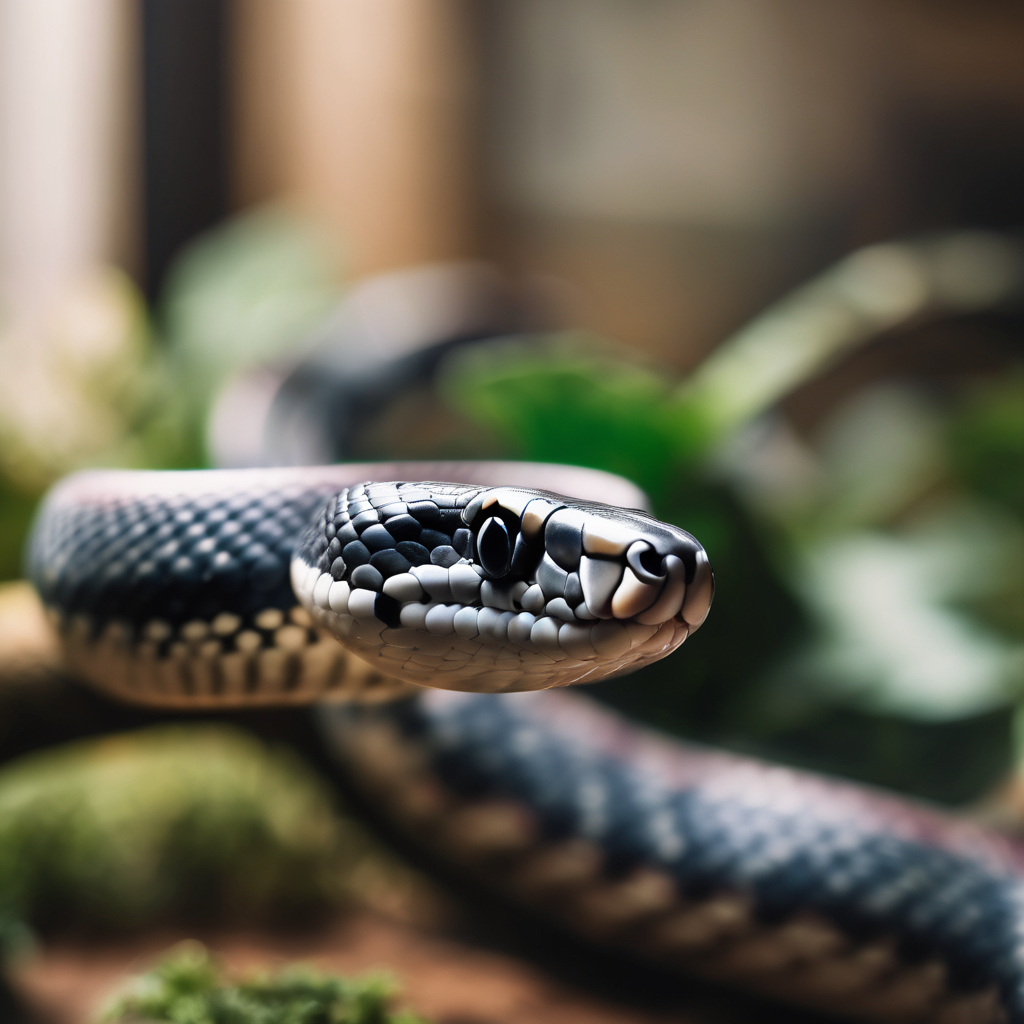
If you have landed on this page because you are thinking about getting a king snake, or because your new lampropeltis is not acting quite right, you are in the right place. King snakes are routinely recommended as the first snake for a reason: they feed reliably, they tolerate a range of conditions better than many species, and they are calm in captivity. But “forgiving” is not the same as “carefree.” A king snake still needs a proper thermal gradient, the right humidity for a clean shed, and a diet of appropriately sized prey — and ignoring any of those is how a seemingly healthy snake ends up at a reptile vet with a retained eyecap or a mild respiratory infection.
This guide walks you through everything a responsible keeper needs to know before buying a king snake: what the common species differ on, how to build an enclosure that will serve your snake from hatchling to adult, what and how often to feed, how to tell the difference between a normal shed and a shed that needs help, and the red-flag symptoms that mean a vet visit, today. It belongs alongside our guide to emergency warning signs that need a reptile vet and our snake enclosure setup checklist for the full husbandry picture.
Which king snake is right for you
The name “king snake” covers a dozen or so species in the Lampropeltis genus, and while most keepers treat them interchangeably the details matter for a first setup. The California king snake (L. californiae), Florida scarlet snake (L. polyzoan), and Mexican black king snake (L. getula alterna) are the three most common in the pet trade, and each has a slightly different adult size and temperament profile.
California king snakes are the smallest at 3–4 feet adult, feed on a wide variety of prey including other reptiles, and are generally docile once acclimated. They are the default “beginner king snake” for a reason. Florida scarlets grow to 3–4 feet as well but carry a stronger feeding response and can be nippy as juveniles. The Mexican black king snake reaches 4–5 feet, is more robust in build, and tends to be calmer as adults but more defensive as hatchlings.
Whatever species you choose, the core husbandry is identical. Pick your snake based on adult size and temperament preference, not on color — and if you are buying a wild-caught import, walk away. Captive-bred king snakes feed reliably and adapt quickly; wild-caught specimens carry a heavy parasite load and frequently arrive stressed or already ill.
Setting up the enclosure
A single adult king snake needs an enclosure at least 40 gallons (a 36×18 inch tank is the common recommendation), with a hatchling or juvenile starting in a 10–20 gallon tub. The enclosure must hold a proper thermal gradient: a warm side at 85–88°F and a cool side at 75–78°F, with the snake able to move freely between them. Heat comes from an under-tank heater (UTH) sized to just over half the tank bottom, OR a overhead ceramic heat emitter (CHP) — never a basking bulb alone, which cools the air too much at night.
Thermostats are non-negotiable. An unthermostatted UTH will cook a snake in days. Plug the UTH into a dimmer or on/off thermostat and verify both ends of the gradient with a digital probe thermometer placed at the substrate level where the snake rests. Our substrate guide walks through safe choices — aspen, cypress mulch, and paper towels are all fine for king snakes; avoid cedar and pine, whose oils damage the respiratory system.
Humidity is the second-half of the equation and the place most keepers get it wrong. King snakes do well at 40–50% ambient humidity, but the real need is a humid hide — a cork bark half-log or a plastic take-out container with a damp (not soggy) sphagnum moss or paper towel inside. The snake retreats there during a shed and the elevated humidity inside the hide lets it complete the process cleanly. Check the hide weekly and replace the lining when it starts to mildew.
You need two hides minimum — one on the warm end, one on the cool end — plus a water bowl large enough for the snake to soak in if it chooses. Change the water daily; a king snake that soaks repeatedly may be trying to hydrate through its skin because something in its environment is off. The full setup list, with measurements and product notes, is in our snake enclosure setup guide.
Feeding and prey safety
King snakes are carnivores and will eat pre-killed or thawed frozen rodents their entire lives. The general rule is that the prey item should be no thicker than the snake’s mid-body girth — a fat mouse for an adult, a fuzzy or hopper for a growing juvenile, and pinkies for a hatchling. Overfeeding is the single biggest mistake new keepers make and it shows up as a thin, stretched tail base (fat storage depletion) or a permanently rounded body shape.
Feeding frequency drops with age: hatchlings eat every 5–7 days, juveniles every 7–10 days, and adults every 10–14 days. A healthy adult king snake will go through 20–30 meals per year. Our rodent-thawing and feeding technique guide covers the safe way to defrost prey (cold water bath or refrigerator overnight, never microwave) and the presentation tricks — like braining a pinkie or warming the head — that convince a finicky snake to strike.
King snakes have a reputation for being reluctant to “release” their prey, and that is a real risk: if the snake regurgitates a mouse mid-feed, the next meal should be skipped for at least two weeks to let the stomach acid recover. Feeders should be parasite-free and the snake quarantined from any wild-caught additions. And never feed a snake that has been handled in the prior 48 hours — stress-triggered regurgitation is common and can kill a young snake if it happens repeatedly.
Shedding, hygiene, and handling
A king snake in shed will turn blue (the eyes cloud over first, then the skin takes on a dull, pale appearance as the old layer separates) and will hide more than usual. This is normal and should not be disturbed — the shed should come off in one piece within a week if the humid hide is working. A retained eye cap or patch of stuck shed on the tail tip is a sign the humidity in the hide was inadequate and needs adjusting.
When the shed is complete, a quick spot-clean of the enclosure is enough; king snakes do not need soaking unless the shed was stuck and the skin is still damp. Handling should be minimal during and immediately after a shed, and always with clean, dry hands or cleaning gloves — king snakes can carry Salmonella and the oil on human skin irritates their respiratory system. A weekly spot-clean of feces and a monthly deep clean of the whole setup keeps the enclosure odor-free and infection-free.
Hygiene extends to the prey as well: always use tongs to offer food, never hand-feed, and dispose of uneaten prey after 24 hours. A king snake that refuses a meal is usually fine for a few weeks — they can go months without eating — but if the refusal stretches past the 6-week mark with otherwise perfect conditions, it is time for a vet check to rule out parasites or internal blockage.
Common health problems and when to worry
King snakes are hardy, but they are prone to a few predictable problems. The most common is a retained shed, which happens when the humidity hide is too dry or the hide is too small. A single stuck eye cap is usually cosmetic and resolves with the next shed; multiple stuck patches, especially on the tail tip, can lead to necrosis and need a vet to soak and peel the skin safely.
Respiratory infections are the next most common, and they start with subtle signs: a speck of mucus at the nose, a slight open-mouth posture, or a reluctance to use the warm side of the tank. Our emergency warning signs guide explains the progression — once a snake is gaping audibly at rest, the infection is advanced and needs immediate veterinary care with injectable antibiotics.
Regurgitation after feeding is usually stress-related (handling too soon, a too-large prey, or an enclosure that is too cold), and the fix is to skip the next two meals and double-check the temperature gradient. But if a snake regurgitates repeatedly, or if the vomit contains blood, a vet visit is needed to check for a blockage or internal injury.
Pre-arrival checklist
- 40-gallon tank (or 10-gallon tub for a hatchling) with a secure screen lid — king snakes are escape artists.
- Under-tank heater covering just over half the base, plugged into a thermostat.
- Two digital probe thermometers, one on each end of the gradient.
- Hygrometer placed at the snake’s resting level.
- Two hides (warm-side and cool-side) plus a humid hide with damp sphagnum moss.
- Water bowl large enough to soak in, changed daily.
- Safe substrate (aspen, cypress, or paper towels) — no cedar or pine.
- appropriately sized thawed frozen mice for the first few meals.
- Long-handled feeding tongs and a quarantine tub if you have other reptiles.
Frequently asked questions
How often should I feed my king snake?
Hatchlings eat every 5–7 days, juveniles every 7–10 days, and adults every 10–14 days. A healthy adult will eat roughly 20–30 times per year. Do not follow a fixed calendar — watch body condition: a snake with a visible spine and a pinched waist needs to eat more often, while one that is consistently round needs less.
Do king snakes need UVB lighting?
King snakes are nocturnal and crepuscular, and they synthesize vitamin D3 from food rather than from sunlight, so UVB is not considered essential. Many keepers use a UVB strip anyway on the warm side as a precaution, but a king snake that eats a varied diet of vitamin-D3-fortified rodents will be fine without it. Our UVB lighting guide breaks down which species truly need it and which do not.
Can king snakes eat each other?
Yes — the species name comes from their habit of eating other snakes, including their own kind. Never house two king snakes together, even temporarily, and never house a king snake with any other snake species. Cannibalism is a real risk and even a “compatible” pair will eventually fight. A single king snake in a properly sized enclosure is the correct setup.
How big do king snakes get?
Most common king snakes reach 3–4 feet as adults, with the Mexican black king snake topping out around 4–5 feet. Hatchlings are about 8–10 inches. Growth is fastest in the first year and slows considerably after that — a 3-year-old adult is usually at full size.
Are king snakes poisonous or venomous?
No. King snakes are non-venomous constrictors and pose no medical threat to humans. They do produce a mild anticoagulant saliva (used to subdue prey) that can cause a small amount of swelling if bitten, but a king snake bite is no more dangerous than a scratch from a cat.
Should I soak my king snake during a shed?
Only if the shed is stuck and the humid hide is already working. A short lukewarm soak (no deeper than halfway up the snake’s body) for 10–15 minutes helps a stuck eye cap or tail-tip shed release. Do not make a habit of soaking a shedding snake — it stresses the animal and can interfere with the natural process. If a shed is repeatedly stuck, the humidity in the hide is the problem, not the soak.
The bottom line
A king snake is a long-term commitment — most live 15–20 years, with some reaching 25+ — but it is also one of the most forgiving snakes a beginner can choose. The key is consistency: a stable thermal gradient, a humid hide that is checked and refreshed, appropriately sized prey offered on a sensible schedule, and the discipline to leave a shedding snake alone. Watch for the early warning signs — a speck of mucus, a slightly cloudy eye, a meal refusal that drags past six weeks — and you will have a healthy, calm companion for years. If anything looks off, trust the vet visit over the “it will probably be fine” instinct; the emergency signs guide tells you which flags can wait and which cannot.
Leave a Reply