
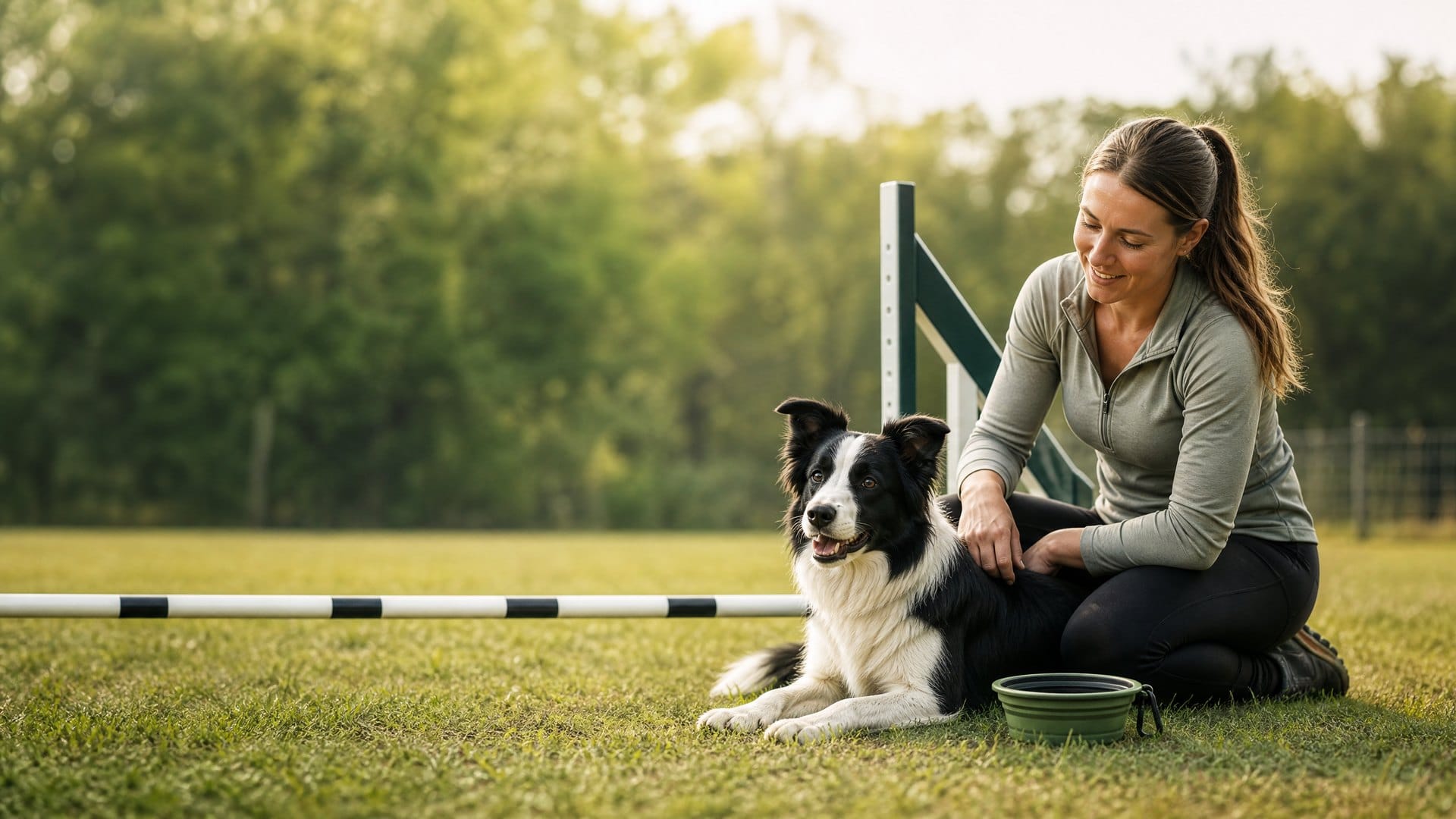
Agility is often made of brief, repeated efforts rather than one long outing. That difference matters. A sensible routine looks beyond the obstacle sequence and considers the dog’s usual food, water access, travel, surface, rest and recovery before asking whether anything in the bowl should change.
Safety note: This guide is for healthy adult dogs already cleared for their activity. It does not replace an individual nutrition, conditioning or medical plan. A sudden change in appetite, gait, breathing, comfort or behavior is a reason to pause and speak with a veterinarian.
Build the routine around short sessions
For many dogs, the most useful preparation is consistency. Keep the ordinary complete-and-balanced diet as the foundation, account for food used in training within the day, and avoid using food to push a tired or worried dog through another repetition. The aim is a dog who can learn, recover and return to a calm home routine.
| Moment | What to notice | Helpful planning question |
|---|---|---|
| Before the session | Sleep, recent meals, travel, weather and the planned intensity. | Is today a routine practice, a new skill or a demanding event environment? |
| Between turns | Response to cues, body language, footing and willingness to re-engage. | Does the dog still look comfortable and able to make thoughtful choices? |
| After training | Settling, access to fresh water, normal movement and interest in the usual routine. | What should be recorded before the next session rather than solved with an extra snack? |
Fresh, clean water matters for active dogs. Offer normal, calm opportunities around the session; do not encourage a dog to gulp a large amount immediately before a short, intense sequence. Human sports drinks and improvised electrolyte mixes are not a substitute for water or veterinary advice.
Let rewards clarify the lesson
Food can be a useful reward when it is planned, easy for the dog to take and part of the daily intake. It should mark a clear learning moment, not become a way to override hesitation, fear or fatigue. Reward-based methods support humane training; if a dog repeatedly disengages, looks worried or needs escalating food to continue, simplify the task and review the plan with a qualified professional.
For practical reward planning, see Training Dog Feeding: Let Food Clarify the Lesson, Not Control the Dog. For the broader decision framework, begin with Performance Dog Nutrition: Build the Plan Before You Change the Bowl.
What can change an otherwise good plan?
Heat, humidity, unfamiliar surfaces, travel, an unusually busy venue, poor sleep and repeated high-arousal work can all change how a dog copes with the same course. Body condition, age, current health and medicines matter too. These variables are reasons to observe more closely, not reasons to copy a ration or supplement routine from another team.
Hydration deserves its own safety-first conversation on warmer or longer days: Active Dog Hydration: A Safety-First Guide for Training Days. When work is finished, the next priority is a quiet return to the dog’s normal recovery routine; our Dog Recovery Nutrition guide explains the observations worth discussing with the veterinary team.
Pause the session and contact a veterinarian
Stop activity and seek veterinary advice promptly for collapse, marked weakness, distressing or labored breathing, disorientation, repeated vomiting, signs of pain, an obvious change in gait, a distended abdomen, seizures or a dog that does not settle normally. Do not try to train through these signs or diagnose the cause from a feeding pattern.
Continue exploring
- Focus Dog Feeding: Create the Conditions for Calm Attention
- Performance Dog Nutrition
- Training Dog Feeding
- Active Dog Hydration Safety
- Dog Recovery Nutrition
- Explore the Dogs Care Guide for everyday care
Leave a Reply