
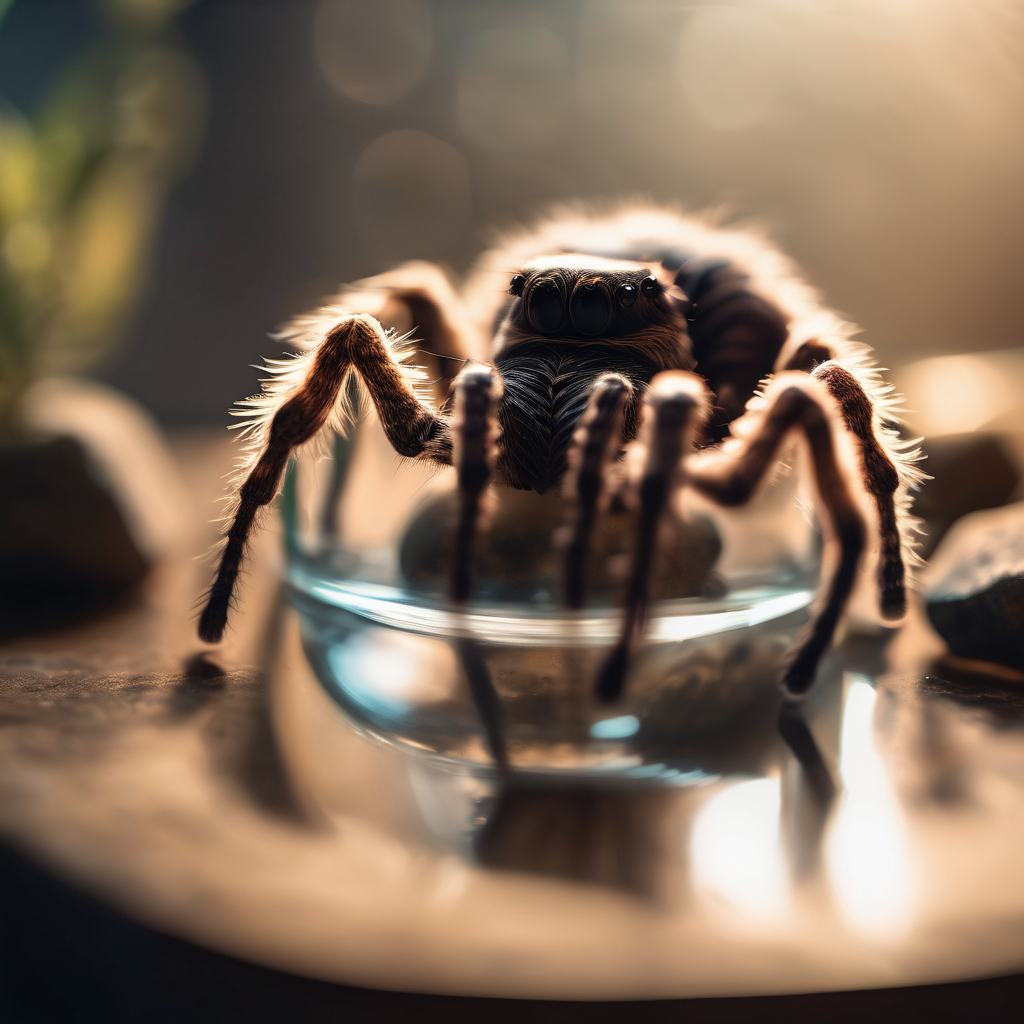
Tarantulas are not like a dog that will drink from a bowl whenever it feels like it. In the wild, your tarantula takes in moisture from its prey, from dew and rain droplets on the enclosure walls, and from the humid air in its burrow. In a dry vivarium it will often ignore a water dish entirely for weeks and still look perfectly healthy, then die of dehydration in a week if the humidity drops too far. This confusion causes two opposite mistakes: new keepers who panic when their spider refuses to drink, and experienced keepers who forget that a terrestrial species still needs access to moisture. This guide explains how tarantulas actually get their water, when a dish helps and when it does not, how to spot dehydration, and what to do for each type of tarantula.
How tarantulas get their water in the wild
A tarantula has three sources of moisture in its natural habitat, and a good enclosure setup should recreate all three. First, it drinks liquid water directly when available, lapping droplets off leaves, rocks and the sides of its burrow after rain or heavy dew. Second, it absorbs a surprising amount of moisture through its book lungs and cuticle from humid air, which is why low humidity alone can dehydrate a spider even if it never touches standing water. Third, it gets metabolic water from its food, since prey animals are mostly water by weight. A tarantula that is eating regularly needs less free-standing water than one that is fasting before a molt or recovering from shipping stress.
The implication is simple: you cannot judge hydration by watching the spider drink, because most of the time it will not, and you should not judge it by whether the dish is empty. You judge it by the humidity in the enclosure, by the spider’s body condition, and by whether it has a reliable way to reach water when it wants it.
The water dish: yes, but the right kind
Every tarantula enclosure should have a shallow water source. It does two jobs: it gives the spider somewhere to drink when it chooses to, and for most species it is the single biggest contributor to enclosure humidity, because the water slowly evaporates into the air. The dish rules are:
- Shallow, not deep. Use a dish with a low lip, or a bottle cap for a sling. A tarantula cannot swim and will drown in deep water, even a species that lives near a stream. The water depth should be no more than the spider is tall, and ideally less, so it can stand on the bottom with its head well above the surface.
- Something to grip. A smooth plastic dish can be slippery. A small rock, a piece of cork bark or a bit of moss placed in the water gives the spider a purchase point so it does not slip under.
- Clean, fresh water. Change the water every couple of days, or whenever you see substrate, frass or dead crickets in it. A dirty dish breeds bacteria and mold that can harm a spider that has a small open wound.
- Dechlorinated or spring water. Tap water is usually fine, but if yours is heavily chlorinated or chloraminated, use spring water or leave the tap water out for 24 hours. This matters most for sensitive species and for slings.
- Place it away from the burrow entrance for burrowing species so the spider does not have to leave its shelter to reach it, but close enough to find. For arboreal species, place the dish low in the enclosure even though the spider lives up high; they will come down to drink.
Do not mist a terrestrial tarantula’s enclosure
This is the most common watering mistake. New World terrestrial species like the Chilean rose hair, the Mexican redknee, curly hairs and most Brachypelma and Tliltocatl come from dry scrubland and deserts. They do not want a wet enclosure. If you mist a dry-species tank daily, you raise the humidity far too high, the substrate stays sodden, mold and mites move in, and the spider develops problems it never would have had in the wild. For these species, the water dish is your humidity tool. A full dish in a warm enclosure provides enough evaporation to keep the humidity in the right range, and you wet the substrate only in a small corner if you want to give the spider a slightly damper patch to choose from.
Overhead misting is appropriate only for a minority of species: many arboreal tarantulas like Avicularia and Poecilotheria, and most rainforest species, appreciate a light misting that leaves droplets on the walls for them to lap up. Even then, mist lightly and let the enclosure dry between sessions. The goal is humid air and available droplets, not a swamp. If you are unsure which group your species belongs to, research its natural habitat before you pick up the spray bottle, and read our tarantula enclosure setup guide for species-by-species humidity targets.
Species matters: match watering to the natural habitat
Watering a tarantula is not a one-size-fits-all routine. Sort your spider into one of these groups and treat accordingly.
Dry terrestrial species
Chilean rose hairs, redknees, curly hairs, most desert and scrubland Brachypelma. Keep the substrate mostly dry, provide a full water dish at all times, and do not mist the enclosure. Humidity around 55 to 65 percent is plenty, and lower is fine for some species. These are the spiders most often killed by an overenthusiastic keeper who mists “for humidity.”
Rainforest terrestrial species
Pinktoes in their terrestrial phase, many Grammostola from humid grassland, and other species from wetter environments. Provide a water dish and keep a slightly damper substrate. You can dampen one corner of the substrate between waterings, but never let the whole floor stay wet. Target humidity in the 70 to 80 percent range.
Arboreal species
Pinktoes, Avicularia, Poecilotheria, most Asian ornamental species. These live in humid, well-ventilated canopies. Provide a water dish low in the enclosure and lightly mist the walls two to three times a week so droplets form for the spider to drink. The key word is ventilation: an arboreal tank must have cross-flow of air, so humid but stale air does not build up and breed bacteria.
Slings
Spiderlings dehydrate much faster than adults because of their tiny size and high surface-area-to-volume ratio. A sling needs a small, shallow water source such as a bottle cap, and the substrate should never be allowed to fully dry out. For slings of humid species, keep a damp corner of the enclosure and mist lightly. Drowning is still the bigger risk, so keep any water source extremely shallow, no deeper than the sling is tall.
How to tell if a tarantula is dehydrated
Dehydration in a tarantula is subtle but recognizable once you know what to look for. The abdomen of a well-hydrated tarantula is plump and rounded. A dehydrated tarantula has a shriveled, wrinkled or deflated-looking abdomen, and the opisthosoma may look oddly small relative to the carapace. The spider may sit with its legs tucked tightly, move slowly and lethargically, or fail to respond to food the way it normally would. In severe cases the whole body looks pinched and the spider may curl up in a corner, which keepers sometimes mistake for a normal pre-molt posture but which is actually a distress sign outside the molt cycle.
The other reliable clue is the enclosure, not the spider. If the substrate is bone dry, the dish has been empty for days, and the humidity reading is far below your species’ target range, dehydration is the likely diagnosis even if the spider looks okay. A hygrometer placed at substrate level is the honest answer here, and an inexpensive digital one is worth the money. If the reading says 30 percent humidity for a species that needs 70, believe the meter, not the spider’s appearance.
What to do about a dehydrated tarantula
If you suspect dehydration, act gently. Do not dunk the spider, and do not force water into its mouth. Instead:
- Fix the humidity first. Correct the enclosure environment to match the species, either by reducing airflow and dampening the substrate for a humid species, or by confirming the dish is full and the airflow is not excessive for a dry species. The spider rehydrates through its book lungs from humid air far faster than it will from a drink.
- Provide a fresh, shallow water dish with a rock for grip, and place it near where the spider is resting.
- Dampen a small patch of substrate in one corner for terrestrial species, giving the spider a choice of dry and damp without soaking the whole floor.
- Offer moist prey. A recently molted cricket or a piece of dampened roach holds more water than a dry one, and eating is itself a major source of hydration.
- Reduce stress. Keep the enclosure dim, leave the spider alone, and do not handle it. A stressed spider dehydrates faster.
A tarantula that is dehydrated because it is about to molt is a normal, temporary state, and you should not intervene beyond keeping water available. During premolt, many spiders stop eating and their abdomen shrinks as they absorb fluids into the new exoskeleton forming underneath. Do not mistake this for illness. After the molt, a well-hydrated spider refills its abdomen within days.
Warning signs that need a vet
Most hydration problems are environmental and fixable at home. But a few situations warrant an exotic vet that sees invertebrates:
- A shriveled abdomen that does not refill after you have corrected the humidity and offered water and food for a week or more.
- An inability to stand or hold itself up, legs splayed, spider on its back outside a molt, which can indicate severe systemic distress.
- A spider that is stuck in a molt with dry, hardened shed clinging to it, which often follows a period of too-low humidity and may need careful intervention.
- Signs of mold or bacterial infection in a chronically wet enclosure, especially fuzzy growth on the abdomen or joints.
Bottom line
Tarantulas get most of their water from humid air and from their food, and a shallow water dish supports both by feeding the enclosure’s humidity and giving the spider something to drink when it chooses. The dish should always be present, always shallow, and always clean. Mist only the species that live in wet canopies, never the dry terrestrial species that so many beginners start with, and check the hygrometer rather than guessing. Get the environment right and a tarantula will regulate its own hydration for years. For the rest of the tarantula care picture, our complete tarantula care guide and feeding guide cover the routines that sit alongside watering.
Frequently asked questions
How often should I change my tarantula’s water?
Every two to three days is a good default, or sooner if you see substrate, frass or dead feeder insects floating in the dish. A dirty dish is a bacteria risk, especially if your spider has a small open wound from a molt or a feeder bite.
My tarantula never drinks from the dish. Is that a problem?
Usually not. Tarantulas absorb most of their moisture from humid air through their book lungs and from the water content of their prey. A spider that ignores the dish but lives in correct humidity and eats normally is well hydrated. Judge the environment and the spider’s body condition, not whether the dish is empty.
Can I mist a Chilean rose hair to raise humidity?
No. Rose hairs are dry terrestrial species from scrubland, and a misted enclosure raises humidity far too high, leading to mold, mites and stress. Use a full water dish for humidity instead, and keep the substrate mostly dry. If you must give a damp option, dampen only one small corner.
How do I water a tarantula sling?
Use a bottle cap or a very shallow dish no deeper than the sling is tall, and add a tiny pebble for grip. Keep the substrate from fully drying out, misting lightly for humid species. Drowning is a real risk for slings, so shallow beats plenty every time.
How can I tell dehydration from a normal premolt?
A premolt tarantula stops eating, may seal its burrow, and its abdomen shrinks as it reabsorbs fluid into the forming new exoskeleton, but the rest of its body usually still looks full and its legs hold it up normally. A dehydrated spider looks pinched or shriveled overall, is lethargic, and often cannot hold itself up properly. When in doubt, check the hygrometer and the substrate moisture.
Leave a Reply