
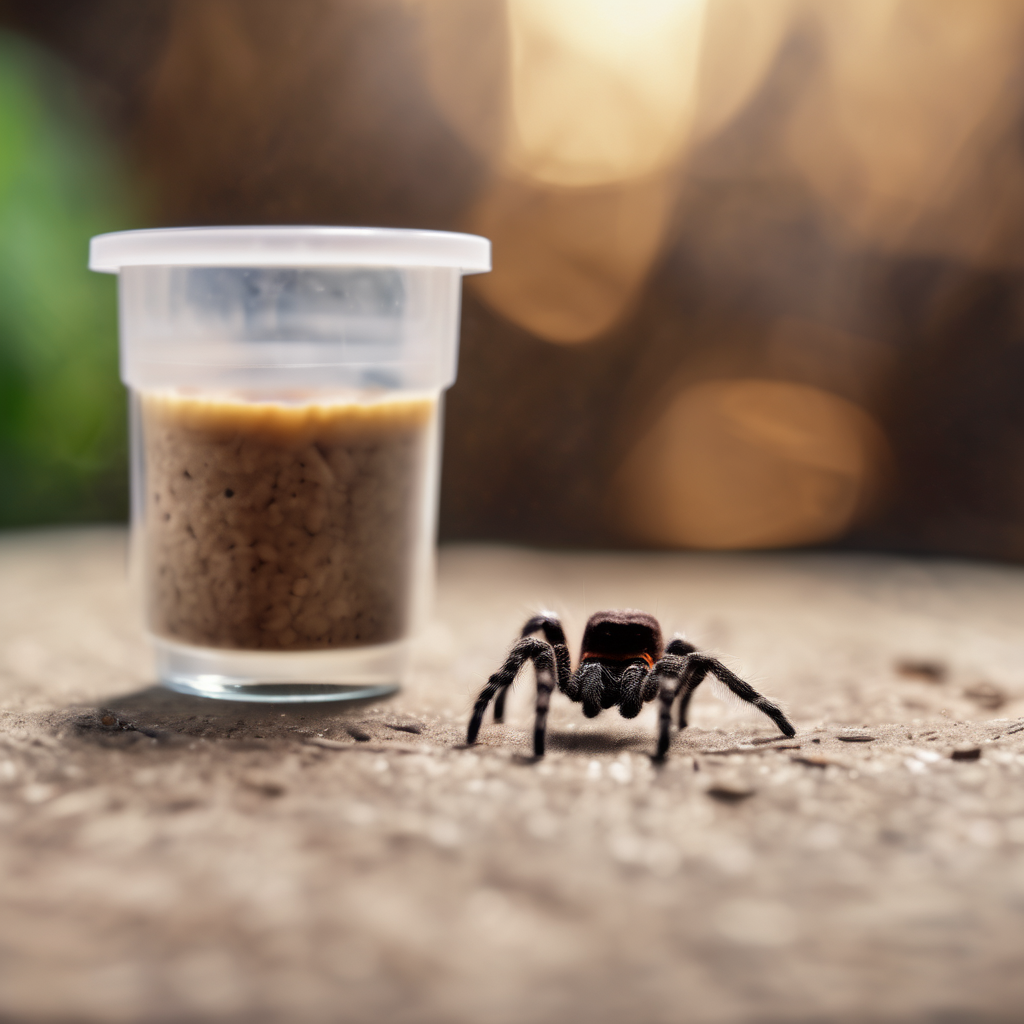
A tarantula sling — a spiderling the size of a fingernail, fresh out of the egg sac — is the most fragile animal most keepers will ever own. Adult tarantulas are famously forgiving: they survive missed feedings, dry spells and mediocre setups. Slings have none of that margin. They dehydrate in days, they moult constantly, and a single prey item that is too large can kill them during a moult. Yet slings are also the most rewarding thing to raise, because the whole animal is visible: you watch it moult its way from a 2 cm dot to a 12 cm adult over three to six years, and every stage is a decision you made.
This guide covers the practical half: what enclosure a sling actually needs, how small the prey has to be, what the molting window looks like and how to survive it, how to raise slings straight from an egg sac if you pull one, and the four failures that account for most sling losses. It is written for keepers who already understand adult tarantula care — for the fundamentals see the complete tarantula care guide.
What A Sling Is, And The Timeline You Are Signing Up For
A sling is a free-ranging juvenile that has left the egg sac or has been separated from its mother. It starts at roughly 1.5–3 cm in legspan depending on species, and it will moult somewhere between 4 and 10 times a year in its first two years — far more often than an adult. Each moult is a gamble: the animal flips onto its back, its old skin splits, and it pulls itself out over the course of an hour or two. If the humidity is wrong, if a prey item bites it while it is helpless, or if it simply cannot get purchase, it dies stuck in its own skin.
Growth rate is temperature-dependent and species-dependent. A fast species like a Grammostola rosea or an Avicularia can reach 10–12 cm in three to four years; a slow one like a Brachypelma can take six to eight. Moult intervals shorten as the animal grows: weekly prey, monthly moults at first, stretching to every few months by the second year and to once or twice a year as an adult. Females outgrow males and live several times longer.
The Enclosure: Small, Cross-Ventilated, Humid
The instinct is to buy a small version of an adult setup. Do not. An adult tarantula finds its water dish by walking across an enclosure; a sling the size of a pea will not find anything, and in a large enclosure the prey it needs is too small to interest it. The sling enclosure is its own category:
- Size. A small deli cup (roughly 500 ml) or a tiny Kritter Keeper, with 2–4 cm of substrate. The rule of thumb: floor space of about three to four times the animal’s legspan, and height of no more than roughly twice the legspan. Too tall and a fall can rupture the abdomen.
- Cross-ventilation. Holes on the sides and the lid, not just the lid. A closed humid cup grows mould within a week; a fully open one dries out in a day. You want airflow without a draft — if you can feel air moving across the substrate surface when you hold it near your face, it is too much.
- Humidity. Most terrestrial species want one corner of the substrate damp, not the whole thing soaked. For an arboreal species (Avicularia, Poecilotheria, most Caribena) provide more ventilation and higher ambient humidity — they die of desiccation faster than terrestrials, and they climb, so they need vertical space and a piece of bark to anchor webbing to.
- Substrate. Coco fibre, or a coco/topsoil mix, lightly moistened. Deep enough that the sling can burrow if it wants to. No sand for burrowers, no gravel, no calcium sand — impaction risk is real at this size.
- No decorations that can collapse. A single cork bark piece or a half-log is fine. Anything heavy that can shift during a moult and crush a soft, immobile animal is not.
- No heat source needed. Room temperature (roughly 22–26 °C) is correct. A heat mat under a tiny cup cooks it; slings cannot move away from heat the way adults can. If the room is cold, insulate rather than heat.
For the underlying principles of terrestrial versus arboreal setups, prey sizing and long-term housing, the enclosure setup guide covers the adult version — the sling version is the same logic scaled down.
Feeding: Smaller Than You Think
The prey rule for slings is stricter than for adults. The food item should be no larger than about half the sling’s body length, and ideally closer to a third. An adult cricket will kill a sling — not by eating it, but by biting it during the long moult when the spider cannot defend itself. This is the single most common cause of sling death that is not desiccation.
What to feed, by size
- Smallest slings (1–2 cm). Flightless fruit flies, or pinhead crickets if you can breed them reliably. Flightless fruit fly cultures are the standard answer and are cheap to maintain. Drop two or three into the cup, remove uneaten flies after a day so they do not stress the spider.
- Small slings (2–4 cm). Pinhead to 1/8-inch crickets, or small mealworms head-first only if your species accepts them — many tarantulas refuse mealworms entirely and some species are poisoned by them.
- Mid-size slings (4–7 cm). 1/8- to 1/4-inch crickets, small dubia roaches, or the occasional pre-killed pinky mouse for a large species.
Feeding rhythm
Feed once or twice a week at first. A sling should always be offered food but should not be drowning in it — crickets that are not eaten within 24 hours should be removed. Pre-kill or cripple the prey for very small slings, so a live cricket cannot injure a spider that is not ready to eat. Drop the food item near the spider but not on top of it; slings are skittish and a cricket landing on a sling reads as an attack.
Nutritionally, a varied diet matters more at this size because the animal is building a skeleton quickly. Rotate crickets, roaches, dubia, and the occasional pre-killed pinky for large species rather than feeding one species forever. The full prey schedule and fasting logic is in the feeding guide.
The Molting Window: The Dangerous Week
You will learn to recognise the pre-moult signs: the abdomen darkens, the spider stops eating, it becomes lethargic, it spins a thick moult mat, and in some species the hairs on the opisthosoma look dull or the skin looks “greasy”. From that point the animal is helpless for a week or more. The rules during that window are absolute:
- No prey in the enclosure. Remove every cricket. A cricket left with a moulting sling is the classic cause of death — it chews on a spider that cannot run.
- Do not disturb the spider. Do not tip the enclosure to “check” on it. If the moult mat tears or the spider is flipped off its back, the moult fails.
- Do not try to help with stuck skin. The urge is overwhelming; the instinct is wrong. Pulling on stuck exuvia rips limbs off. If the animal is genuinely stuck and alive days later, photograph it and contact a vet or an experienced keeper — that is a judgement call, not a DIY fix.
- Do not feed for 3–7 days after. The new cuticle is soft and the fangs are not hardened. Feeding too early damages both.
- Keep humidity up but not wet. A failed moult from dry air is the second most common sling death. During the pre-moult period, make sure the damp corner is actually damp — this is the one week where being too dry is unforgivable.
The full molting process, the post-moult timeline and the exceptions are covered in the molting guide.
Raising Slings From An Egg Sac
If you have a female that produced an egg sac, you have a choice: leave it with her (she may care for it, or she may not, depending on species) or pull it and incubate it. Pulling it is the controlled option and is straightforward:
- Keep it warm and humid. Roughly 24–26 °C in a small ventilated container with the sac suspended slightly above a damp (not wet) substrate so it does not sit in water and mould.
- Do not open it. Opening a sac to “see how they are doing” is how sacs get contaminated and die. Wait for the slings to emerge on their own — 5 to 10 weeks is typical for most common species, longer for Brachypelma.
- Watch for mould. White fuzz on the sac is a kill signal. If you see it, the sac is probably lost; remove it from the room before it spreads to other enclosures.
- Count the slings when they emerge. Not all sacs are fertile, and knowing your fertility rate tells you whether to keep breeding.
- Separate them immediately. Slings of many species will cannibalise each other if left together. One sling per cup, no exceptions.
Note that many species (most Brachypelma, Grammostola) guard their sac and may fast for weeks while doing it. Interfering with a guarding female is how sacs get damaged. If you want to raise a sac with the mother, leave her alone and check on the sac no more than once a week.
Upsizing: When To Move Them
Slings outgrow their cups faster than you expect. Move to a larger enclosure when the sling’s legspan exceeds roughly half the enclosure’s floor width, or when it is visibly struggling to turn around. Do it during a feeding interval — never during the pre-moult window, when the animal is fragile and immobile. Move the substrate along with the spider if you can; a moult mat already in place is worth a great deal to a stressed animal, and a transfer that destroys it forces the spider to re-establish, which costs it a feeding cycle.
The Four Failures That Account For Most Sling Deaths
- Desiccation. A cup that dried out over a warm weekend kills a sling silently. The damp corner is not optional. If you travel, ask someone to check the cups, and use a container with a smaller vent count rather than none.
- Prey injury during moult. Crickets left in with a pre-moult sling. Remove food the moment you see the darkening abdomen.
- Overwatering and mould. The opposite error: substrate soaked to the point that mould grows on the sling. Damp, not wet — squeeze the substrate and no water should run out.
- Handling. Do not handle slings. A fall of 30 cm onto a hard surface can rupture the abdomen of an animal this size, and the stress of being held suppresses feeding for days. They are observation animals for their first year, not pets to be held.
Warning Signs: When To Worry
- Abdomen shrivelling — dehydration or a refusal to eat that has gone on too long. Increase the damp area immediately and check the vents are not creating a draft.
- Curled legs, “death curl” posture — the classic tarantula distress posture. Causes range from dehydration to enclosure too dry to mite infestation. In a sling, treat it as urgent.
- Stuck moult — an animal halfway out of its old skin for more than a few hours is in trouble. Do not pull; get expert advice fast.
- Refusing food for several weeks while healthy and active — sometimes normal (pre-moult, seasonal fast), sometimes not. If it is not pre-moult and persists, check temperature and humidity first.
- Webbing excessively in a terrestrial species — often a stress response to an enclosure that is too large, too bright, or too dry.
There is no home treatment for a sick sling. If an animal is unresponsive, curled and unresponsive to a humidity correction, or stuck mid-moult, the realistic options are an exotic vet or an experienced keeper — which is why you identify one before you need one, not after.
Checklist For A New Sling Setup
- Deli cup or small Kritter Keeper, cross-ventilated, ~2–4 cm coco fibre substrate
- One damp corner, rest dry; no free water
- Room temperature 22–26 °C, no heat mat
- One piece of cork bark, nothing heavy
- Flightless fruit fly culture running before the sling arrives
- Feeding once or twice weekly, prey no more than half body length, leftovers removed
- Pre-moult protocol known: dark abdomen = remove all prey, do not touch, raise humidity
- No handling for the first year
- Upsize when legspan exceeds half the floor width
- Vet or experienced keeper identified in advance
FAQ
How many slings can I keep in one enclosure?
One. Communal rearing is done by experienced breeders of specific species under controlled conditions and still loses animals. For a keeper, one sling per cup is the only defensible rule.
My sling has not eaten in three weeks. Should I be worried?
If it is active, has a plump abdomen, and the abdomen is not darkening, it is probably pre-moult or fasting — both normal. If the abdomen is shrivelling, correct the humidity first and offer smaller prey. Sling fasts of 3–6 weeks are not unusual before a moult.
Can I keep a sling in the same room as adults?
Yes, as long as temperatures are stable and there are no pesticides, cleaning sprays or scented products used near the enclosures. Tarantulas are extremely sensitive to airborne chemicals, and slings more than adults.
Do slings need UVB?
No. Unlike reptiles and amphibians, tarantulas have no vitamin D3 synthesis pathway and get nothing from UVB. A normal day/night light cycle is appropriate, and direct sunlight is a hazard because it cooks a small enclosure in minutes.
What is the best first sling for a beginner?
Fast-growing, hardy, easy-to-feed species — Grammostola rosea and Tliltocatl species are the standard recommendations, and the reasoning is laid out in the beginner tarantula comparison. Avoid fast, nervous or medically delicate species for a first sling.
The Bottom Line
Raising a sling is not a harder version of keeping an adult — it is a different discipline with different failure modes. The adult survives your mistakes; the sling does not. Get the cup small and cross-ventilated, keep one corner genuinely damp, feed prey smaller than instinct says, strip the enclosure the moment the abdomen darkens, and do not touch the animal for a year. Do those five things and the moult intervals, the growth spurts and the first adult moult three years later are the payoff for the most attentive keeping you will ever do.
Leave a Reply