
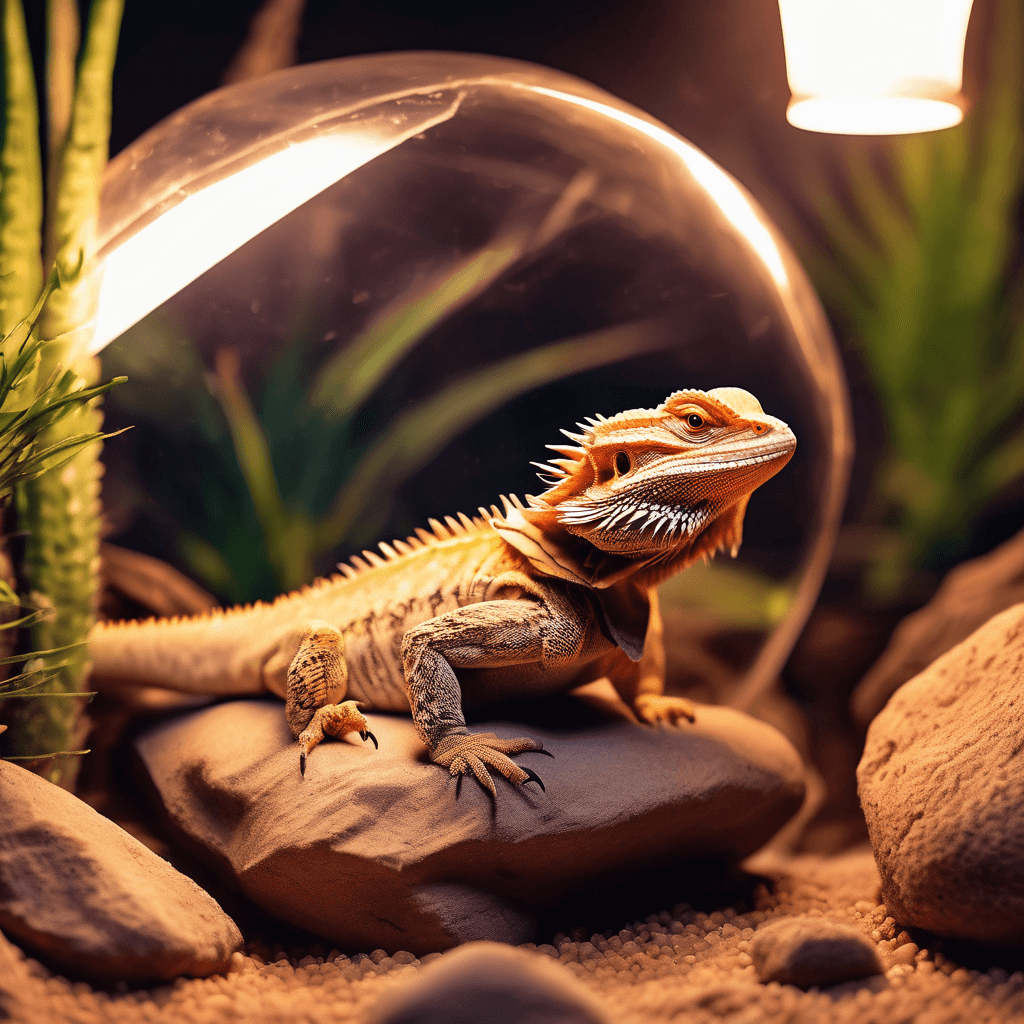
Bearded dragons are the most personable lizard in the hobby — they recognize their keepers, they bask in the open, and they tolerate handling better than most reptiles. They also have the largest beginner enclosure and the most specific heating requirements, and the setup is the cost of the personality.
This guide covers the complete beginner setup. Part of the small pet reptiles guide series.
The Species
- Size: eighteen to twenty-four inches as adults — the tank requirement follows it.
- Lifespan: eight to twelve years with proper care.
- Activity: diurnal — active during the day, and they bask in the open.
- Temperament: the most interactive lizard, and they tolerate handling well.
- Social behavior: the arm-waving is submission, and the beard darkening is stress or display.
The Enclosure
- A 75-gallon tank for an adult — the juvenile can start in a 40-gallon, but the adult needs the length. The small-tank adult is the most common husbandry failure.
- Secure screen top — they climb, and the ventilation suits the arid setup.
- Substrate: paper towels, tile, or reptile carpet for the safest option. Loose sand risks impaction, especially in juveniles, and the solid surfaces eliminate it. Slate tile gives the nail wear too.
- A basking rock or branch — under the heat lamp, and the surface temperature is the measurement.
- Hides at both ends — the warm and cool retreat, though they bask more than they hide.
- A shallow water dish — they drink from it and occasionally soak, and the shallow prevents drowning.
The Heating
- The basking spot at 100 to 110 degrees — measured at the surface with an infrared thermometer, and the air temperature is misleading.
- The cool side at 75 to 85 degrees — the gradient between them is the thermoregulation.
- A heat lamp or ceramic heat emitter — overhead, because they bask. The deep heat projector is the modern recommendation.
- A thermostat or dimmer on the heat source — the burn prevention, and the non-negotiable equipment.
- The night drop to 65 to 75 degrees — they tolerate and benefit from it, and the night heat is unnecessary.
The UVB Requirement
Unlike the leopard gecko, bearded dragons require UVB:
- A 10.0 UVB bulb — the strength for the basking species.
- Spanning half the enclosure — the gradient, and the shade retreat at the other end.
- Replaced every 6 to 12 months — the UVB output degrades before the visible light fails, and the date on the bulb is the schedule.
- No glass between bulb and dragon — glass blocks UVB, and the mesh top is acceptable but reduces output.
- Metabolic bone disease is the failure — the deformed limbs, the rubber jaw, and the preventable condition from missing UVB and calcium.
The UVB bulb replacement is the step that gets forgotten — the bulb still glows after the UVB output has failed, and the degraded bulb produces the deficiency months later.
The Diet
- The omnivore shift: juveniles eat mostly insects (70 percent) with some greens; adults eat mostly greens (70 percent) with fewer insects. The ratio shifts with age.
- The insects: crickets, dubia roaches, and black soldier fly larvae — dusted with calcium at most feedings and a multivitamin weekly.
- The greens: collard, mustard, dandelion, and turnip greens as staples — the variety is the nutrition. No iceberg lettuce.
- The feeding frequency: juveniles two to three times daily; adults once daily. The greens stay available.
- No citrus, avocado, or spinach — the oxalates bind calcium, and the common toxic foods.
- Treats: hornworms and silkworms occasionally — the hydration and variety benefit.
The adult diet is where the mistakes happen — the owner keeps feeding insects at the juvenile ratio, and the adult obesity and the organ strain follow. The greens become the majority.
The Brumation
- They brumate in winter — the reptilian dormancy, and the appetite drops for weeks to months.
- The behavior: sleeping more, eating less, and hiding. Normal, not illness.
- Keep food and water available — they may eat occasionally, and the weight monitoring is the check.
- The weight loss beyond the normal — the brumating dragon loses some weight, and the excessive loss needs a vet.
- Not all dragons brumate — captive conditions sometimes suppress it, and the absence is fine.
The Handling
- Support the body and the tail — they are larger, and the support matters.
- Short sessions when young — the handling time grows with acclimation.
- Watch the stress signs — the dark beard, the gaping, and the flattening mean stress, and the return to the enclosure follows.
- Wash hands after — salmonella is real with all reptiles.
Health Monitoring
- Metabolic bone disease: from missing UVB or calcium — the rubber jaw and the deformed limbs are advanced, and the bulb replacement is the prevention.
- Impaction: from loose substrate or oversized insects — the solid substrate eliminates the substrate risk.
- Respiratory infection: from cold or wet — the gaping and the mucus are the signs.
- Parasites: from wild-caught insects or new animals — the annual fecal check is the screening.
- Obesity in adults: from the insect-heavy diet — the greens majority is the fix.
Frequently Asked Questions
Are bearded dragons good for beginners?
Yes, with the commitment to the space — the adult needs a 75-gallon enclosure, and the setup is the largest of the beginner lizards. The heating and UVB requirements are specific, and the personable behavior is the reward.
Do bearded dragons need UVB?
Yes — they are basking diurnal lizards, and the UVB is required for calcium metabolism. A 10.0 bulb spanning half the enclosure, replaced every 6 to 12 months even though the visible light still works.
Why is my bearded dragon not eating?
Check the basking temperature first — the wrong temperature suppresses appetite. Then the brumation cycle in winter. Beyond a week or two with other signs, a vet.
How often should I replace the UVB bulb?
Every 6 to 12 months — the UVB output degrades before the visible light fails, and the faded bulb produces metabolic bone disease months later. Write the replacement date on the bulb.
The Bottom Line
A 75-gallon adult enclosure with solid substrate, a basking rock, and a shallow water dish. Basking spot at 100 to 110 degrees at the surface with a thermostat-controlled heat source, and the night drop to 65 to 75. A 10.0 UVB bulb spanning half the enclosure, replaced every 6 to 12 months — the required equipment, and the replacement is the step that gets forgotten. Dusted insects at 70 percent for juveniles shifting to greens at 70 percent for adults, and the diet ratio is the age. The brumation is normal, and the weight monitoring is the check. The bearded dragon is the most personable lizard, and the thermostat, the UVB replacement, and the adult diet are the three habits that keep it healthy.
Leave a Reply