
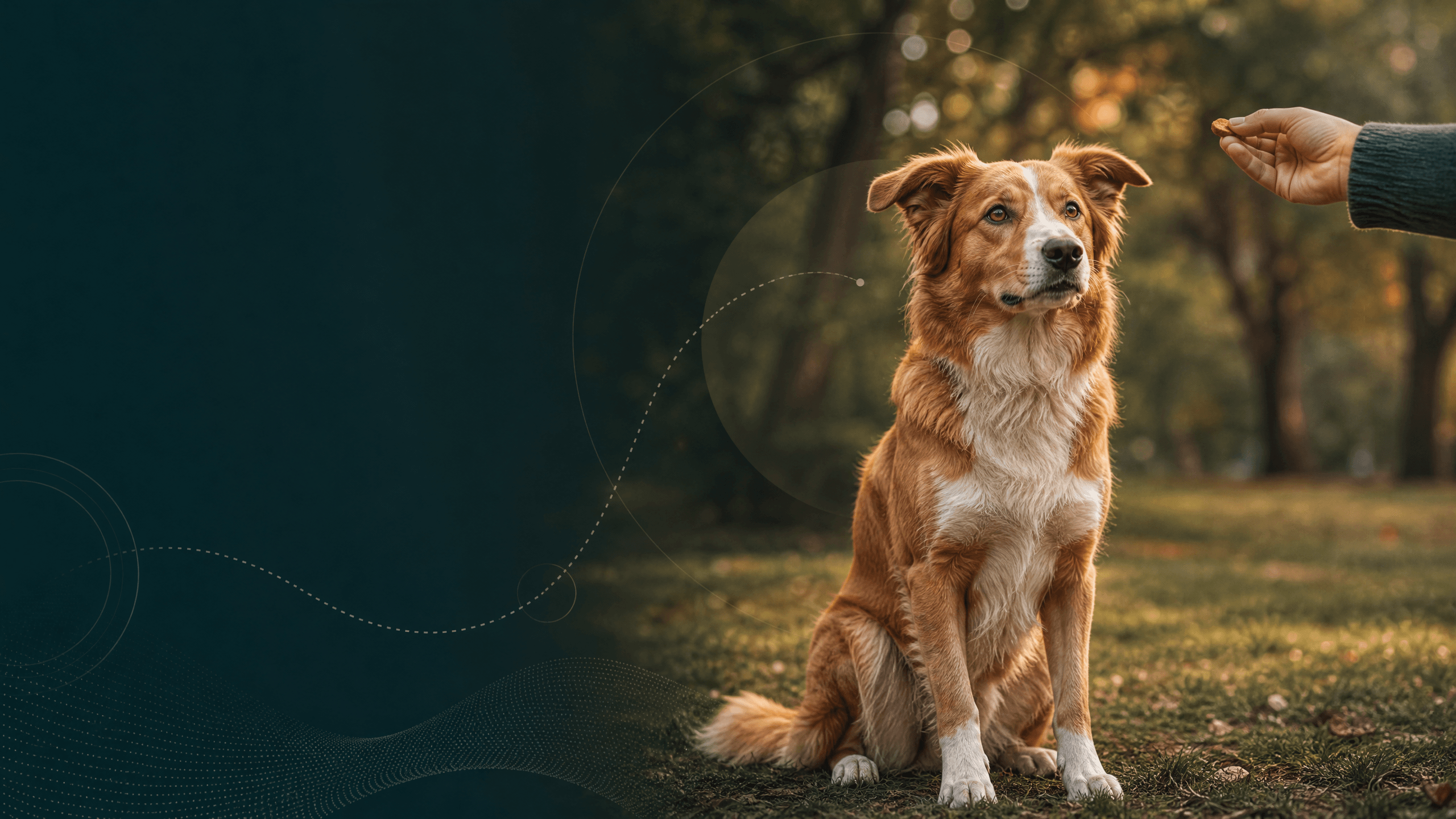
Food can be a powerful training reward because it is immediate, practical and easy to vary. Used well, it helps a dog understand which behavior earned a good outcome. Used carelessly, it can add too many calories, create household inconsistency or turn a learning session into a confusing bargaining game.
This guide is for teaching everyday cues and skills with reward-based methods. It is not a behavior-treatment protocol for fear, aggression, resource guarding or separation distress. Those issues deserve individualized help from a qualified veterinary behavior professional or reward-based trainer.
The aim is simple: mark a behavior you want to see again, then deliver a reward the dog values. The food follows the behavior; it should not become a visible condition for participation.
Why food works in humane training
Reward-based training uses outcomes the dog values to increase behaviors we want to see more often. The American Veterinary Society of Animal Behavior recommends reward-based methods for dog training, including behavior problems, rather than aversive methods.1
Food is one possible reward. Attention, play, access to sniffing or a chance to continue a walk can also matter. The best reinforcer is the one that works for that dog in that situation without compromising wellbeing.
| Use food when | Consider another reward when |
|---|---|
| The dog is learning a new cue or skill. | The dog is full, stressed or uninterested in food. |
| You need many short repetitions. | Play, sniffing or movement are more motivating. |
| You can use a measured part of the daily ration. | Extra food would upset the dog’s feeding plan. |
| You can deliver it quickly and calmly. | The environment is too difficult for the dog to learn. |
Build a reward budget before the session
Start the day by setting aside a measured portion of the dog’s usual food, if that is appropriate for the dog’s diet. Then decide whether extra high-value treats will be needed for a difficult task or distracting environment. This makes the training session visible in the total feeding picture rather than an invisible addition.
A complete and balanced diet remains the foundation. If the dog is on a therapeutic diet, is growing, has digestive problems or is overweight, ask the veterinary team how rewards should fit the plan.2
| Before training | During training | After training |
|---|---|---|
| Choose one skill and a short session. | Mark the desired moment, then reward. | Note what worked and return unused food to the plan. |
| Prepare small, easy-to-deliver rewards. | Keep the rate of success high. | Watch for digestive or appetite changes. |
| Choose a quiet starting environment. | Make the task easier if the dog struggles. | Do not compensate for a hard session with punishment. |
The three-step learning loop
| Step | What happens | What the dog learns |
|---|---|---|
| Cue or setup | You ask for a known behavior or create an easy opportunity. | What action is relevant. |
| Marker | A short word or click identifies the successful moment. | “That specific behavior worked.” |
| Reward | Food, play or another valued outcome follows. | The behavior is worth repeating. |
Keep the loop clear. If the dog misses repeatedly, the problem is usually the setup: too much distraction, too large a step or an unclear cue. Make the task easier rather than withholding food until the dog becomes frustrated.
Avoid turning food into a bribe
A reward is delivered after the behavior. A lure may be used briefly to teach a movement, but it should be faded as soon as the dog understands the pattern. If the dog only works when it sees food in your hand, move the food out of sight, simplify the task and reward after the response.
This is not about making food less valuable. It is about helping the dog trust the learning process. Consistent cues, timely rewards and short sessions create clarity without pressure.
What this page does not treat
Food may be part of a professional plan for fear, reactivity or resource guarding, but those cases need a safety and behavior assessment. Do not use meal access to force compliance, remove a bowl to “test” a dog or punish growling. For daily routines, enrichment and lower-stress mealtimes, see Behavior Dog Feeding.
A visual session checklist
| Green light | Pause and simplify | Stop and seek professional help |
|---|---|---|
| Dog is comfortable, engaged and able to earn rewards. | Dog is distracted, repeatedly missing or losing interest. | Dog shows fear, escalating distress, guarding, pain or a sudden behavior change. |
| You can keep rewards within the feeding plan. | The environment is too difficult. | Food refusal accompanies illness signs or severe anxiety. |
| The exercise is brief and achievable. | Your timing or cue is unclear. | Safety is uncertain for people or animals. |
Where to go next
For everyday routine, enrichment and meal-time environment, read Behavior Dog Feeding. For attention during scent games and quiet cognitive work, see Focus Dog Feeding.
Explore more dog care resources
For a broader foundation on daily dog care, feeding, training and health, explore the Dogs Care Guide. You can also browse the latest current dog-care articles on PetNova World.
Leave a Reply