
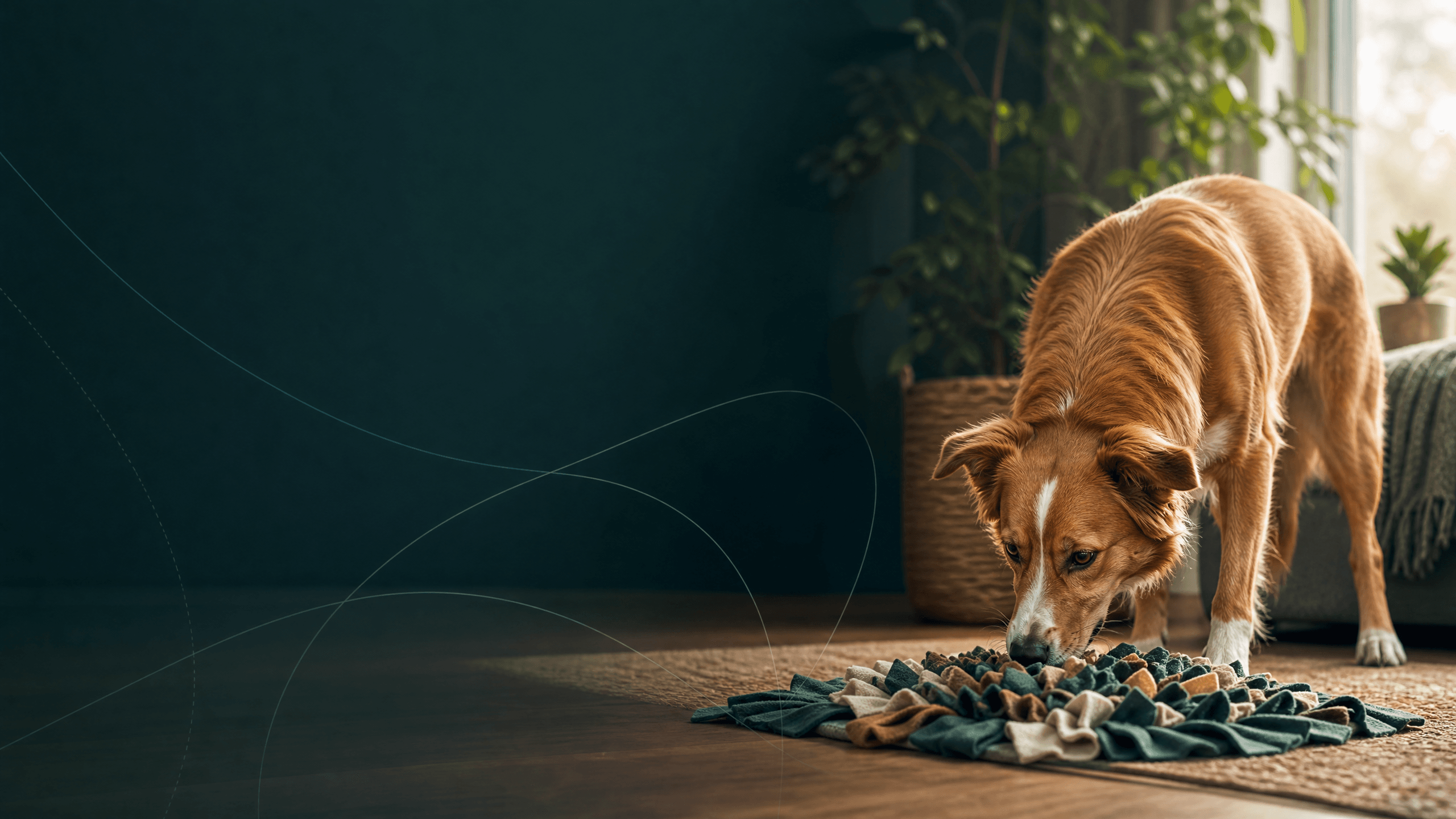
The bowl is only one part of feeding. Where a dog eats, how predictable the routine feels, whether the home is busy and whether the dog can settle all influence the experience. A calmer mealtime environment will not solve every behavior concern, but it can remove avoidable stress from an ordinary part of the day.
This guide is for everyday routine, enrichment and household management. It does not diagnose anxiety, treat aggression or provide a resource-guarding protocol. If a dog growls, freezes, snaps, guards food or shows sudden behavior change, protect everyone’s safety and seek qualified help.
A good feeding routine does not prove who is “in charge.” It gives the dog a clear, safe pattern and gives the caregiver useful observations about appetite, comfort and behavior.
Begin with predictability
Many dogs benefit from meals that occur in a reasonably consistent rhythm, in a place where they can eat without being crowded or startled. Predictable does not have to mean rigid to the minute; it means the household can recognize the pattern and avoid turning each meal into a negotiation.
| Consider | A calmer default |
|---|---|
| Location | A quiet area away from doorways, children’s play and other pets when needed. |
| Household traffic | Give the dog room to eat without being approached or tested. |
| Other animals | Feed separately if competition, rushing or tension is present. |
| Routine | Keep the sequence familiar: prepare, place, allow space, remove leftovers according to the feeding plan. |
| Observation | Notice appetite, pace, posture and comfort without hovering. |
A sudden change in appetite or behavior around food can have medical, environmental or emotional causes. Record the context and discuss persistent or concerning changes with the veterinarian.1
Enrichment is a choice, not an obligation
Some dogs enjoy finding part of their meal in a snuffle mat, food puzzle or simple scatter activity in an appropriate safe space. Others find novelty frustrating, guard the object or need a straightforward bowl. The goal is not to make every dog work for every bite; it is to offer a safe form of engagement when it suits the individual.
| Enrichment may suit a dog when | Skip it or seek advice when |
|---|---|
| The dog explores calmly and can disengage. | The dog guards the object, becomes frantic or distressed. |
| The food is part of the normal feeding plan. | The device creates conflict with another pet or person. |
| The puzzle is easy enough to create success. | The dog has dental pain, injury restrictions or swallowing concerns. |
| You can supervise a new item safely. | The dog destroys or ingests pieces of the device. |
Start simple. A difficult puzzle does not make a better enrichment plan if the dog becomes frustrated. Rotate options rather than adding more and more objects.
Use food to support calm, not pressure
Reward-based behavior work focuses on reinforcing outcomes we want to see more often and avoiding methods that create fear or distress.3 At mealtime, this can look like giving space, rewarding a calm approach to a mat before the meal or offering an approved enrichment option when the environment is quiet.
It does not mean taking food away to prove a point, cornering a dog near the bowl, punishing a growl or asking a worried dog to “earn” every meal. Growling is information that the dog is uncomfortable; it should trigger a safety plan and professional assessment, not a confrontation.
The household observation map
| Notice | Write down | Useful next step |
|---|---|---|
| Appetite | What changed, when and around which food? | Contact the veterinarian if the change persists or is concerning. |
| Pace of eating | Calm, rushed, hesitant or repeatedly interrupted. | Adjust environment; ask about persistent changes. |
| Social context | Who and what is nearby at meals? | Add distance, barriers or separate feeding spaces. |
| Body language | Relaxed, tense, frozen, lip-licking, retreating or guarding. | Stop pressure and seek qualified support if tension escalates. |
| Enrichment response | Curious, calm, frustrated or protective. | Keep only options that are safe and genuinely enjoyable. |
A visual routine: place → pace → protect
| Step | Goal | Example |
|---|---|---|
| Place | Choose a low-traffic feeding area. | A quiet corner, away from a second dog. |
| Pace | Give the dog time to eat or explore without interruption. | Let the dog finish; do not repeatedly reach into the bowl. |
| Protect | Prevent predictable conflict. | Use separation, gates or rooms when needed. |
When this is no longer a routine issue
Seek veterinary or qualified behavior support for food guarding, snapping, bites, sudden appetite loss, severe anxiety, repetitive vomiting, weight change, pain around the mouth or a sudden shift in temperament. If safety is uncertain, manage distance first and do not attempt a DIY confrontation.
Where to go next
For teaching cues and using rewards in a learning session, see Training Dog Feeding. For calm scent games and routines that support cognitive engagement, read Focus Dog Feeding.
Explore more dog care resources
For a broader foundation on daily dog care, feeding, training and health, explore the Dogs Care Guide. You can also browse the latest current dog-care articles on PetNova World.
Leave a Reply