
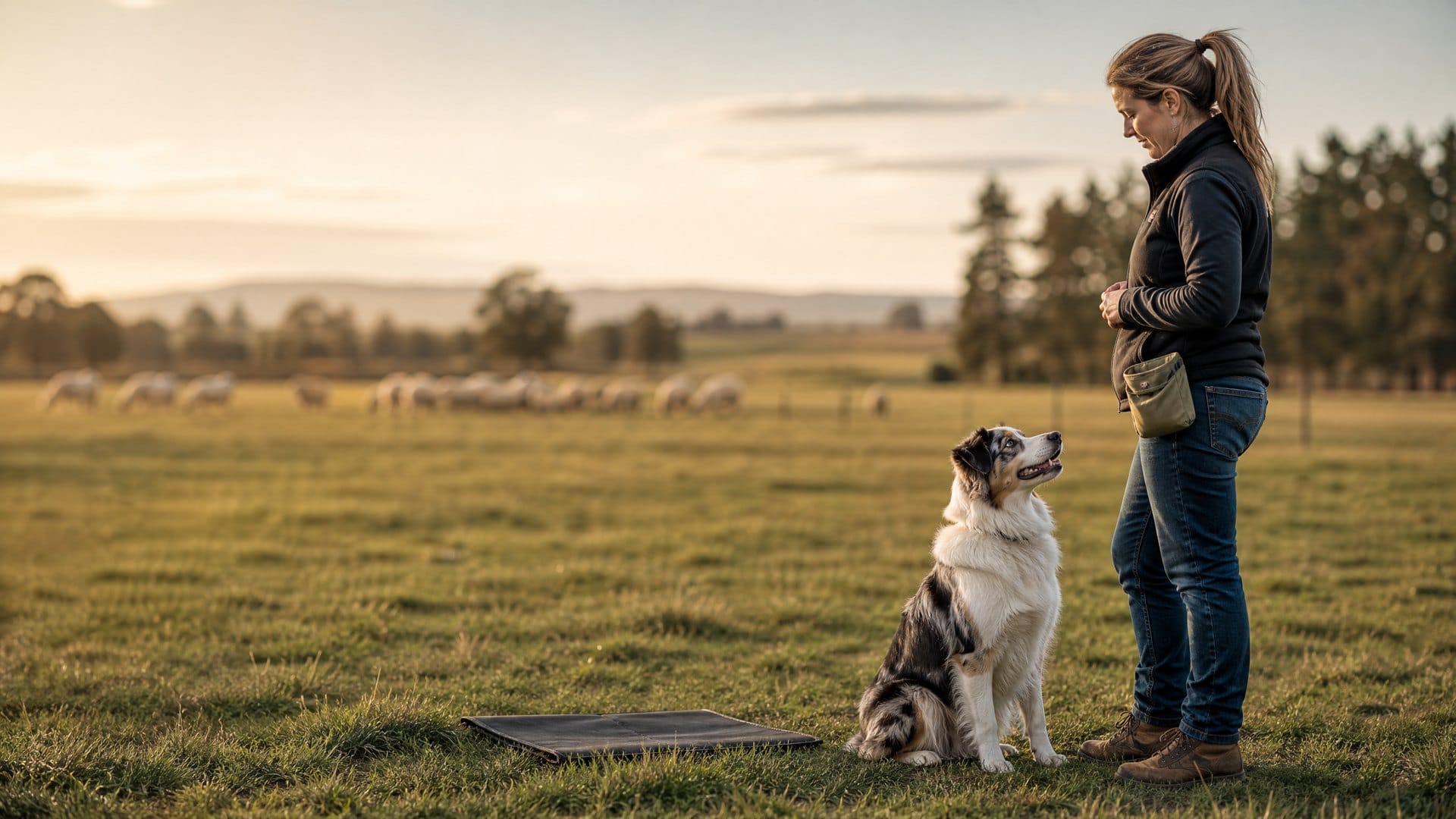
Herding dogs are often described as if their intensity were something to feed or switch on. That is not a useful care plan. A healthier approach looks at the whole routine: predictable meals, well-timed rewards, learning sessions that match the dog’s skills, rest after arousal and careful attention to behavior and comfort.
Safety note: Food cannot replace humane training, safe stock work, appropriate handling or a veterinary assessment. This guide does not advise on increasing drive, correcting behavior with food or using diet to manage pain, fear or illness.
Make rewards part of the day, not a separate fuel source
When food is used in training, plan it as part of the dog’s normal daily intake. A small, meaningful reward can communicate a completed lesson; it should not be used to pressure a dog that is overwhelmed, fatigued or unsure. Reward-based methods prioritize positive reinforcement and non-aversive management, which keeps the relationship and learning process central.
| Part of the routine | Helpful aim | Question to ask |
|---|---|---|
| Meals | Predictable nutrition from a complete-and-balanced foundation. | Is the daily pattern stable enough to notice real changes in appetite or comfort? |
| Training rewards | Clear feedback for a skill the dog can understand. | Is the food marking success, or trying to persuade the dog through difficulty? |
| Work and arousal | Sessions scaled to the dog, setting and previous learning. | Does the dog remain responsive and able to settle when the task ends? |
| Recovery | Quiet time, water access and ordinary home routines. | Has the dog returned to normal movement, behavior and appetite? |
Focus comes from conditions, not a special ingredient
Sleep, familiarity, clear cues, appropriate difficulty, comfort and a predictable environment influence attention. A dog who loses focus may need a simpler task, a quieter setting, more rest or professional assessment—not a new food marketed as a shortcut. Read Focus Dog Feeding: Create the Conditions for Calm Attention for a broader look at calm attention and daily structure.
For detailed reward planning, see Training Dog Feeding: Let Food Clarify the Lesson, Not Control the Dog. For mealtime predictability and lower-conflict household routines, visit Behavior Dog Feeding.
Notice the whole dog after work
A good session ends with the dog able to decompress. Track ordinary observations: willingness to move, posture, appetite, social behavior and the ability to settle. Repeated signs of tension, reluctance, discomfort or disrupted recovery deserve a review of workload, handling, health and environment rather than a feeding experiment.
For a general framework that starts with workload, health history and body condition, explore Performance Dog Nutrition.
Pause and contact a veterinarian
End activity and contact a veterinarian for collapse, marked weakness, breathing difficulty, disorientation, repeated vomiting, a distended abdomen, seizures, pain, lameness or a notable change in gait, appetite or behavior. If behavior itself has changed, seek a qualified, reward-based professional alongside veterinary guidance rather than escalating pressure in training.
Continue exploring
- Training Dog Feeding
- Focus Dog Feeding
- Behavior Dog Feeding
- Performance Dog Nutrition
- Explore the Dogs Care Guide for everyday care
Leave a Reply