
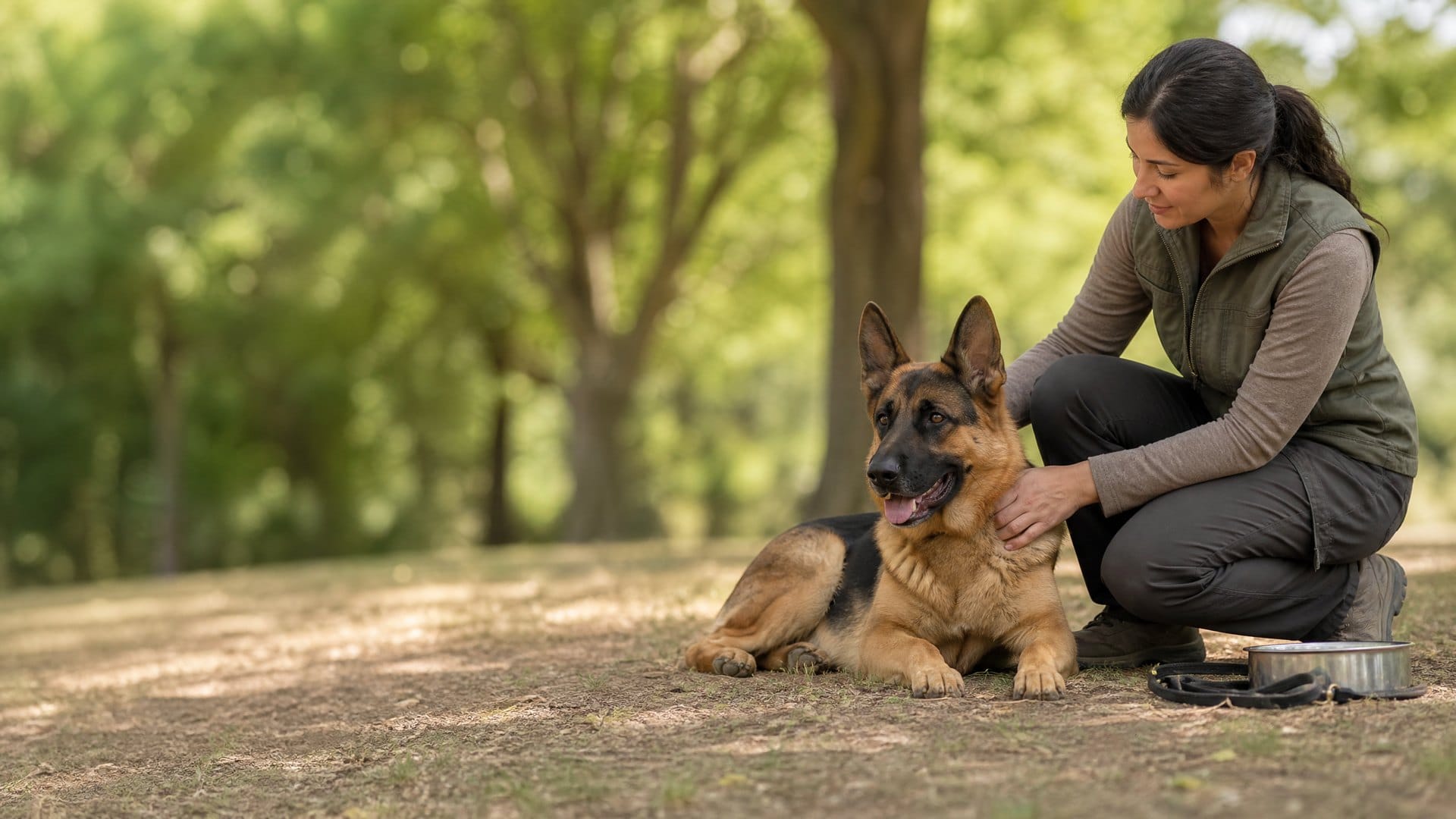
Responsible working-dog care is not about making a dog more watchful, forceful or intense. It is about meeting daily needs consistently and noticing when work, environment or routine is no longer supporting welfare. Food belongs in that picture as one part of a complete plan—not as a tool for producing alertness or changing protective behavior.
Safety note: This page does not provide guard training, aggression advice, tactical work instruction or a medical nutrition plan. Seek qualified, humane training support and veterinary advice for any concern involving behavior, pain, health or safety.
Put welfare at the center of the workday
Working roles vary, but dogs benefit from a predictable base: an appropriate complete-and-balanced diet, reliable water access, rest, safe movement, low-conflict handling and opportunities to settle. A dog’s body condition, appetite, normal behavior and recovery after activity offer more useful information than a single “energy” label on a food bag.
| Daily element | Welfare-focused aim | What to observe |
|---|---|---|
| Meals and treats | Keep the full daily diet nutritionally adequate and predictable. | Changes in appetite, stool, body condition or food-seeking behavior. |
| Handling and training | Use clear, humane methods that do not add unnecessary fear or conflict. | Ability to respond, relax and recover between demands. |
| Activity | Match the task to health, preparation, conditions and the individual dog. | Gait, comfort, willingness to move and breathing. |
| Recovery | Protect quiet time after work rather than filling every pause with stimulation. | Settling, normal sleep and return to familiar social behavior. |
Food should support the plan, not control the dog
There is no responsible diet shortcut for making a dog more protective or more alert. If food is used in structured training, it should be incorporated into the day and used within humane, reward-based learning—not as a way to push through fear, fatigue or escalating arousal. For the behavior side of mealtimes, see Behavior Dog Feeding: Make Mealtimes Predictable, Enriching and Low-Conflict.
A good working routine also has room for recovery. Our Dog Recovery Nutrition guide explains how normal routines and observation fit alongside veterinary care when a dog needs a quieter plan.
Review changes early
Repeated reluctance, changes in body language, loss of appetite, a different gait, slow settling, discomfort with handling or a sudden shift in behavior should trigger a review. The next step may be rest, a veterinary consultation, a check of the environment or support from a qualified reward-based behavior professional. It is not a reason to add a supplement, change food abruptly or increase work.
For the broader approach to activity, health history and nutritional adequacy, read Performance Dog Nutrition. For calm attention and predictable conditions, visit Focus Dog Feeding.
Pause and contact a veterinarian
Stop activity and seek veterinary guidance promptly for collapse, marked weakness, breathing difficulty, disorientation, repeated vomiting, a distended abdomen, seizures, pain, lameness, an abnormal gait or a major unexplained change in appetite or behavior. A safety concern involving a dog should also be handled with appropriate local professional support.
Continue exploring
- Performance Dog Nutrition
- Dog Recovery Nutrition
- Behavior Dog Feeding
- Focus Dog Feeding
- Explore the Dogs Care Guide for everyday care
Leave a Reply